Ring Side Report- RPG Review of Elemental Evil Player’s Companion

145542-thumb140

Product– Elemental Evil Player’s Companion

System– Dungeons and Dragons

Producer– Wizards of the Coast

Price– $FREE!  here http://www.drivethrurpg.com/product/145542/Elemental-Evil-Players-Companion-5e

TL; DR– If this is what WotC’s future looks like, I’m on board! 93%

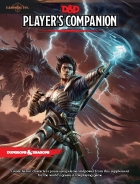
Basics– Horrors of the elemental apocalypse are upon us!  It’s time for new heroes to rise!  This book provides new player options including new races like the deep gnomes and the genasi.  This book also proves a surprising number of spells for almost all the classes except for clerics

Mechanics or Crunch–   Honestly, it’s good to get ANYTHING from the currently quite WotC.  The new races are all well done.  These races are not anything new for the system, but they are new to the current rules set. The spells all look great, and they add some new diversity to the ones from the core set.  It’s just good to get some more!  The one problem I do have is the exclusion of clerics from the rules.  What here is good, but he absence of some things are noticed. 4.75/5

Theme or Fluff- This does have some fluff to it.  Each race has a write up that adds some impressive diversity to the races in the Forgotten Realms.  Again, these write-ups are not anything new as the races are all old favorites from at least fourth edition, but it’s good to hear what these races have been up to since fourth edition DnD ended.  The spells all have some great elemental flavor.  What I did want that wasn’t here was some bonds to draw characters in as well as some background on the adventure.  My players all loved this new book, but the current season doesn’t have that much background to front load the adventure like the Paizo Player’s Companion books for their adventure paths.  I love what I’m reading, but I’d like a bit more to bring the playing in. 4.25/5


Execution– I’m really digging the new layout for the DnD books.  This book feels like an RPG, but it also feels fresh.  Sure it’s a short book, but getting this much content from another company would cost you $5 from Monte Cook games, and Paizo doesn’t even offer this much content in their free player adventure path companion books!  The font is good, the spacing is great, and the art is fantastic.  There is only one piece of art that I know has been reused, so that’s even more top marks for WotC, who has notoriously reused art in the past.  If you can keep this up, I’ll buy more player books when they happen! 5/5

Summary– This isn’t perfect, but it is amazing. And, it’s FREE!  I’m really surprised that this book is free.  It’s got an impressive amount in it for the first really player expansion out there.  I know that we, the player base, can’t expect to get free books forever, but if this is the treatment I’m going to get for all of the adventure seasons, I’ll be happy.  I would like more, but for the price and the content, I’m thrilled! 93%

Ring Side Report-Board Game Review of Kanban: Automotive Revolution

pic2041406_md

Product– Kanban: Automotive Revolution

Producer-Stronghold Games

Price– $60 here http://strongholdgames.com/store/board-games/kanban-automotive-revolution/

Set-up/Play/Clean-up– 60-90 minutes (2-4 players)

Type-Euro

Depth-Heavy!

TL; DR– Almost too complex…Almost 90%

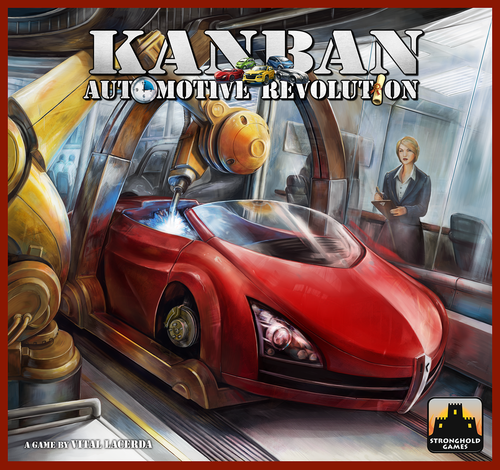
Basics-Who can build the best car?  In Kanban, each player takes the roll of a car designer in the Kanban Company.  Under the careful eye of your supervisor, players choose what departments they want to work in each day for three weeks or until there are three companywide goal assessment meetings.  I won’t go as in depth as the rule book, but here is a quick summary of the rules.  The departments players can work in each day include: administration, design, logistics, the assembly line, and testing and innovation.  Players can choose which department they want to work in and place a worker on one of two spots in that determent.  These spots determine how many shifts a player can take in that determent, usually two or three, an in which order they get to work with the first having fewer shifts, but being first.  Each shift in a department allows you to do a few different actions.  Here is a quick summary of the different actions:

Design: get car designs and car designs with upgraded parts

Logistics: pick up car part cubes for yourself or place part cubes on the main board for all

Assembly: spend car part cubes to build cars

Testing and Innovation: spend car designs to get cars OR spend car designs with upgrades and a car part cube to improve a car part

Administration: use one other area’s abilities

Players also have the option to train in each area.  By training players can unlock new abilities in each area as well as allowing more storage on their player board.  In addition, when it comes time to score points later, players order is determined by who is the most training in more areas.  The supervisor will move around the board, and if you take a shift in a location with the supervisor, the boss will evaluate your performance in that section.  Here is where the game adds an extra layer with two modes of play.  One mode the boss is nice and gives you extra points if you are being productive.  In the other, the boss punishes you if you fall short!  The boss also moves between sections to move the game forward.  When she moves back to administration, she advances the week marker.  When the game reaches the third week, the game is over.

Also, when players use car designs to put cars in their personal garage on their player sheet, this moves a pace car in testing and innovation depending on how far back the car they took was.  When the pace car in testing and innovation moves to a certain point on the testing track, you have a meeting at the end of the business day.  Meetings are the major way to score points.  As you do other actions in the different departments, you will earn chairs at the business meeting.  Some of the actions to earn chairs are building specific cars or training in a number of different departments.  At the meeting, players can place chairs on goal point cards to score those points.  Most cards will allow you to have multiple chairs, but the boss will want to hear less and less about the same topic, so scoring later on the same goal card will win you less points until no one can score on that goal at all.  Also, each player can play one card from a hand of goal cards as a pet project that they and anyone else can now score on.  The first set of public goal cards are random, but the second and possibly third set of cards all come from the players hands as you start with three, use one each meeting for a pet project and then play one as a new public goal before being dealt two more cards.  The most important thing to know here is if you don’t have seats, you can’t score points!  The game can also end when the third meeting happens.

The last thing the happens at the end of the game is players can use seats to score points on the game goal conditions.  These end game goals can be scored by as many players as are out there and, as an examples, are having five cars, being training in so many departments and so on.  Then, players get points for each car they have in their player board garages, and they score points for how upgraded each car they have, but only if they have they have the upgraded the car part in one of those cars he or she has.  Players also get points for being first, second, or third on each sections training track and for how many resources they still have at the end of the game. Person with the most points in the end is the winner and best designer in Kanban!

Mechanics– WOW there is a lot going on in this one!  But, honestly in a one page summary without the pieces to play with, it’s a bit harder to digest than when you sit down and play.  It’s still a lot to digest, but it’s not nearly as bad.  The hardest thing for me to wrap my head around was scoring.  How to get the chairs at the meeting is really important, but you can make up for blowing a meeting if you have the right cars and upgraded car parts at the end of the game.  It’s a ton of fun making sure you choose the right department and actions at the right time.  It’s not too hard, and it is a lot of fun.  But, it is a brain burner to understand initially. 4.75/5

Theme– Now, the theme of being an office worker in a car company might not sound like the most fun thing in the world (I’m from Michigan, I know this!).  But, it does feel like you’re part of a company competing to be the best.  Having to get seats at the meeting does feel like you maneuvering politically to get noticed by the boss at the right time.  Having to move between the department really did feel like you were doing different jobs each day to make sure that you got everything lined up to succeed.  Even the limits on the number of activities you could do feel like a really like job.  I can’t work 30 hours in a 24 hour day.  It all adds up to some positive stress that makes a good Eurogame fun!  It’s not perfect though.  While I know Ford gives some good discounts on cars to its employees, you don’t just get to take them home for free!  It’s a few minor things that break some of the illusion of the game.  It’s fun and feels like the real offices experience, in a good way, but some minor things do break the fourth wall a bit. 4.5/5

Instructions– The instructions to this game are good, but they are not perfect.  The game comes with a link to an instructional video, and that really helps.  Also, the designer is spending a ton of time answering anybodies questions on board game geek in a thread.  It’s a really great effort by Stronghold to present this game to the players and to make sure everybody knows how to play it.  That said, the rules by themselves are ok, but it’s got a lot going on!  Even the rules themselves say that you have to read everything!  That should go without saying, but if you skip a little bit of say the Splendor rulebook, you’re going to be ok.  Miss or skim a paragraph in this one?  You will be lost and play the game completely wrong.  But, if you just want to complete board game experience without any internet guidance, the rule book itself will teach you how to play, but you have to make sure you really read this one! 4/5

Execution– As I’ve been doing lately, I made an unboxing video for this game!  Here is a link to the video https://www.youtube.com/watch?v=6628QbxggOs  All I have to say to make my day with this one is: CAR MEEPLES!  I love what’s in this box.  It does come with some bags showing that Stronghold Games does love me!  It also comes with a ton of cardboard for seats, tokens, and car designs.  The car designs are nice chunky cardboard, which makes it hard to shuffle, but it also makes it easy to pick up and play with, so I’m happy. The art on the tokens and the main board is also great.  It’s got a lot going on, but it also doesn’t overwhelm you.  One problem I do have with this game is the same problem I have with many of Stronghold’s Eurogames.  The box is somewhat thin.  I’d like the box to be made of a bit more sterner stuff. Overall, this game has some top notch components that really stand out. 4.8/5

Summary– I really like this game.  It’s truly a puzzle.  Kanban has levels and layers that will make even the most determined and smart players have to really consider what they have to do next.  That also makes it a bit harder to explain, teach, and understand.  I love this game, but I had to work at it to get to that point.  This game is almost too hard for me to understand.  That’s the double edged sword of Eurogames.  Too simple and no one will play it.  Too hard and no one CAN play it.  This might not be my favorite Eurogame of all time, but this is one I will keep going back to as, no matter what I do, I still see new options in this game all while having a blast playing it.  If you want something simple to play game at the end of the night after you might have had too many beers to do calculus, then this is not the game for you. However, if you want a well done, extremely intellectually, surprisingly quick game, then this is for you.  I know I can’t wait to get it back to the table.  90%

Ring Side Report- RPG Review of Baker Street

142228-thumb140

Product– Baker Street: Roleplaying in the world of Sherlock Holmes

System– Baker Street

Producer– Fearlight Games

Price– $20 here http://rpg.drivethrustuff.com/product/142228/Baker-Street-Roleplaying-in-the-world-of-Sherlock-Holmes?term=Baker+Street

TL; DR– If you want to investigate some Victorian crime, you can’t do better. 93%

Basics– Holmes is dead, but the world still needs heroes!  In Baker Street, the players all take the roll of inspectors hired by Scotland Yard to help solve cases that would normally be throw to the late Sherlock Holmes.  Are you on the case?

Mechanics or Crunch– This is its own complete system, so let’s break this up.

Base mechanic- This is completely a skill based system.  You only have a handful of trained skills, and when you do an activity, you choose a skill and roll that many six-sided dice along with a Sherlock die.  If you are not trained and you need a skill, you roll two six-sided dice.  You succeed on a 4, 5, or 6.  The Sherlock die will add some randomness to the other dice.  The Sherlock die has a 1, 2, 3, Watson, Moriarty, or Sherlock face.  The 1, 2, and 3 sides of the Sherlock die make the 1s, 2s, or 3s successes on the other dice.  Watson gives you a free assist to help another player or an extra success.  Moriarty makes all non-successful die faces count against the successes!  The final face Sherlock, Sherlock himself, allows you to name a dice face number and those dice now count as successes.  The last thing to mention is professional skills and specialties.  When you use a professional skill (think a skill you have ranks in) any 6’s you get on dice allow you to reroll the die for extra successes.  This can continue until you don’t roll a 6 again!  Specialties allow you to gain two extra dice on a check because of your degree of training in a particular area.  The whole system is quick and easy.

Combat-Combat happens, but this isn’t the main push of the system.  Sherlock fights some foes, but that’s not the big pull of the books.  However, this game does have some interesting twists to fighting.  The basics of combat work just like any other skill.  If I try to hit your character, you would roll you dodge skill, and I would roll my weapon or attack skill just like the base mechanics above.  If your dodge roll has more successes than my attack, you didn’t get hit. However, if I have more successes on the attack, I roll a weapon damage roll.  This weapon damage roll works just like above, but I use a chart to determine how many dice I would roll for the attack instead of a skill.  I still roll the Sherlock die however.  The most interesting thing is combat is not done with initiative like any other RPG.  It’s done by naming another character or the game master.  Players start, then after the first player goes, and he/she chooses who gets to go next.  However, keep in mind if all the players go, and choose the bad guys run by the GM to go last in the round, the GM can choose to have the bad guys go again at the start of the next round almost taking two turns in a row!  That’s a simple turn order mechanic, but it does lead to some interesting thoughts and discussions around the table!  It’s also fun to see a novel way of managing combat in a RPG.

Investigation- Here’s the real meat and potatoes of Sherlock Holmes!  When players investigate a murder or a crime scene, they enter a new phase of the game to gain and eliminate clues through several sub-phases.  First, players Observe the scene revealing clues. One player rolls the dice for their observe skill, but every other player can give that player half their dice pool rounded down for their observe skills.  The number of successes reveals clue cards that the players can begin to investigate.  Each clue has a description as well as three leads that may go deeper down the rabbit hole or throw them off the trail.  After the Observation round, players then do a Reason round.  One player rolls his/her reason skill and other players aid as above.  This will eliminate a number of clues that are false or erroneous.  Finally, players then enter the Deduction round.  Just like the previous two phases, one player rolls deduction while the other players help.  This phase gives players a number of times they can ask the GM about different leads on each card to ask if they are real or not.  Some leads on a clue card are not useful at all, while some are the next area that they players must observe or interrogate to determine who did the dastardly dead.

Threat-Sometimes a player want to ask more questions to a NPC then there is time to do.  Sometimes a player want so re-investigate a room.  Sometimes a player just wants to ask the GM for an assist to find the best way forward.  When that happens, the threat level of the investigation raises!  This is a behind the GM screen level of general tension that can only hurt the players.  When the threat level rises, some bad events may occur like thugs ambushing the players, making the Sherlock die’s 1 phase not work, or just adding extra bad guys to the final fight.  It’s an addition to keep pushing the players forward in their quest to solve the crime while preventing them from spending days looking over the first room.

Characteristics-This game doesn’t have feats like Pathfinder/DnD, but what it does have are characteristics.  You start with two personal characteristics, two professional characteristics, and two negative characteristics.  These characteristics not only give you roleplaying hooks, but when you invoke a professional or a good quality you get extra dice on that skill roll.  The negative characteristics give the GM some story hooks in you as well!

Resolve-I love story candy for my players.  Resolve is that currency in this game.  It’s used for several things from adding dice to a dice pool to preventing damage when you are hit with a weapon.  Also, when a GM invokes a negative characteristic of your player, you can spend a point of resolve to avoid the flaw.  If you don’t have some resolve, then you follow your darker impulses and do something that most likely won’t end well!

Summary- Overall, this is a good system, but it does some minor flaws that are flaws in how investigations are narrated in all stories.  You know every day you sit at the gaming table that there will be an investigation scene, kind of like every episode of CSI will have an investigation scene.  If you can’t get past that or don’t want that in your game, then this system might not be for you.  The system of investigation means that pretty much every charter has to have some ranks in the three skills used to find and discard clues and leads.  Now, that isn’t too much fun to have some of your character planed before you get to play, but then again you are playing a criminal investigation game!  The basics of the skill system and the ease of it use do work really well.  It’s quick, fun and easy to play this game, even if I’d like a bit more flexibility in the game overall.   4.5/5

Theme or Fluff- You want some classic Victorian crime novels?  You got it!  This game has some great world building describing in vivid details the different classes of servants the upper class has to the various different kind of criminals that stalked Whitechapel in the 1890’s.  Baker Street is set up to tell a Sherlock Holmes’ story well, and it succeeds in spades!  Even the provided adventure looks like it’s printed on a newspaper from the time!  5/5


Execution– Overall, this book is really well set up, but there are some problems.  The general character building and how to play are all done well.  It reads quickly and has some good spacing, all of which are very important to me.  The PDF is presented like an old book with some wear and tear, which does give some excellent flavor.  However, the PDF isn’t really hyperlinked well with the hyperlinks just listing all the pages.  Also, the adventure that is presented has great flavor as it looks like an old newspaper, and I’m happy to see an adventure here to help me run my first game.  However, the use of Victorian newspaper format makes it harder to really read and digest quickly.  You can’t really scan it to find what you need in a hurry as it isn’t really spaced well.  It’s some minor complaints, but these small things did hurt my overall experience slightly.  4.5/5

Summary-This is a great way to run an investigative RPG, but the problems you might have are if you want an investigative RPG.  This game solves the absolute hardest and worst problem to correct in a RPG investigation-are the players and GM out-thinking each other?  Much like old school point-and-click adventure games, investigation in a RPG might stall out because neither side of the GM screen finds the train of logic from the other side.  The investigation system here is top notch allowing for really deep stories to be told.  However, my only real problem with this system is its build really well to do what it does.  If you want to do something that the system isn’t designed for like run a Sword and Sorcerery campaign on Mars, this isn’t what you should use.  Also, you need to want to play a criminal drama and build your character for that.  Pathfinder/DnD will have this one beat for variety, but if you want some really well done Victorian sleuthing, then you can’t do better than this out of the box!  93%

Ring Side Report- RPG Review of Insight RPG System Core Rulebook

Product– Insight RPG System Core Rulebook

System– Insight RPG

Producer– NEVR

Price– $10 here http://rpg.drivethrustuff.com/product/127515/Insight-RPG-System-Core-Rulebook?term=Insight+RPG

TL; DR-An interesting, simple universal RPG system that’s worth the intro price. 92 %


127515-thumb140


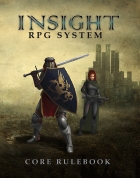
Basics– It’s time for an every system RPG!  The insight RPG system is a universal RPG system that uses a d10 based mechanic for all its rolls.  Let’s give this system a point by point break down.


Mechanics or Crunch– Like all good universal system RPGs this needs a few points for the mechanics.  Let’s break this up.

Base mechanic- This system uses d10 for all its rolls.  It’s an attribute and skill point system that plays a bit like a combination between the Synthicide RPG I reviewed last time and 4th edition Legend of the Five Rings.  Basically, you are six different stats that are similar to the standard D&D array most roleplaying gamers are comfortable with.  This determines the number of dice you roll.  Then, you have skill ranks that you use to determine your success range.  If you are untrained and the skill is something simple like dodge (the basic don’t-get-stabbed skill), then every dice you roll can only succeed on a 10.  However, as you put points into the skill, the success range increases with two ranks meaning the success range is now a 8-10.  If you roll a 1, it is a fumble and never good side effects can occur.  So a person with four body control (think dexterity for D&D/Pathfinder) who is shooting a gun with four ranks in the skill will roll four dice and can succeed on a 7-10.  Some skills are complex meaning they are a mixture of two skills.  When that happens, on skill is instead added as a bonus to your dice pool instead of modifying the success range.  It all works well and quickly after some adjustment.


Difficulty and Challenge rating-Insight builds on the base mechanic by adding two different side mechanics to the game.  Difficulty modifies the success range in the opposite range of skill ranks.  A difficulty 2 task with a character with four skill ranks would only succeed on a 9 or 10.  Challenge is the number of successes needed for a task.  Climbing an ice wall while being followed by a polar bear would be a challenge 3 task needing three success at whatever range and dice pool you have.


Combat-Like most RPGs, combat is a pretty central tenant of the game.  What makes this game interesting is that two different mechanics are introduced for movement and range.  One is a custom system that is a hybrid of theater of the mind miniature combat, while the other is a standard D&D/Pathfinder battle map mechanic.  In the Insight system, players are different distances and these distances represent different areas of the map.  A basics quick diagram of the combat would be a middle band of the combat area where melee combat happens with five different range bands extending on both sides of the melee middle ground.  Both systems use an action point mechanics to determine how many actions you can do on your turn.  Using a larger, heavy hitting weapon takes more action points to swing, while stabbing quickly with a small knife would be fewer points per attack.  One final subject of combat is damage.  Damage works by the attacker rolling his attack dice using the base mechanic of ability dice number and skill number determine success range while the defender rolls defense in exactly the same way with the defender subtracting successes from the attacker’s success total.  If the attacker still has successes after defense, the number of attacker successes remaining is multiplied by the weapons damage value and the defender subtracts his/her armor value from this damage.  Damage also affects specific areas of the body as a random dice roll is used to determine hit location.  Each location can only take so much damage before the character begins to take penalties to attacks, defense, and skill values.


Magic- Insight is a universal system set up to run your steampunk game to your high fantasy, future magic system.  Magic is a complex skill with a separate pool of points a player spends to cast spells similar to magic points from the Final Fantasy games.  It’s also elemental based with different elements being separate skills and granting separate effects such as fire doing damage and spirit healing and summoning creatures.  Like everything else, it’s well presented with examples.


Summary-Overall, I liked this system.  I do have a few problems with it.  First and foremost is the way skill dice work.  It’s confusing to get a higher skill number but that lowers the acceptable dice values for a skill check.  Now, if you can follow the basics and you play for over 30 minutes, you will be fine and completely understand how the game is played.  But, it’s a little new user unfriendly.  I do like the addition of the two ways to set up combat.  I don’t think I’ll use the Insight introduced distance system at my table, but it’s a new, well designed system.  In summary, Insight might not be a perfect system, but it’s got things that I love like variable actions per turn with action points and successes determining damage.  It’s worth checking out if you get a chance.   4.25/5


Theme or Fluff- Full disclosure-I was not expecting any theme from the Insight RPG. Insight is a universal RPG, so most authors don’t put the time in to make a world for the players to destroy.  However, the last chapter of the book is a fantasy world to play in as well as an adventure.  It might not be your favorite world, but this book does have a setting as well as a quick adventure.  There is even a map of the place!  Well done! 4.5/5


Execution– This book has my new favorite execution mechanic-icons for important subsections.  The book understands that the system might not be as simple as say Pathfinder/D&D to get on your first read through.  However, the writers just put an icon next to an example to grab the reader’s eye.  The book also does this for important rules, notes, and optional sections.  It speeds up your reading and rereading when you can glance over a page and get the rules you need right away.  Also, the book does a simple introduction before the first chapter.  You get the game rules as an intro before the book even starts, and as a person who reads lots of RPGs, that really helps me know what I’m getting into.  And, it’s a great reference for advanced players who need a quick start.  There is even art from several different RPG styles and the world in the last chapter has a map that I never expected to see.  From something I always complain about, the book has well done spacing, layout, tables, and font again making this a pleasure to read. 5/5


Summary– This is a well done system that has more in it than I expected going in.  The system is pretty simple if you are accustomed to RPGs.  If you are not, then the skill system might be a bit much for some intro players.  That’s the only negative thing I can really say.  It’s got a story to it that I didn’t expect to read, and the execution of the book makes it fun to read.  Honestly the only thing I want from this RPG is more.  And, NEVR has several extra PDF available to build on your favorite aspects of the system.  You don’t get the custom, out of the box fit for a specific setting you would if you get a system specific RPG, but with a little work this RPG could easily be the campaign setting/system you’ve been searching for.  92%

Ring Side Report-Board Game Review Ortus Regni


Core_TEST_5_1024x1024


Product– Ortus Regni

Producer– Jon Sudbury Games

Price– $45 here http://jon-sudbury-games.myshopify.com/collections/frontpage/products/ortus-regni-core-box

Set-up/Play/Clean-up– 30-60 minutes (2-6 players)

Type-American

Depth-Medium

TL; DR– This is the coffee table game you need! 95%


2015-03-02_1425265486

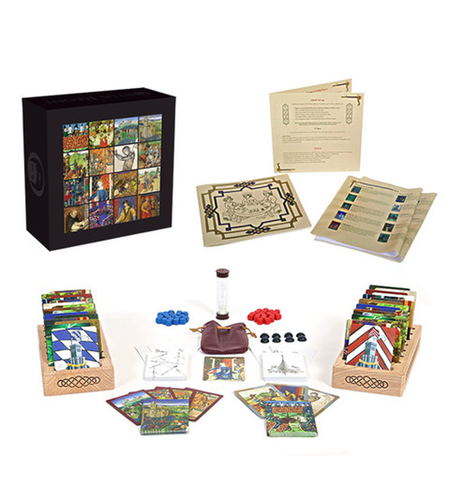
Basics-Forge your kingdom!  Ortus Regni, “Origin of the Kingdom,” is a two to six player card game of dueling earls fighting to create their own kingdom.  The only way to do that is to be the last man or woman standing.  Each turn, a player can take one action and then has to draw one card.  That’s honestly the whole game, but don’t let that simplicity fool you.  The actions range from declaring battle, starting a joust, using a monk to look at another players hand, sending emissaries to the Vikings, and just playing any card from your hand face down to act as a defense of a location.  Every player starts with one location:  their palace.  From there, cards will give you new locations, such as castles which can start a new location, lands to get more soldiers, churches to get favor in battle, and even markets to get more soldiers from lands.  Other cards can be played from your hand, like vassals and champions, whom you can make lords of your various locations, or intrigue cards that can kill other players’ lords or steal soldiers.  Battles are also very simple, as the attacker sends a number of cards at the defender.  Some of the cards may come from the soldier draw deck and some may be lords of fiefs.  The defender can play cards just like the attacker. Then a card is drawn from the battle deck which randomizes the results of the battle, with results ranging from determine damage as normal to a side may not be damaged in this battle.  The other aspect of the game is the Vikings.  The Vikings represent the wild cards of the game.  Each round, if no player attacks, a black token is placed next to the Viking deck. After eight black tokens are placed near the deck, the Vikings arrive.  Control of the Vikings is determined semi-randomly; influence cubes corresponding to each player are placed in a bag and drawn blindly.    Every player starts with a cube in the Viking bag, but some cards allow you to put extra cubes in the bag.  Whoever’s cube is drawn from the back gets to use the Vikings like a club against other players in battles described like above.  The last area I want to talk about is the joust.  Jousts allow earls to steal land from other players.  A player can use a banner card to cause another player to ante up a piece of property as well as ante up a wagered property of his or her own.  Players then draw two cards from the joust deck and see who makes the better hand with the lord they send to the joust with the winner taking the anted lands.  This isn’t all that complicated a game, but the most interesting part of all this is the fact that the game isn’t played with any rules on the cards!  That’s right; every card is just a gorgeous medieval painting.  If that doesn’t grab your attention, I don’t know what will.


Mechanics– Let’s start with the bad before I start heaping praise on this game.  Ortus Regni doesn’t add anything completely new to the card game genre.  It’s got deck building, attacking card bases, different paths to victory, as well as non-player characters that attack other players.  However, what this game does really well is incorporate all those things together.  When I say it doesn’t add anything new, that kind of like saying eggs, flour, butter, and sugar are not really new.  Separate, they are all great things that are done well by others, but together they make an amazing cake.  This is a cake game. Good pieces mixed well together.  It’s not the most revolutionary card game out there, and for some, it won’t kill their Magic addiction.  However, if you want a card game with a single buy in with multiple strategies to exploit, then this is well worth your time and money. 4.5/5


Theme-If you’re willing to invest in theme so much you’ll exclude words on your cards to keep players that engaged, you get a five.  It’s just that simple.  However, past the artistic choices in the game, the game does feel like a battle between lords.  It changes on a dime, shifting constantly as intrigue, Vikings, and straight out battles all cause the world to shift as any political landscape would.  While there are points where the writing is on the wall for an individual game, even then a few events like defenders don’t get damaged, or a random draw of the Vikings can change a game’s outcome.  It feels like I’m making good choices as well as walking the luck line.  I don’t feel like I’m cheated when I lose by luck or win by luck.  It’s got that balance down phenomenally. 5/5


Instructions– The rules are good, but a few things could help them be great.  First the good.  The rules are well done with lots of spacing, examples, and pictures to help new players learn how to play the game.  This is even complemented by the quick start rules that get players into the action really fast.  However, the rules tend to be a bit long, and the absence of an index really hurts quick look up when you need it most mid-game.  The game is simple enough that after that first, semi painful game where you have to constantly look up the rules over and over again you won’t need anything more complicated than the quick rules.  Adding an index would make that first game a little smoother, and make future trips to the rules move even faster.  However, overall the rules do a good job, but need a few tweaks to be excellent. 4.5/5

2015-03-02_1425265596


Execution-Hands down a 5!  I can completely understand the apprehension players may have with a card with no instruction on the cards.  But, anyone who sees this game absolutely is astounded by the art and the packaging.  Here is my video of the unboxing of this game. https://www.youtube.com/watch?v=2GnAYl-tCwc  Just look at those parts!  Everything in this game is a painting.  The box is nice thick cardboard that won’t fall apart.  The instructions are well done, with a few small problems, but they are printed on nice thick paper.  Heck, even the paper is the nice textured paper that feels more like an ancient manuscript than a simple rule book.  It’s got quick start rules to help you get right into the game, and the training decks teach you the rules without having to spend a ton of time even learning the rules from the book itself.  This is the kind of game you buy and put on a coffee table as an art piece.  5/5


Summary– I’ll admit I was a little hesitant to dig into this one.  It looks beautiful, but the loudest question you will have going in is “How do you play a card game with no printed rules?”  But, honestly, you don’t need them.  The fact the game comes with such top notch components like a cloth card indicator really helps you as a quick reference.  And the lack of words makes the game that much more immersive.  The only way I could have gotten more into this card game was some mead and a turkey leg roasted on a spit.  You do feel like an earl in your hall trying to dominate the others at the table.  The instructions are good, but a few tweaks would make them great.  However, the execution of this game steals the show.  The card game isn’t the most unique game that I’ve ever played, but when you see the parts work together and how they look on the table, it’s honestly the most beautiful game out there.  Heck, the game even comes with wood deck holders!  This is a game you set out for other to see, and play when you get a chance.  Deck building isn’t that long, and it will well be worth your efforts to do so.  For the price, fun, and sheer look of the thing, this is a must add game for your collection.  95%

Ring Side Report- RPG Review of Liber Arcanum

Product– Liber Arcanum

System– Dungeon Crawl Classics RPG

Producer– Cognition Pressworks

Price– PDF ~$10  here http://rpg.drivethrustuff.com/product/139777/Liber-Arcanum

TL; DR– More wizard options than you can shake a wand at.  90%


Basics– Behold the Book of Secrets!  Liber Arcanum contains new wizard and elf player options for DCCRPG.  This book contains the expected new spells but also has patrons, new subclasses of wizard, magic items, and more.


Mechanics or Crunch– Here is where the book shines.  I love DCCRPG, and play it every other week.  But, Goodman Games doesn’t make many player options.  This book is an excellent addition to any player wizard.  It’s got an impressive amount of spells as well as new patrons that come fully fleshed out.  Every spell get’s several pages describing it in detail as well as giving all kinds of interesting flavor.  It’s an easy drop into any DCCPRG game. 5/5


Theme or Fluff- Theme is another home run for this product.  I’d expect, in book of spells and patrons, spells and patrons, but the book goes a little further by adding little story bits as well as art to draw you in. The arts not perfect, but it does a great job of telling a story.  Furthermore, the book even has a cosmology.  That is way more than I expected from a simple spell splat book. 5/5


Execution– Of the areas I review RPG products on, this is the one area where this product struggles.  Some white space would really help this product.  The first chapter adds lots of content, but it’s pretty text dense.  A few tables and some more art would have really helped break that up.  On the subject of art, this product’s are is ok.  It’s not bad, but it’s not as good as the core DCCRPG book.  That can take away a bit from the text, but overall, I’m just happy to see some art here. A little more space, some organization changes, and some art touchups would help this product make it over the top.  3.5/5


Summary– It’s always good to read some more DCCRPG.  Strange fantasy is always a crowd pleaser, as is this book.  It’s a massive 300 pages with lots of content ranging from the expected spells to the unexpected planer diagrams.  That’s pretty impressive from a third party publisher.  However, it’s not without its faults.  The art is a bit off in places and the font size and spacing could use a bit of work.  However, that doesn’t detract from the awesome content in this one.   A well done tome that should be found in any wizard’s library.  90%

Ring Side Report-Board Game Review Brew Crafters

2015-02-01_1422748959

Product– Brew Crafters

Producer– Dice Hate Me Games

Price– $60 here http://www.dicehatemegames.com/games/brew-crafters/

Set-up/Play/Clean-up– 90 minutes (2-4 players)

Type-Euro

Depth-Medium

TL; DR-An excellent intro to hard core Eurogames with a clean aftertaste. 97%


Basics-Crack open a cold one!  In Brew Crafters, players take the role of different microbrewers trying to be the local best.  While this is a Eurogame through and through, it’s actually not that complicated.  Each turn is divided into two basic rounds.  Round one is action selection at a market.  Here each player takes turns placing two meeples on different market spaces that get you money, the first player marker, specialist for your brewery, hops, malt, yeast, and special ingredients.  Next, players enter the brewery and place their brewery worker meeples on either brew beer, expand, or research with multiple workers from multiple players being able to take the same action.  To brew beer you have to spend the ingredients for each type of brew, and then the brew enters the pipeline.  The initial pipeline brews one beer at a time, but it takes two extra brew actions to be able to sell that beer.  When you start to brew a beer, you get victory points for the brew.  Also, if you are the first player to brew a beer, you also score extra points.  The expand action gets extra locations for your brewery from a garden that makes fruit or hops to a tasting room that brews beers in two rounds instead of three.  The research option lets you move up tech tracks that start by giving you extra resources, provides a resource every four turns in winter, increases productivity, and ends with a way to story extra victory points at the end of the game.  Each turn is one season starting with spring moving all the way to winter.  At the end of each year’s winter, each player has to pay for their brewery workers, specialist, and add-ons to their brewery.  If you can’t pay for your additions, you get money from the bank, but take a small victory point penalty.  At the end of three years, the player with the most victory points wins.


Mechanics– This game is deviously simple for a middleweight Eurogame.  Place two workers to buy ingredients, then place one action worker to do stuff at the brewery.  That will be about ~60% of your turns till you get a second action worker.  That seems simple, but the complexity comes from what that brewery worker does in your factory.  Players get a ton of options, and finding the best interplay of those options is how you win, and you don’t need encyclopedic knowledge of the rules to find that optimization strategy.  And, just like any good euro out there, just because you find one working strategy doesn’t mean it won’t get trounced during the next play through as the other players may be refining a strategy of their own.  It’s all amazingly well done as the mechanics work together like a well-made clock. 5/5


Theme- I liked this one.  I did feel like I was creating a microbrewery from the funny names of the beers to the farmers market where I got the ingredients to brew.  Also, the mechanic of not having to pay until the end of a year is interesting twist in the theme and mechanics.  I don’t pay to build on the brewery at the time, but I have to pay a bank for the loan to build my stuff and pay my workers after a bit of time.  That honestly feels more real than paying up front like in other Eurogames.  Like all themes in Euro-worker placement games, there are a few hiccups like “why can’t I buy more hops from somewhere else?”, but overall this is a slam dunk. 4.8/5


Instructions– The rule book is thick, but not too heavy.  It describes the rules well.  It’s thick but not so heavy to be overwhelming.  That said, I don’t want to give a backhanded compliment, but this game does the absolutely best at the worst thing in game design.  The game makes use of both iconographies to show some action as well as some wordy patches.  That’s not bad, but the heaviest word section is the different additions to the brewery and how they affect game play.  All of the brewery additions can’t be written in simple symbols. So the book does do a deep, well done explanation of each addition.  Also, each player gets a player card that describes how each place works in the brewery.  That in my opinion is the best way to deal with the bad situation of complex addition in a game.  It’s not perfect.  It’s a little clunky, but it does do a good job of getting the rules across.  4.5/5


Execution– More videos!?  I put up an unboxing video to show off all the components of this game right here http://youtu.be/7ONr50Lvfo4 . And, man, are there a ton!  All the pieces are well done and made from some nice chunky cardboard.  I like what’s in this box.  Nothing’s like a five pond board game.  I would have liked some more bags, but bags did come with this box so I’ll take what I can get.  Keeping your parts organized will be the best thing you can do to keep this game playable.  If your parts get mixed up, you are going to hate the amount of time it will take to play the game the next time.  But for $60 bucks, you get a ton of well done stuff in this heavy package.  5/5


Summary– This is an awesome version of Agricola that I can get my wife to play.  It’s got development of your property while still having worker placement, action selection, resource management, and tough choices while not being the punishing experience that Agricola can be.  Even if you don’t get what you want, you can still get some great options that allow you to build for you next turn.  I get all the fun development aspects of the classic worker placement Eurogames while not having the getting destroyed because I didn’t get the option I needed that turn.  That right there makes this a great introduction to hard core Eurogames.  Great components, theme, and mechanics make this an awesome game. 97%

Ring Side Report- RPG Review of Synthicide Preview

Product– Synthicide

System– Synthicide

Producer– Will Power Games

Price– Prekickstarter Preview!  Check http://www.synthiciderpg.com/ for more information

TL; DR– Firefly, Terminator, Mad Max and Mutant Chronicles combined with sleek RPG mechanics 93%


synthicide


Basics– Man has explored the cosmos, fallen into war, and crashed back into barbarism.  Now, the Tharnaxis Church (a cult of synthetic humanoids) rules the worlds relegating humans to second class citizens.  How will you survive in a galaxy that doesn’t care for you?


Mechanics or Crunch– Let’s walk through the different aspects of this system as there is, alternating, a ton and not much to cover:


Base Mechanics– This game uses a single 10-sided dice for everything.  Want to shoot a guy?  Roll d10+Combat+bonuses (Combat is its own statistic in this game).  Seduce a robot? d10+Influence+bonuses.  This is either verses a pre determined value such as a armor value or verses a Action Difficulty (think a threshold or a DC) for both cases.  Also, your statistics do not have some value you need to determine: a Combat 1 is a +1 bonus to combat rolls, and an Influence 4 is +4 to influence rolls.  Unlike Pathfinder/D&D, I don’t have to do simple math to determine what my bonus is.  It’s quick and clean with no little fiddly bits added on, just the way I like it.


Combat-Combat is interesting as it’s point based.  You get a number of points based on your half your Speed score + 3 (divided down).  Your first attack costs 1 point, your next cost 2, and your third costs 3.  Moves are 1, while defending is 2.  It’s easy, but allows for a player to gamble on what they want to do.  Don’t want a defense bonus for the round?  Make that second attack.  Want a bonus to your rolls that round?  Spend 2 actions to get a bonus.  It’s different from the D&D/Pathfinder move/attack/swift mechanic, and I enjoy the flexibility it provides.  Also, as you move around on the battle field, some weapons allow for quick attacks (think attacks of opportunity from D&D/Pathfinder), but only some weapons.  You can’t quick attack with a claymore, but a dagger works just fine.  This is another interesting nod to reality I liked.


Damage-Above I mention that basics are d10+ability+bonuses.  If that roll hits, damage is the same d10 roll+combat+weapon damage.  I like that how well you hit also determines how well you damage the target.  You don’t reroll the d10, you just keep the same d10 roll from before.  I’ve complained before about how a d20 roll of 17 and a d20 roll of 10 can equally hit the AC 10 orc for the same damage of d8.  This system gets past that problem by factoring damage and attack at the same time.  WELL DONE!


Character Generation and Leveling Up-Characters are created by selecting human, mutants, part robot, or all robot providing some base statistics.  From there you choose an aspect that adds statistics onto the base stats to make your custom character and use point buy to get traits to further specialize your character.  It feels like any other point buy with one key difference.  Point buy will always win for specialization for character generation, but will lose to simpler systems in the time required.  However, Synthicide will hopefully roll out of the gate with a character generator.  The NPC one works great, but the preview did not come with player character side.  Characters earn experience points called trait points (TP).  Your character levels up when you have four gross TP not net TP meaning you have a running total of how much you have earned and a total you currently have.  You can constantly be spending TP to refine your character, but still moving toward leveling up.


Psychic Powers- Synthicide is an RPG that wants to stay rooted in science fiction without crossing over into fantasy like Shadowrun does.  To add “magic” to the system, the game adds psychic powers.  They are well done, and something you may be able to buy based on the physical body you have (complete machine people can’t use psychic powers).  For the most part, these powers are either limited to a number of times per day based on your influence ability or are free to use as much as you want.  Also, something I really enjoy, some powers can be super charged for extra effects that cause you to take damage.  I love cast-till-you-pass-out systems!


Drama-In addition to current almost standard ideas of giving players some chips to cash in for rolls and rerolls based on storytelling and role-play, this game also adds a drama system.  Drama is a number that is added to and subtracted from as the game progresses by player rolls and actions.  When the dam breaks, the drama score gives the GM a guide line on how to add interesting elements to the game on the fly.  It’s a fun, optional system that can help a GM better add to his/her world by integrating more of the players actions as well as dice rolls.


Summary- Synthicide isn’t perfect, but for the most part it’s well done.  A bit more explanation as well as a few more examples like a full combat example and some tables will really help the system.  However, this is a kickstarer preview.  If this is where the game is starting, then they are well on their way to an excellent product!  It got sleek combat and general mechanics.  The rules flow easily, and in general, everything is just set up to be user friendly.  Nothing feels bloated.  I’d like a bit more, but what’s here is ready for show time. 4.75/5


Theme or Fluff- This was a pre-kickstarter preview of the RPG, so I didn’t expect much.  But, I was surprised.  The game has a very fleshed-out world (Or should I say worlds?).  Even the Game Master section of the rules tells you to emphasize how little the world likes the characters.  The one sentence explanation of the story is Man went to the stars, made mutants and went to war with mutants, crashed into the near Stone Age while artificial intelligence took over the galaxy relegating humans/mutants to second class citizens. I get the feeling from this game of a recipe made from equal parts Firefly, Terminator, Mad Max and Mutant Chronicles.  Honestly, that’s a fun place to be if you want a post-apocalyptic space opera with elements of racism and the struggle to survive.  It can use more, but the version I have didn’t have any pictures, so more art will really help this one blossom. 4.5/5


Execution– I received a PDF of the game.  I usually harp a lot on spaces and art, but I’m putting that aside as this is a preview.  What is part of the PDF is the basic system, and honestly it’s done.  The thing I have in my hands would be something you could easily get on Drive Thru RPG for cheap.  That’s an excellent place for a kickstarter to be.  It just needs to be cleaned up a bit by adding art, more white space, and some tables.  Tables would really help some of this product by giving short summaries of what the different traits do.  That’s my major complaint so far is summaries and short tables would help things.  But what is explained and laid out well are the base mechanics and such.  That was a present surprise in an over hundred page PDF.  However, what also came with the preview package were the tools to make non-playable characters.  This RPG doesn’t have a monster manual, and while I want one, it does come with some tools to make characters on the fly with a computer.  That right there is awesome as it comes lock, stock, and barrel with a character generator and slightly ironic as now I’m building machine enemies on my laptop.  Overall, a well done RPG that’s ready to roll for it’s kickstarter debut. 4.75/5


Summary– I like what I see here.  This RPG went up to kickstarter, but was pulled to be refined.  I didn’t get a chance to read the original RPG, but if that lead to what I see now, that was an excellent idea!  What I read through is an easy to read, run, and play RPG set in an interesting galaxy.  It’s not done as it has now art and needs a few minor improvements to really make this one a grand slam.  But, when those are added to the final PDF/book, I think this will be a phenomenal RPG.  It doesn’t bog down the world and mechanics with unimportant garbage just like the mission statement of the company said they wanted to do.  This is one to keep your eyes on! 93%

Ring Side Report-Board Game Review Dwarves, Inc.

Product– Dwarves, Inc.

Producer– Assa Games

Price– I got a prerelease copy!  Here’s the general website http://www.assagames.com/default.htm

Set-up/Play/Clean-up– 30 minutes (2-4 players)

Type-Euro

Depth-Light

TL; DR– A surprisingly deep game of stock market manipulation and underground mining. 98%

2015-01-29_1422574765

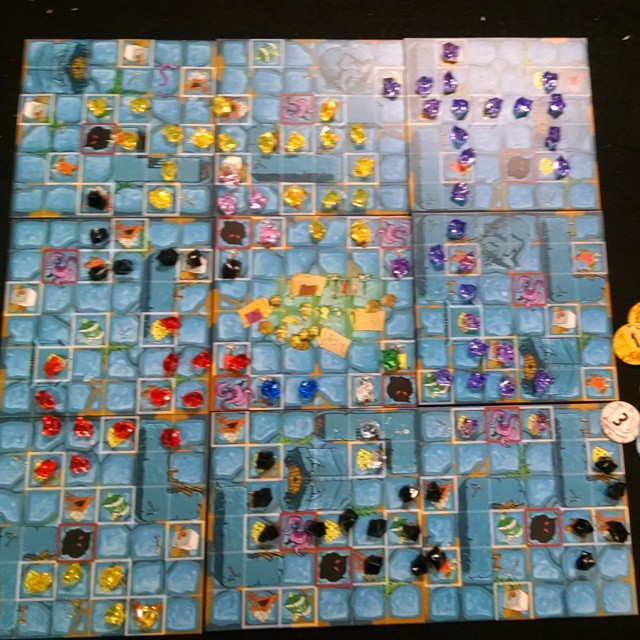
Basics-Let’s get rich!  Dwarves, Inc is a game of mining underground trying to strike it rich. The game is deceptively simple.  Players assemble a modular board of nine squares with the only rule being that the center square is the square with all of the different types of start locations for each mining company.  On a players turn, that player will select three gems and place them on the game board extending a company’s mines off of already played gems.  Some spaces you cannot cross, unless you have a card that says you can, and are marked in red.  If a play extends the mine into a specific space that player gets something for his/her player board.  These space bonuses range from finding extra dwarves who score gold later, tunnels to teleport across the game board, lock boxes to put more gems in your player board safe, treasure chests to earn random effect cards, and gold cashes to earn gold.  The player with the most gold wins, but how you earn gold is the interesting part.  When a mine extends to a cash of gold, all players look to see who has the most gems of the company’s type that landed on the gold space each player in their player board safe.  The person with the most gets a number of gold depending on their number of dwarves.  The person who has the second most gems of that type gets less gold per dwarf they have on their board.  And finally, if the person who extended the mine onto the gold space didn’t get gold because other players had more of that company’s gems on their player board, then that player gets a smaller amount of gold.  Each player starts with four different types of gems (the player’s choice) and four dwarves.  After extending the mines for on a player’s turn, that player can trade one gem from their player board for a different gem from the bank.  Once all the different gold cashes on the map have been claimed by the various companies, the games over and the player with the most gold wins!


2015-01-29_1422574847

Mechanics– This game feels simple, but it’s nothing like that.  The entirety of you turn is placing three gems, and then exchange up to one gem in your storage area.  But, the manipulation of how mines/companies are extended is amazing.  Do you remember that simple game where you have to complete boxes on a field of dots one line a turn, but whoever completes the box get points?  This game feels like that in a good way. Having the most gems of a type is good, but having too many of a type is not great.  You have to subtly manipulate the gem stock market to make other players think that they can score more points than you.  Also, making sure off turn other players are earning you gems by having the second most gems is an amazing way to get ahead.  It’s a surprisingly devious game that plays out in a relatively short time span.  I love it! 4.8/5


Theme- The theme isn’t perfect, but for as quick as this game is, I love what I see. The game uses these little gems for everything which is amazing and a tiny bit off.  The gems represent your investment in a company and work great in your safe box, but at the same time they are also used as your tunnels on the board.  That’s the little bit off part.  But I do like the nice tactile feel of them.  Aside from my nitpicking on that, the game does feel “dwarfy” enough.  The dwarf companies are competing underground at digging companies and you are alternating between directing them and speculating on their progress.  More dwarves will earn your more gold as more dwarves can do more work.  Overall, this does feel like an underground dwarf game even with my tiny nitpicking criticisms.  4.8/5


Instructions– The instructions are short, but really well put together.  There is enough white space for the rules to be read quickly, and the explanation is done really well.  I was playing this game in less than 5 minutes from cracking open the box.  No fuss, no muss, just well done rules that explained things for me. 5/5


Execution– It’s time for a video!  I did an unboxing video for this game, so check it out here!  https://www.youtube.com/watch?v=LJDLmxWt2rI  I have a preproduction copy, but this is what you can expect to get in the box.  In the theme section of this review, I mentioned how I had some problems with the gems, but I’m of two minds on this one.  Unless Assa game cranked up the cost of the game and made little dwarf meeples, gems do a decent-to-good job representing the mines and investment in the different companies.  I do like the nice 3D shape that they are and the feel that have.  The board is well done and the modularity makes for some replay even with how short this game is.  I even like the cards.  The event cards are not the standard cardboard that most games are, but the newer plastic cards I’ve seen more often lately.  I know it’s new and feels a bit different, but honestly, I prefer the plastic over the older stuff as the cards don’t fray as quickly.  All told, this is a well done game. 5/5


Summary– I have almost nothing bad to say about this game.  It’s a fun game who’s strategy comes at you like a sidewinder snake.  If you take this game as a simple game about mining dwarves, you will lose.  If you really think about your choices and learn to manipulate your fellow players, you stand a good chance of winning.  And I like that.  This game does not have Twilight Struggle levels of strategy, but this game is also easily playable in 30 minutes.  And it’s teachable in less than five minutes out of the box.  You will spend more time opening this game then having to explain this game, and that’s the sign of a good game.  It’s well worth your time and your money.  I look forward to what Assa Games comes up with next. 98%

Ring Side Report-Board Game Review Machi Koro

71ejd-+L7TL._SX466_

Product– Machi Koro

Producer– IDW Games and Foxgames

Price– $30 here http://www.amazon.com/IDW-Games-665IDW-Machi-Board/dp/B00JGHCBZA/ref=sr_1_1?ie=UTF8&qid=1422494958&sr=8-1&keywords=machi+koro

Set-up/Play/Clean-up– 20-30 minutes (2-4 players)

Type-Euro

Depth-Light

TL; DR– A good lighter, quicker version of Settlers of Catan. 88%


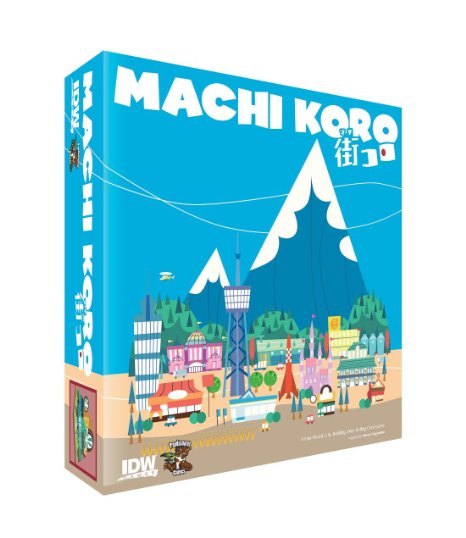
Basics-Who’s the best mayor of Machi Koro?  In this game each player has just been elected the mayor of the city and starts with two cards that represent the building in the town along with four public works.  The building come with numbers ranging from one to 12 while the public works give you new abilities to the ability to roll two dice or reroll.  On a players turn, he or she rolls one six-sided die and every player consults the cards they have.  Some cards give you money on anyone’s turn, some only on your turn, and some steal from the player who rolled the dice.  After rolling the dice, the player can buy a card or build a public work.  Then, play continues with the next player doing the same.  The game ends when one player builds all four of their public works and is the best mayor!


Mechanics– This game is like a less complicated version of Settler of Catan.  That doesn’t make it bad, but it somewhat simpler.  There are some choices, but don’t look for Rococo level’s of depth or strategy here.  It’s fun and you can make some plans.  However, even the best strategy can be ruined by rolling like crap for half an hour straight.  Also, there is no real way to deal with a runaway leader.  That person either rolls something or the other players have to luck out and steal from him/her with specific buildings.  It’s fun, but has some balance issues. 3.75/5


Theme- The theme in this game is kind of off.  It’s cute and easy to play, but why are there up to four mayors of the same town?  I felt more like a land developer than a mayor.  I did have fun, and I did feel like I was building something, but I didn’t feel like the leader of a town.  In addition, I also don’t understand why some buildings hurt other players.  Why does my cafe steal from the other players?  It does feel light and cute, but I don’t get some of the feelings the designers hoped I would have. 3.75/5


Instructions– You can open this game up, read the rules, and be playing in less than five minutes.  The game isn’t super complicated, and the rules don’t over compensate things either.  I like what I’m seeing here! 5/5


Execution– The game is some dice, some money tokens, and some cards.  It’s not much, and others have done similar things.  But, this game is one of the best executions of these basic components.  The dice get their own separate areas of the box while the cards have nice dividers to keep things from getting messy.  Also, the art is nice and cutesy.  And the best part is all this is on some nice high quality cardboard and plastic box inserts, so the box doesn’t feel like it’s going to fall apart! 5/5


Summary– I love Settlers of Catan, but sometimes it’s hard to get a game in.  This one feels like Catan, but is much quicker and lighter.  You can’t expect a ton of strategy though, and the theme of being a mayor feels a bit off.  However, if you just want that quick Catan-like game experience or need an under half an hour quality game, this is a great option to have.  90%