Basics– Ok, but who’s behind all this crap? Field of Maidens picks up where the book two of Blood Lords left off with our heroes being summoned to find who’s behind the poison plot. But along the way bodies start to pile up…
Mechanics or Crunch– The crunch here works well. Paizo understands their system the best, and it shows. The combats were balanced, and my all undead party had monsters where they could FINALLY use negative energy to damage. There is some serious social interaction along the way as well as a bit of exploration. Fun all around. 5/5
Theme or Fluff– The adventure works, but some of it feels like fluff. This adventure has the characters go after a newly undead creature from the first book. As they track them down, they learn about the new creature, but some of the events along the way are kind of out of left field. There is about a third of the adventure in the field of maidens that felt like it really wasn’t necessary. It works, but it’s a bit of fluff that might not really build out the main quest. 4/5
Execution– Paizo knows their stuff. Paizo made this so there is good art, hyperlinks, good layout, and an easy to read style that makes this easy to approach. Solid production all around. 5/5
Summary– This adventure is fun, but be ready for the filler episode. The middle third isn’t really necessary, but the rest does advance the plot. The monsters are fun, combat enjoyable, and the social interactions are well done. It’s a well done book with a bit of filler. 93%
TL; DR-Missing pieces and price hurt the product. 83%
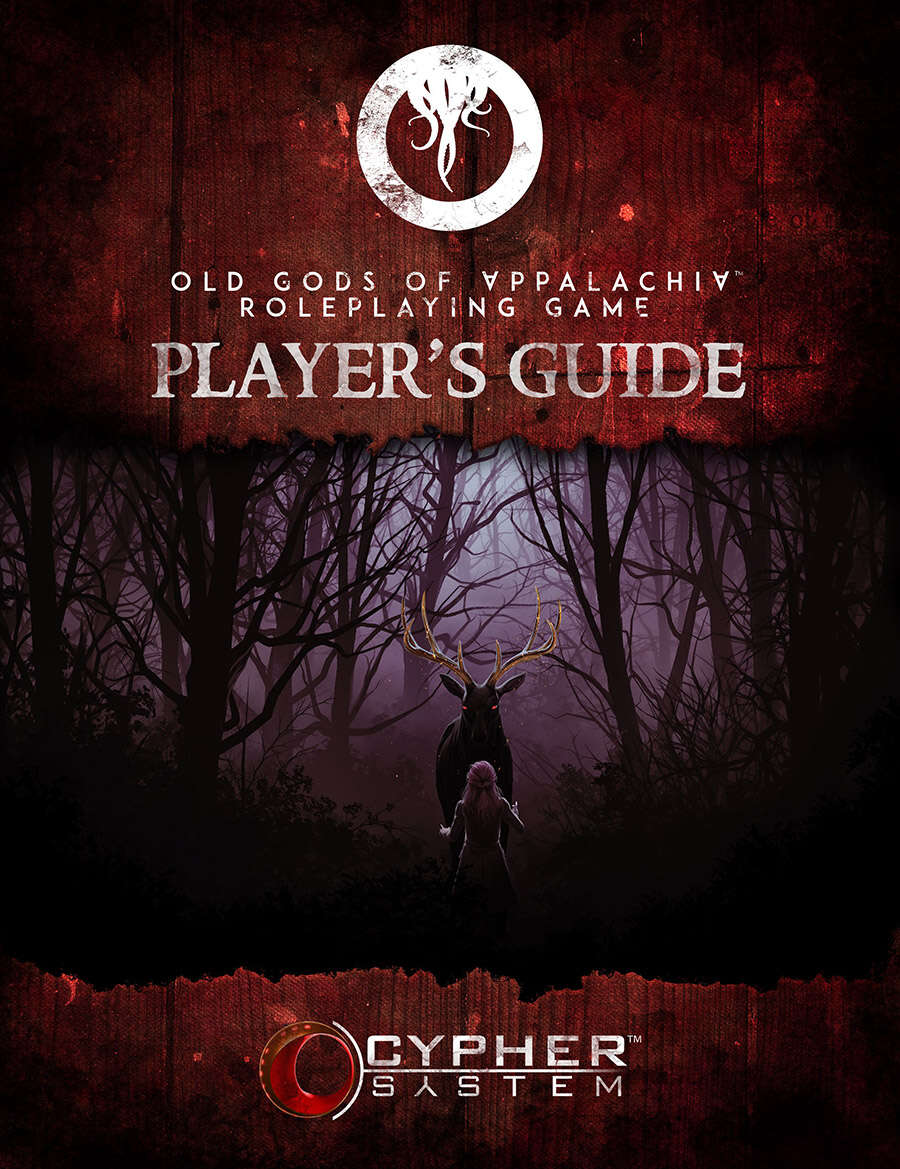
Basics-What’s that in the woods? Old Gods of Appalachia is a horror podcast made into an RPG using the Cypher System by Monte Cook Games. Let’s see what is in that hollar down yonder!
System et al- This is the Cypher System you know and love. You lose points from each pool instead of being dealt damage on a condition track. Besides that, this is the cypher system that you either hate or love.
Cyphers- So what’s a cypher? I don’t think this book even explains it. That’s a major problem…
Mechanics or Crunch– This gives a decent intro to the cypher system, but it has a major flaw not explaining what a cypher is. You will learn fast, but the fact the book doesn’t explain this is a problem. The system is explained decently and you get enough background to play. The book comes with four complete characters so you can get playing fast. 4/5
Theme or Fluff– Here is the high point of the book. This book spends lots of time explaining the world of the American coal country during the period of 1900 to a little past WW2. It’s deep but leaves more room for you to explore. This is honestly most of the book. 5/5
Execution– This is good, but WAY TOO expensive! This is a 32-page book that costs eight bucks. AND IT DOESN’T EXPLAIN HOW A CYPHER WORKS! This should be a free product and there is a free intro version that is 17 pages. This is a lot of exposition and four characters. It’s done well, but the art is recycled in the main book, so it’s just too expensive. 3.5/5
Summary– This is a decent product hurt by a few key issues. If you have this, you have four characters that you can instantly run in someone else’s game. That’s good. You will understand the rules EXCEPT for what a cypher is. You will find out quick, but it’s the system name! Also, the price is WAY too high for an intro product. This feels more like a free product a company throws out to get interest. Honestly, maybe just buy the core book which is 3 times as much but over 10 times as long. 83%
TL; DR-Run for your lives cypher system horror! 100%
Basics– Begin your statement…. This is the full RPG for the Magnus Archives. This has rules for the cypher system, how to make characters, character options, monsters, two adventures, and a full introduction to the Magnus Archives.
System et al- Cypher system is VERY agnostic for where you put it in. It’s always only the player rolling, and how hard a thing is, is its rating. Players have abilities and can spend points to reduce the ratings of any challenge. Players then roll a d20 and need to hit the rating times 3. Failure isn’t instant death, but does have consequences. Doesn’t matter if it’s Numenera, fantasy, or horror like the Magnus Archives.
Cyphers- Cyphers are one time things that give you awesome powers. In the original system, they were items from a long time ago that might be one time cool tricks, like a cell phone that will let you call five minutes into the future to give yourself a heads up on what problems you’re going to face. Here, cyphers are one time abilities. You rest up and you get these back. I don’t hate the change, but it was surprising the first time I saw it.
Mechanics or Crunch– This is what I wanted! This book has rules for the whole system. One shocking thing is how powered the monsters are! Most monsters start at a challenge of 5. That means a character must roll a 15 if they want to hurt them. This goes with the theme, but the game says that you need to RUN when bad things happen. You’re just a dude and that zombie will eat you. But, that ties the theme well into the story. Also, most characters are not crazy psychic monsters like the X-men. You might get some psychic powers later, but for the most part, it’s hitting that zombie with a baseball bat or shooting horrors with a .45 to make them go away. And I enjoy it! 5/5
Theme or Fluff– Theme is strong here as well. Like I mentioned in mechanics, you don’t want too many straight up fights. This isn’t pulp stories or superhero comics. You’re gonna die! And that’s horror. The feeling that that thing in the dark is not just Generic Monster 4 for you to mop up for XP before the pizza arrives is very strong in this book. The mechanics and the theme drive you to feel the dread your character experiences. 5/5
Execution– Monte Cook Games does solid work in production. The book reads easily, has solid art, and is well laid out. Overall it’s just a well done book. I said this last time and I’ll say all the same things again. The one minor issue is this book has two adventures but no premade characters. But I will give it a pass as the free player book has four premade characters in it. 5/5
Summary– This is a good book, but you have to decide what you want. If you want more modern horror, then this is a solid book with great mechanics and a whole podcast behind it. If you want to punch Cthulhu in his tentically face, then this is not the game for you. Also, the podcast is well done but technically over. That’s not bad, as you get a complete story, but might drive some players away. If you like the cypher system and want horror, then this is your game. 100%
TL; DR– Good, but this doesn’t cover most of the basics. 80%
Basics– What’s your statement? The Magnus Archives is a podcast that was adapted to the cypher system. Players take the roles of investigators looking into paranormal events. WIll you find what’s causing all these strange events?
Base Mechanics- This is the cypher system. Players state an action, and the GM states a difficulty. The difficulty times 3 is what the player needs to roll on a d20. If the player wants to lower the DC, players can spend points from a pool for mind, body, and dexterity to reduce the level. The GM doesn’t roll dice!
And that’s it. It’s built on the basic cypher system.
Mechanics or Crunch– This book gives the very basics of the cypher system, but dont expect to play the game with this alone. You can’t build characters with this. Nor can you really run a game with this alone. You get the base mechanics of this game with a good explanation, but you get no options. It has pregenerated characters, which I love, but it’s very bare bones. 3.5/5
Theme or Fluff– There is more here, but it’s very basic. I don’t know what the Magnus Archives are and why there are statements. I know there are podcasts about it, and I’m interested in them now. But I don’t really know why or who is doing the investigating. What’s here will draw you in, but you will need the full book to get those answers. 3.5/5
Execution– Monte Cook Games does solid work in production. The book reads easily, has solid art, and is well laid out. Overall it’s just a well done book. 5/5
Summary– For the price of free, this is a good intro to the Magnus Archives. If I had paid for this, I would be upset. In a player’s guide, I expect a bit more character options and explanations to the game. This has a decent explanation, but no options. I also expect a bit more in terms of world building. I’m intrigued, but I have no answers to what is going on. As a product, this is a good book for production. I want a lot more, and all of that is found in the main game book. Worth a look at free if you want to see the basics of the system and world. 80%
Basics– Welcome to the shadow war! In CthulhuTech, magic has returned to the world and it has merged with all the tech of the day. However, strange Gods and Cults now use this for their own goals. This will not end well for mankind! This book has several pre-generated characters and a walk through of a very simple adventure with mechanics to introduce the new version to new players.
Base mechanic- This game uses a d2 system. Basically you have a skill and an attribute. You roll dice equal to their total for an action. If you get odds, you fail on that die, and evens are successes. Get enough successes and good things happen. This goes all the way through to combat and chases. It’s a VERY simple system.
Mechanics or Crunch– This is a simple game intro for a simple game. But it works. This is not crazy complex with all kinds of modifiers. I’d put this closer to a Fate system. If you want rules lighter but with some choice, this might be the system for you. 5/5
Theme or Fluff– This adventure is good, but the layout is both good and annoying. The characters have their own sections which is nice. The GM doesn’t get a lot of introduction to the system before reading box text. The game primarily teaches about the world and mechanics by box text. This is good as an intro,but I still don’t know too much about the world itself. I also feel its not really tech-based any more. I feel this is just magic or even more closer to Persona with the characters basically using summons to fight. I’d like more tech and less Cthulhu in this game. 4/5
Execution– This works well. The book has separate character sheets, pictures, and a nice layout to make it easy for players. For the GM, there are nice sections to guide the GM so they can guide the players into the story. It flows easily and quickly for a fun one shot adventure. 5/5
Summary– I am intrigued by this. It’s fun and simple. I typically like more crunch, but this works well enough for what it wants to be. The world might be better served with more build up. There is story here, but I feel like I’m missing a lot. This is due to it being a quick start. I am interested in the full book, so it did its job. 93%
Basics– Pathfinders, are you ready to PARTY!? This intro scenario for this year’s Pathfinder Society season has you go hobnob with the snobs of Absolom to make a good impression. All you got to do is be nice, show the Pathfinder Society is good, and make a friendly impression. What could go wrong?
Mechanics or Crunch– This adventure’s mechanics are on point for an intro adventure. There are about four different encounters in this adventure. It’s pretty heavenly split between some social, some light exploration, and combat. All of them feel like they fit for the levels they aim for. This adventure is the standard excellent Paizo crunch I expect.5 /5
Theme or Fluff– Intro adventures have tough ground to cover, and this one does well, but it’s not perfect. The adventure has the players go to the party, and start with a few different mini interludes. These work well, but players can’t see all the characters and their small side quests and vignettes. Not bad, as the forced adventures where players have to do all the side quests get a bit story heavy, but these all kind of boil down to “do good and learn that one person doesn’t like you”. Next there is the new antiPathfinder group who aren’t evil, and you have to avoid them. Then you quite literally have to fight devils and then save someone’s life. After that people try to run you over. After that you must convince everyone you’re awesome after literally saving people from the devil. Lastly there is one last optional combat that’s fun. The story gets a bit disjointed as you save them every step of the way, but people still don’t like you. Maybe that’s more realistic than I think having just reread that again. 4.5 /5
Execution– This is just a yadda yadda of all my other Pathfinder reviews. Good layout, easy reading, good pictures, good resources, good handout….yadda yadda yadda. I expected Paizo to make a good layout for the adventures, and I got it. I might quibble about not having all the monster pictures in the book, but that has more to do with there being three different fights possible in the middle, but seeing as those on their free database with pictures, that feels too pedantic for even me to downgrade them for. 5/5
Summary– This isn’t perfect, but this might be one of the better year intro adventures out there. The mechanics are good. The flow is not perfect, but it works decent enough. The adventure itself is solidly crafted. It players in under four hours, and is fun enough that everyone had a blast. If you want to jump in to Pathfinder Society, this is a good starting point as either a GM or a player. 97%
TL; DR-New and old combine to make a fun D20 game. 90%
Basics– Welcome to the world of Ancerra! MythCraft is a kickstarter from last year that works via several talents and a base system you already know if you played most other DnD style games. Let’s look at how the system works.
Base Mechanics- This is d20+attribute for attacks and D20+attribute+skill ranks for skills. You attack with a sword? Add your Strength to that d20. You shoot a bow? Add your Dexterity to that d20. You know it, I know it, and we both love it.
Attributes- each level you gain +1 attribute point. Your bonus in an attribute can NEVER be more than half your level +1. So a sixth level fighter can’t have a strength greater than +4. It’s easy enough to keep track of and familiar enough to be easily applied.
BOP-Characters are built from a Background, Occupation, and a Profession…. and a lineage. Lineage is your race. You gain features at specific levels that are lineage specific. The lineages range from your standard human to constructs to even undead and kind of robot people. Backgrounds give you skills you can put points into and occupations it should lead into, and professions are the job you do for money and it provides additional skills and bonuses. Both professions and occupations deal with tags. Tags are information that the game uses to identify important things and prerequisites for bonuses.
Classes- At second level you can choose a class and here is where the game REALLY opens up. There are over 10 classes. These classes have different paths that lead to different talents that give you different abilities. This game uses talents for lots of different abilities and honestly you could use the word feat from DnD and Pathfinder and you would completely understand what the game means. But unlike the strategic direction that DnD 5e went in to avoid feat trees, this game leans HARD into feat trees for the different classes and subclasses within each.
Skills- Your background provides you with a number of skill points, and skill and subskill options you can spend those points on. You gain skills each level as well. The amount of skill points you can put in each skill is limited by your background.
Combat-All the normal things you know and love for combat are here. You roll initiative at the start of combat but it’s based on your awareness attribute instead of Dexterity or Perception. BUT here is where MythCraft separates itself from other games in the DnD space. Each action takes action points. Instead of DnD’s Move, Minor, Standard or Pathfinders three actions, each character gets three action points and more based on your coordination attribute up to 8. Each action you do takes different action point costs. Some spells cost one point while some might cost over four! Stab someone with a dagger will be two points, while some things like a Greataxe are eight minus your strength score, minimum four. You may need to build up to the big boy big toys that do massive damage, but a nimble elf with a dagger might get four solid dagger strikes in a turn. If you hit the armor score, you do damage via rolling different sized dice.
Magic-Magic is more akin to Final Fantasy in this game. You get spells via talents and classes, but you don’t prepare spells like in DnD or Pathfinder. You have your pool of points, and you spend those points as well as action points to cast spells. You can cast the same spell all day long as long as you have the points you need for it.
Ok, Let’s do my thoughts.
Mechanics or Crunch-This game is different and the same at the same time. The D20 system and its children are alive and well. It’s put to good use here being both new and old at the same time. It’s easy to pick up, but not a carbon copy of 5e, 4e, 3.5, or Pathfinder. It is easy and fun to play. I don’t know if most people will get to level 30 and have a crazy high coordination to get those crazy turns, but it is an interesting game where you get to do all kinds of different actions or the same action. 5 /5
Theme or Fluff– My complaint about this game is there is a lot here, but not enough story about the world. The different character options provide a story, but there is not enough about the world as a whole to draw me in. The races all have backgrounds that are cool and intriguing. The classes have story in them and the art makes you see what they are. The gods and pantheons are all interesting. But, there is not a world story in this book. You get that there is some planet you are playing on and there is some fantasy things happening like demons bad, but beyond that I have no idea who’s doing what. I want to know more, but give me more in this book. There’s awesome here, but I need more. 4 /5
Execution– This book makes interesting design decisions that alternate between paying off and not quite getting there. First, the simple issue of too many different words for the same thing. You have talents and features. Just call them one thing and give them different tags. This game gives out lots of tags to label stuff that’s important. Good, so just have talents with tags for the linages and say you can take them at different levels. It’s what Pathfinder does and it works. The book has several pages with introductions of each class and a picture. It then says go to page XX to see all the class stuff. That’s cool! Those pages are several pages of words explaining each talent. That’s boring, but needed since this is a feat based game. Then after all the feats, the book has each feat tree for each subclass. Honestly I would put those in between each class to show how the different talents/feats have different requirements for each other. I love the diagrams and don’t even mind if they are not hyperlinked inside the pictures. But breaking up 50 pages of text with some pictures will help your readers. Otherwise, this book does the job well, though with a few minor issues. 4.5/5
Summary– This book is someone’s labor of love and how they see d20 RPGs being played. It’s close enough to your old D20 favorites that you will learn how to get playing fast. It’s also different and has enough options that you won’t call this a simple clone of any other game out there. Its issues are in the execution, with a few choices that I feel need a bit more work to reach perfection, and a lack of world story that I feel other books will address. I just wish they were in this one! If you don’t want to play another 5e game but want the simplicity of the math, and you don’t want Pathfinder but want the flexibility of the action mechanics, Then this is the game you and your group should pick up. 90%






 Throat Punch Games