Ring Side Report-Board Game Review of King of New York

Product– King of New York

Producer-Iello

Price– $50 here http://www.amazon.com/King-New-York-Board-Game/dp/B00KU9LQUO/ref=sr_1_1?ie=UTF8&qid=1429421137&sr=8-1&keywords=kings+of+new+york

Set-up/Play/Clean-up– 45 minutes (2-6 players)

Type-American

Depth-Light

TL; DR– A much improved second version. 95%
91H7TLUPYqL._SL1500_

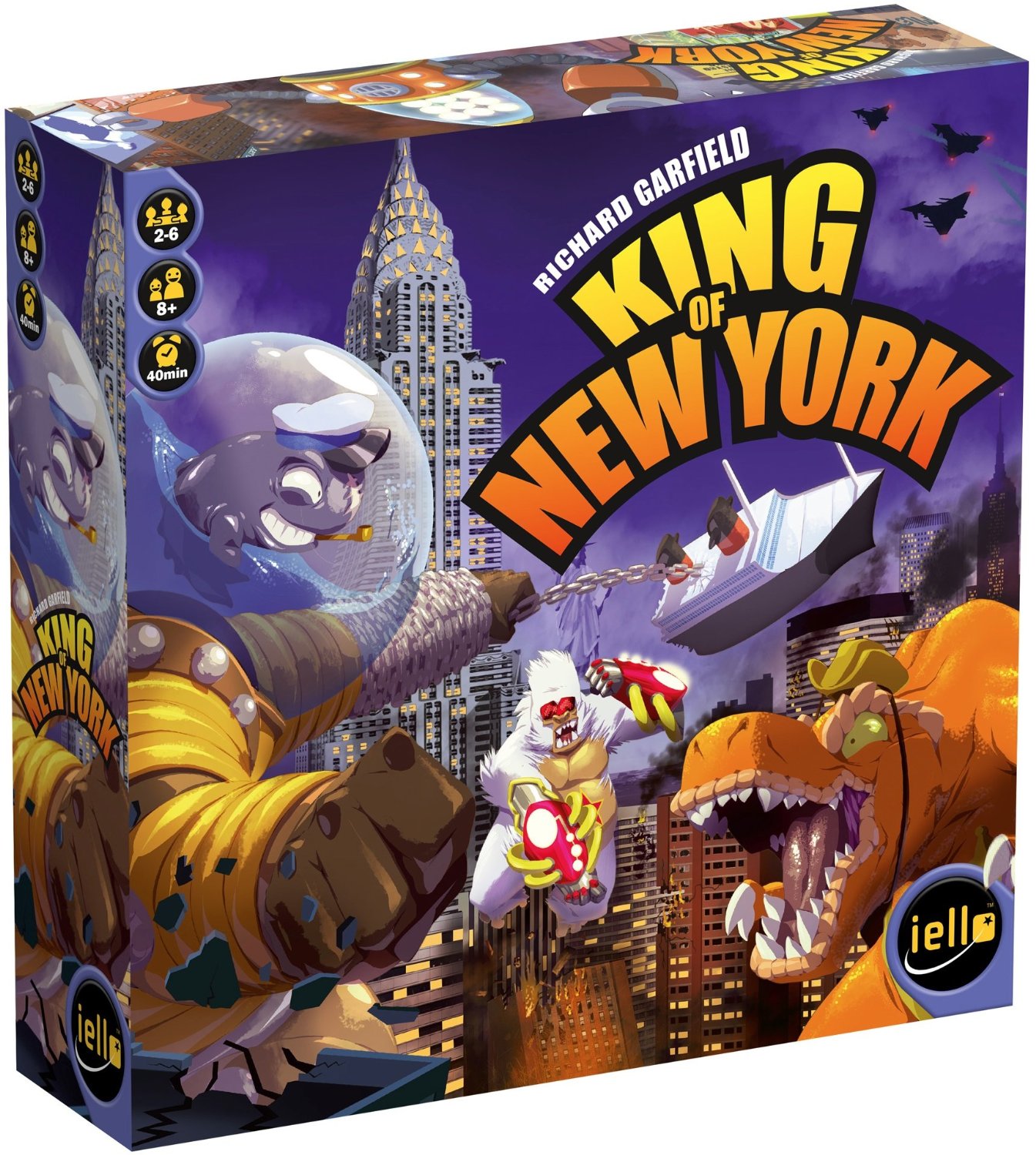
Basics-Time for a rumble in the Bronx!  King of New York is a standalone game that builds on the popular King of Tokyo line.  This game follows a very similar turn order with some significant differences.  At the start of the game, all players choose which of the five New York boroughs they wish to start in, with the exception of Manhattan.  Like in King of Tokyo, a player rolls six dice, and can reroll some, all, or none of the dice.  Each die has six faces with players gaining different effects based on how many of each die each player rolled.  Lightning gives the player energy cubes for each die result that can be spent on upgrades.  Hearts heal the player one point for each heart result while not in Manhattan. Attack damages the player in Manhattan if the active player isn’t in Manhattan, or damages each other player not in Manhattan if the player is in Manhattan.  If the player in Manhattan takes damage, that player can leave, and you have to enter Manhattan instead!  If you start your turn in Manhattan, you gain energy as well as victory points.  The major differences between this and Kings of Tokyo come from the final three dice faces.  A new result is destruction.  Destruction results are spent to turn over tokens in each borough.  These tokens have two sides: red and blue.  Blue sides are buildings that usually provide points or healing.  Red sides are active military units that provide points or power cubes.  Both sides have a number that must be spent to either flip the token or to remove the unit from the board.  This brings us to the next result of Ouch!  Ouch! causes the units to attack players depending on the number rolled.  A one result causes the active player damage equal to the number of red tokens in the borough; two causes all players in the borough damage, and three causes all red tokens to attack all players!  Rolling three Ouch! results will also earn the player the Statue of Liberty Card worth three points.  This card can be stolen, however, when another player rolls three Ouch! results.  The final result is celebrity.  If you get three celebrity results, you gain the Superstar card, one point, and at the start of each round you gain an extra point.  This can also be stolen.  After all the dice are resolved, if no player is in Manhattan, you must move there.  If there is one monster there, you can move there depending on the number of players, or you can move to another borough.  Manhattan also has three areas that can be moved into over time, with the deepest area of Manhattan giving tons of points and energy at the start of each turn.  Finally, you can buy any cards available before ending your turn.  Play continues until there is only one monster standing or one player has 20 victory points.

Mechanics– Just like King of Tokyo, King of New York is about pushing your luck.  But this game feels a lot less like Yahtzee! and more like rolling for specific results.  The changes to attacking units, gaining celebrity, and damaging non-player characters massively change the results of this game.  Honestly, it’s a much deeper experience and one that I enjoy better than King of Tokyo.  Currently though, the monsters in each game don’t have any differences between each other.  It’s important, but not world ending.  This is just like the original King of Tokyo game, so I expect that an expansion is coming up very soon to fix that.  Overall, this quick, easy to learn, fun game that plays well. 4.75/5

Theme– I feel much more like Godzilla in this game than I did in King of Tokyo.  I don’t feel like I’m playing combat Yahtzee!, but instead I’m a 40 story mantis that is destroying New York.   The addition of buildings to destroy and units to fight really drive this home as well as deciding when to just put a ton of enemy units on a friend’s space and then get out of that part of town!  It’s not perfect though.  I don’t have difference powers between creatures, and the basic mechanic still somewhat takes away from the basic monster feeling that I’m supposed to have.  But, I don’t think that can be helped without a massive overall of the mechanics.  4.75/5

Instructions– Overall, the instructions are done reasonably well.  My main complaint is how packed they are.  I’d like more pages with more examples then the cramped four pages I get. It’s not unreadable by any means, and this game isn’t exactly the deepest game I’ve ever player, so overall the rules do a good job.  I’d just like them to be easier to read. 4.5/5

Execution-This is a great game for how it’s handled.  I love the art and the components.  I love large chunky tokens as well as heavy dice.  The box fits all the components well, and just like King of Tokyo; I think it will hold the expansions pretty well too.  The cards are well done, and the tokens all feel nice.  Overall, it’s a great box and presentation of what it contains. 5/5

Summary– I don’t think I’m going back to King of Tokyo.  I like that game, but I really LOVE this game.  I feel like a monster not a person playing Yahtzee!  Yahtzee! isn’t bad, but this is much better.  It’s got a few minor faults, but overall it’s a top notch game that represents the monster genre well. 95%

Ring Side Report- RPG Review of Savage Characters Volume One

Product– Savage Characters Volume One

System– Savage Worlds

Producer– Dragonlaird Gaming

Price– $5 here http://www.drivethrurpg.com/product/137955/Savage-Characters-Volume-1?manufacturers_id=6270

TL; DR-An excellent book full of useful Savage Worlds characters.  95 %

137955-thumb140

Basics– Need some characters quick for your Savage Worlds game? Dragonlaird Gaming provides several characters for fantasy, horror, western, and sci-fi settings for the Dragonlaird Gaming Savage Worlds settings.  Each character get’s a full write up including a picture, a background, a character sheet, a novice character sheet, some character hooks for different character levels, and an advancement plan for the character.  Some characters also get extra setting rules.

Mechanics or Crunch– The best comparison I have for this book is the NPC codex for Pathfinder, and honestly this is much better.  Instead of providing several different characters at each level, this book provides less NPCs and gives you an easy way to drop each NPC into your game at any level.  That makes this an easy to use resource for you game.  Awesome. Even better, this book adds a few new traits for your characters to use.  I didn’t expect to find new character options in this book, so that’s a present surprise!  One bad thing about this book is, if you don’t know all the Savage World rules, then the character write ups will not be as helpful.  Every character has a great write up with all their traits, but if you don’t know those traits off the top of your head, you’re going to be spending some time going back and forth between this book and your other Savage World books. 4.8/5

Theme or Fluff-Each character gets a full right up with a background, description, pictures, and character hooks.  I’ve got a picture to show the players, and I can jump into that character on the fly as a GM based on the character hooks and story provided.  These are well done complete characters that can help me carry the stories in my games.  5/5


Execution– Overall, this is a well done book.  I have a few minor problems with the execution of the PDF.  I would like the book to be hyperlinked.  Also, the art is good, but some are not as great as others.  One more issue I have is I’d like a bit more discretion of the different worlds presented in the book.  The character presented work well in any setting, but a bit more description of the worlds would possibly entice me to pay in those places a bit more.  However, overall the book loads quick, looks great, and reads easily. 4.5/5

Summary– Need some well done characters quickly for your game?  This is the resource you should consider getting.   It reads quickly, is well designed, and has some great characters for your games.  I do have a few minor qualms, but these problems don’t hurt the overall presentation of the book.  If you want to find out how to write a well done NPC book, this is the book to mimic.  95%

Ring Side Report-Board Game Review of Machi Koro Harbor Expansion

download

Product– Machi Koro Harbor Expansion

Producer-IDW Games

Price– $20 here http://www.amazon.com/IDW-Games-AUG142812-Machi-Koro/dp/1631401688/ref=sr_1_1?ie=UTF8&qid=1429068035&sr=8-1&keywords=machi+koro+harbor   OR WIN IT HERE! https://throatpunchgames.com/2015/04/10/machi-koro-give-away/

Set-up/Play/Clean-up– 45 minutes (2-5 players)

Type-Euro

Depth-Light

TL; DR– This is how you improve an original with an expansion. 94%

Basics-TO THE SEA!  The Harbor expansion of Machi Koro adds several new things to the base game.  I’ve previously reviewed the base game here (https://throatpunchgames.com/2015/01/29/ring-side-report-board-game-review-machi-koro/ ).  First and foremost, the harbor expansion now adds a fifth player.  Next, the game completely changes the card availability mechanics.  In the base game, you roll a six-sided die, cards you or other players owned would trigger, and finally you could purchase any available building card or major landmark for your town, with the winner being the person who built all four major buildings.  This addition now mixes all the building cards together in a pile.  Cards are drawn and each different building is placed in a separate pile until 10 different piles are generated instead of having all the buildings face up and available at the start of the game.  Otherwise the game plays the same as before with the first person to build all their landmarks being the winner!

Mechanics– This expansion adds a new player and new cards.  That doesn’t sound like much, but adding the ability to play five people really makes this game that much more fun.  I can get this to the table that much more often.  Honestly, that’s awesome.  Next, the change in card availability is small thing with a huge impact!  Not being able to buy the same thing all the time massively changes the types of decisions made keeping you on your toes creating an atmosphere of positive stress.  This game moved from a simple game to an exercise in smart choices with limited resources.  Honestly, I WON’T play the basic rules again as this rockets the game from a simple Catan-ish game to its own stand alone masterpiece.  It’s still a game where randomness can really destroy a player’s chance.  That said, this game is even more fun now with the small changes added in the expansion.  4.25/5

Theme– The base game isn’t a theme powerhouse, but this game does build nicely on what was there.  This game is called the Harbor expansion, and one of the new landmarks is, obviously, the harbor.  What really improves the theme of this game is now some cards need other landmarks to function.  You CAN’T fish with a tuna boat if you don’t have a harbor to fish from!  It’s a simple addition, but now the cards make a bit more sense.  Also, the random nature of what pops up does make this game feel a bit more like developing a town as different towns try to attract new businesses.  It’s not perfect, but it’s much better!  4.5/5

Instructions– The rules are short, concise, and easy to read.  If you can manage the base game’s pages, then this games short addition is no problem.  It even clarifies some points from the original game that were somewhat fuzzy.  Well done! 5/5

Execution– It’s time for another video!  Watch my unboxing here: http://youtu.be/Dm8ZLiifjlA This expansion is more cards, some being new buildings, more landmarks, and an extra set of landmarks to add a fifth player.  The art is still the Machi Koro style you know and love.  Even, the box is well put together.  This is basically more of what I loved from the original Machi Koro game. 5/5

Summary– Machi Koro is a quick, fun game to begin with.  It might not be the eight hour Eurogame experience some players want, but thirty minutes for a four player game is pretty solid.  The Harbor expansion honestly ups the game to a new level.  It’s simple a better game by just changing the way buildings are reveled as well as the new thematic buildings.  Also, for less than $20, it’s a no brainer.  This is a great game with great additions that also allows for more players! 94%

We have some good news!  IDW Games has given me a copy of the base game to give away!  Want to win the game that started this all?  Click here and follow the instructions- https://throatpunchgames.com/2015/04/10/machi-koro-give-away/

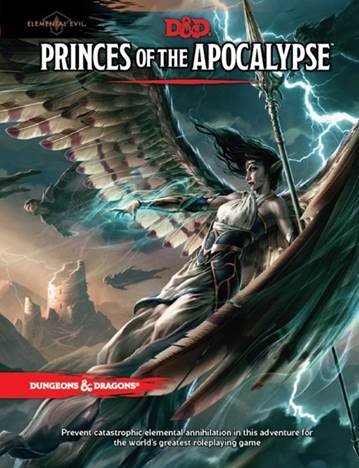
Ring Side Report- RPG Review of Princes of the Apocalypse

51CBGBT8ghL

Product– Princes of the Apocalypse

System– DnD 5th Edition

Producer– Wizards of the Coast

Price– $50 here http://www.amazon.com/Dungeons-Dragons-Elemental-Apocalypse-Adventure/dp/B00U6ALTOA/ref=sr_1_1?s=toys-and-games&ie=UTF8&qid=1428288898&sr=1-1&keywords=princes+of+the+apocalypse

TL; DR– Good, but I left feeling hungry!  85%

Basics– The elements are back!  Around the town of Red Larch, monsters and evil are stirring.  Horrible elemental forces are advancing on civilization, and the heroes are the only ones who stand in their way.  Can you stop the elemental cults before they summon the elemental evil?

Mechanics or Crunch-This book adds a fair bit to the DnD 5e setting, but what’s here is less than I expected.  Overall it’s all well done, but I just want more.  The player’s companion online add-on was well done, but that had more options than this book.  The monsters and the story all have well done mechanics, but again, I wanted more.  I wanted new third level paths for a few classes.  I felt at least the cleric should have gotten four new domains and given the GM new tools to add evil elemental mad priests to the world, but that wasn’t added.  Clerics don’t even get new spells in this book!  What is here is great, but the book feels a bit like leaving hungry after a meal.  4/5

Theme or Fluff- I love the Forgotten Realms, so it’s good to see any more information about that world!  The story itself is well done, and provides the players with some great side trips for different adventures across the valley where the story takes place.  Even more interesting, some of the previous settings like Dark Sun get some support by providing the GM with Dark Sun information if you wanted to run this adventure there.  As a story, this adventure really hits its stride.  5/5


Execution– I don’t really like how WotC is setting up their adventures lately.  I feel the descriptions of the rooms bury the lead when it comes to monsters and other descriptions of locations.  Also, this book has a lot of information, but it’s somewhat arranged in a difficult to follow layout.  The campaign starts at 1st level, but that section before the real adventure is after the start of the campaign, so as a GM of a low level party, I have to flip all over the book.  It’s annoying.  Also, some of the maps are in different orientations, so unless you notice the compass rose, you’re going to spend a few minutes confused to why things to the north suddenly moved to the south!  It’s nothing game shattering, but some of the layout and arrangement choices for the book make this not as enjoyable as it could have been.  3.75/5

Summary– Let me start by saying, I’m just happy to see more D&D products out there!  This book is a great continuation of the Forgotten Realms story calling back to some of the most iconic D&D adventures ever written.  I also enjoy that other settings are supported by this book, as some of those settings haven’t gotten as much love lately as I’d like.  However, this book didn’t deliver as much I hoped.  The play section contents less information than the free online player PDF.  Also, I would have really liked a few new class additions to really drive home the elemental nature of this story.    Furthermore, the execution of this book, while not bad, makes this adventure somewhat hard to read and run.  This isn’t a horrible book by any means, but this isn’t as great as the core three books.  If you want a great adventure, this is worth it.  But if you want some good additions to DnD 5e as a whole, you will be somewhat disappointed.  85%

Ring Side Report-Board Game Review of Splendor

71mn1dVNGkL._SL1384_

Product– Splendor

Producer-Asmodee

Price– $40 here http://www.amazon.com/Asmodee-SCSPL01-Splendor-Board-Game/dp/B00IZEUFIA/ref=sr_1_1?ie=UTF8&qid=1428287594&sr=8-1&keywords=splendor

Set-up/Play/Clean-up– 45 minutes (2-4 players)

Type-Euro

Depth-Light

TL; DR– Excellent game with no story. 79%

Basics-Time to head to the mines! In Splendor, you play a gem merchant trading gems to gather mines while trying to impress the nobility.  At the beginning of the game, a number of noble characters are drawn equal to the number of players plus one.  Then, three decks of cards are shuffled, and three cards from each deck are displayed.  These decks all have different gems in them with one decking having cheap gems worth little to no points, another with middle value gems it in, and the final deck having the most expensive and highest point gems in it.  Below the gem decks are placed poker chips with the five different kinds of gems on them.  Each turn, players take actions to gather gem tokens or spend gem tokens to buy gem cards.   Each gem card has a cost in other gems on it.  The cheapest gems normally require between three and five gems, while the most expensive gems requiring over 10 gems.  On a players turn, a player can take one of four actions: gather three different gem chips, gather two gem chips of the same type if four gems of the same type are available, reserve a card by placing it face down in front of the player and taking a gold (wild card) token, and finally spending gem tokens to buy a gem card from reserve or from the available cards.  When a gem car is purchased, another is drawn from the deck.  This game has an engine building component as each gem card purchased has a gem on it.  Any purchased gem cards can be used in place of a gem token when purchasing another gem card on a one-for-one basis without having to discard or return the card.  Thus, building up your gem cards makes it easier to buy gems in the future.  Some gem cards have points on them, which are added to your point total.  Also, each noble drawn at the start of the game has a number of different gem types and amounts on them.  When you have that same number of gems and types of gems as the noble, you get that noble and their points for free on your turn.  When one player gets 15 points, play continues until every player has an equal number of rounds.  Then the player with the most points is the best gem merchant and is the winner!

Mechanics– This is where Splendor absolutely excels.  Splendor’s easy to master mechanics make the game a breeze for players of any age.  The game’s four actions are quick while still giving you enough meat of the game to think about what you’re going to do next and the engine you’re going to build.  It’s fast, fun, and brilliant.  5/5

Theme– And here is where Splendor fails.  The game doesn’t really have a story to build on.  I didn’t feel like a gemologist trading gems as I moved up the international mineral ladder to conquer my opponents.  I feel like a guy sitting around a table trading poker chips as I build a card gathering engine.  The saving grace for the theme of this game is the art and execution.  The art is nice, adding a bit of environment to the game while the substantial poker chips do add a bit of tactile feeling to the game.  If you want a strong story in your games, you need to look elsewhere!  Honestly, simply adding some more story in the rules would have made the theme stand out even more.  1/5

Instructions– The rules to this game are amazingly well done.  The rules are less than two pages, front and back.  It’s clear and concise while still having pictures to help with game play.  These are rules you can read in less than three minutes and get playing in five.  Well done!  5/5

Execution– I know the execution of this game is controversial with the battle lines drawn over the poker chips.  I’m in the camp where I mostly like the poker chips. These are not the standard cheap-o plastic discs with some stickers.  These are heavy duty, clay poker chips.  I like game components with some heft, and this game delivers.  Also the cards are nice, but they are a bit flimsy.  I’d like them to be a bit harder card stock.  The art is well done with great drawings of historical figures as well as mines from all over the world.  Even the box has nice dividers that really help package the game.  Overall, this game is well executed with only a few things I’d like to see changed. 4.75/5

Summary– This is a game where the score is not the great predictor of enjoyment.  I really enjoy this game and have gotten a ton of plays in.  But, if you need a story in your game for the most enjoyment, then this is one you want to pass by.  I don’t always need a story, but that part of a game does draw me in more.  However, if you just want some excellent mechanics then this is your game.  It’s fast, fun, and thought provoking.  Building the perfect gem gathering engine in the shortest amount of time is always a blast!  I can’t recommend this game to everyone, but if you want a fast-paced, quick, easy to lean Eurogame, then this is the game to get.  79%

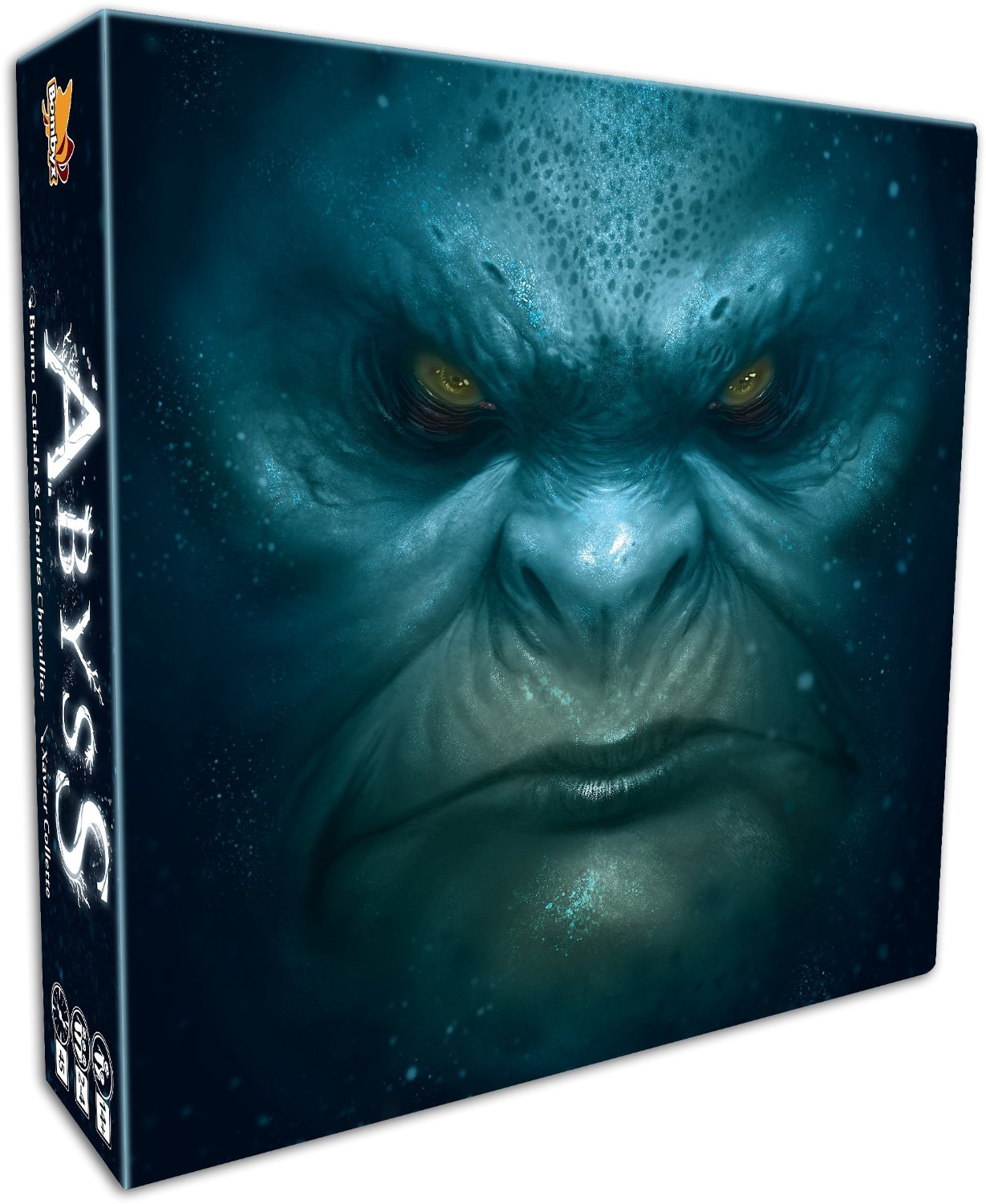
Ring Side Report-Board Game Review of Abyss

81hZL1H4ERL._SL1500_

Product– Abyss

Producer-Studio Bombyx

Price– $40 here http://www.amazon.com/Abyss-Board-Game-Cover-Vary/dp/B00KU10PH2/ref=sr_1_1?ie=UTF8&qid=1427851039&sr=8-1&keywords=abyss

Set-up/Play/Clean-up– 60 minutes (2-4 players)

Type-Euro

Depth-Light

TL; DR– Amass an undersea powerbase quickly and easily in this great game. 95%

2015-03-28_1427575156

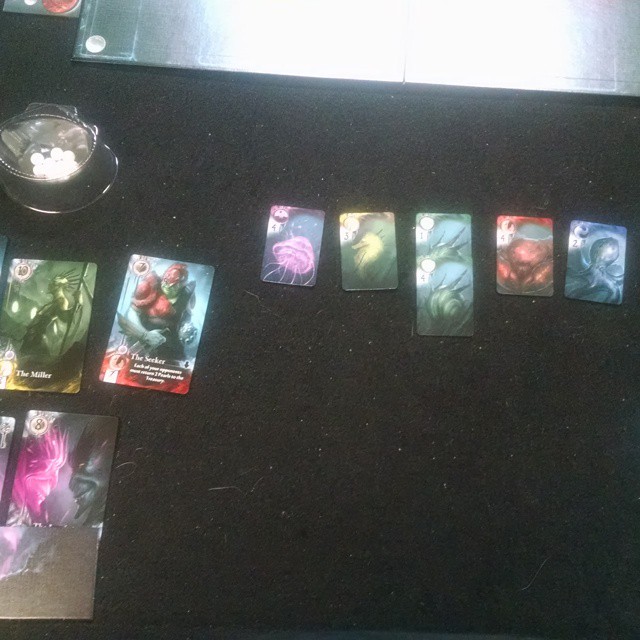
Basics-Under the Sea!  In Abyss, each player is fighting to be the lord of an undersea kingdom.  Each turn players can do one of three things: explore the depths for cards, take cards that have been discarded by searching, or spend cards to get undersea lords for points.  When a player explores, the player reveals a card.  If it is an ally card, then every other play can buy that card from the player for one pearl.  Ally cards are one of five different undersea creatures with point values ranging from one to five.  As more cards are revealed and more are bought, the price of each card increases.  If the card is not bought from the player, then the first player can choose to pick up the card for free or leave it.  If the player takes the card, then their turn is over.  If they don’t take the card, the player then continues this process until they fill up a track with cards and are forced to take the last card also gaining a pearl.  In the exploration deck, there are also some monster cards.  These cards can be avoided, or the monster can be fought and the player gains pearls, bonus victory points, or possibly keys to buy locations.  In either case, the cards not taken are separated based on the type of deep sea ally they are and placed in different piles below the exploration track.  The second action a person can do on their turn is to take one of these piles.  The final action a person can take on their turn is to spend allies to buy an undersea lord.  These lords have a number of bubbles indicating how many different types of allies have to be spent, a number indicating how many total ally points have to be spent, a value for end scoring, and possibly a power and/or a key.  Also, when a player buys a lord, he chooses one of the lowest point allies used to buy the lord, and places that in front of the player for end game points.  If a player ever has three keys, the player has to buy a location either choosing from the current visible locations or drawing up to four, but all not bought drawn locations become available to all other players.  These locations provide end game victory points based on the lords or allies you have in play.  This continues until one player has seven lords or until a player can’t buy another lord.  Then players get points for the monsters they fought, the highest point ally of each ally type they put into play for buying lords, their lords, and their locations.  The player with the highest points is the new king or queen of the sea!

2015-04-01_1427846551

Mechanics– This game has the look of something far more sinister and complex than it really is.  It’s actually really simple once you get the rules down, and that takes less than two turns.  There is deep strategy, but it’s not so deep that you can’t have fun.  This is honestly as complex as Settlers of Catan with a different theme and a bit more player interaction and memory.  The three actions you can take on your turn are really self explanatory, and play fast.  There are some problems like players have no hand sizes.  One player in one of my games just kept taking cards.  He ended up with over half the deck of allies at the end of the game.  He didn’t win, but that can make the game drag a bit.  Unlike some Eurogames, this one has tons of player interaction, so who you play with can really impact your enjoyment.  That aside, if you like some quick thinking with a bit more auction mechanics than Catan that is a good intro to middle complexity game, this is a great game to add to your collection.  4.75/5

Theme– This game feels dark and mysterious, just like the undersea.  As a player you do feel like you’re building a support base for yourself by first getting the commoners on your side, then moving to the lords before you move on the throne.  It all feels fun.  The art really hammers home the feeling of being in a deep sea kingdom too.  It can seem a bit too oppressive at times with some of the art bordering on gothic macabre, but even then it’s still amazing art!  4.75/5

Instructions– The rules do teach this game really well, but this is a game you can’t just open the box and play.  The mechanics are well done, and the rules teach them easily.  My only real problem with it is that some of the leads are buried with small, important parts of gameplay kind of put in the middle of paragraphs.  I bought my first lord without realizing I should then have put an ally in front of me for end game points.  The rules are well done, but this is a game whose rules you should read by yourself before you bust it out on the table with friends.  4.5/5

Execution– This game gets a five out of five for presentation alone!  Much like most of the games I’ve been reviewing lately, I’ve made a YouTube video (http://youtu.be/nAGFEi1FldE).  The game is amazing.  The art is great.  The writing is clear.  And even the box looks good.  The little plastic shells for the pearls are the cherry on top of this game.  And, when you’re done conquering the undersea nobility, the pieces all fit back into the box with nice custom cut places.  Well done! 5/5

Summary– I really love this game.  It’s got a great theme with some amazing mechanics that make this a blast to play.  Building up your undersea alliances with different nobles for power is quick, fun, and easy to do with the sleek mechanics of this game.  It’s got a few minor faults like some player mechanics that can be made less fun depending on who you’re playing with and a few smaller problems, but overall if anyone wants to play this game, I’ll be one of the first to come to the table! 95%

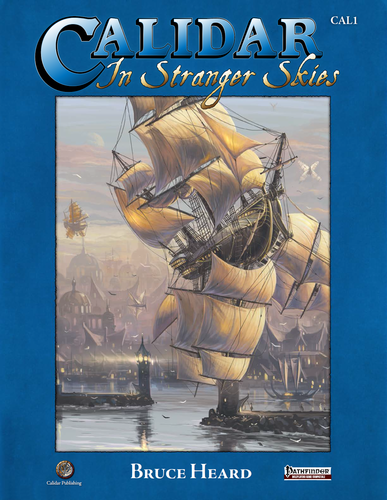
Ring Side Report- RPG Review of Calidar: In Strange Skies

pic2239143_md

Product– Calidar: In Strange Skies

System– Pathfinder

Producer– Calidar Publishing

Price– $10 here http://www.drivethrurpg.com/product/133973/Calidar-In-Stranger-Skies

TL; DR– How about some Spelljammer in Pathfinder? 90%

Basics– Set sail for the first star on the right!  Calidar is a setting for a universe focusing on flying sky ships that sail between planets with most of the focus on the world of Calidar.  While the book goes small enough to detail the kingdom of Meryath on Calidar, the book also has enough universe detail to give any game master enough ideas for how to run the universe.  Let’s break this book down into its parts.

Mechanics– This is not a crunch book, but it also doesn’t want to be.  Any book that starts with 45 pages of story to introduce the world via fiction wants you to get the world feeling first before even considering the mechanics of the system.  For the majority of the crunch here, the system uses Pathfinder for its base mechanics.  It does build where it needs to by adding some creatures that are specific to the world.  The book does have new sky ships as well as maps for the setting as well.  It’s done reasonably well, but there isn’t anything that really builds on Pathfinder’s mechanics to make it its own.  That’s not horrible as building on established mechanics system is ok, but I would have liked a bit more to make Pathfinder its own.  4/5

Color- Hand’s down, this is the best part of the book.  The book begins with a fun 45 page story and spends most of its pages building a world for the players to play it.  The fantasy isn’t completely original with elements like orcs are evil and many common tropes, but that doesn’t made it bad by any means.  If you want Pathfinder Spelljammer, this is the setting for you.  5/5


Execution– This book does something different and uses three columns for its text.  The text isn’t bad, but the three columns don’t really suit my reading and understanding style.  The art here is well done as this is the first RPG book I’ve ever read where the air currents are laid out!  That kind of attention to detail is impressive.  Honestly, a little more art to break up some text and changing to the use of two columns, and I’d be much happier with the execution of this book.  That and maybe a small adventure to help me as a game master get into the world a bit better.  4.25/5

Summary-If you want Spelljammer in Pathfinder, then this is the book for you.  You will get the feeling of the old school with his book.  This book has lots of details while still giving the writer room to build out into the different planets and still zoom into the micro scale of each city.  It’s a good book that really does build its own universe.  It’s got its faults as I would have liked to see some Calidar specific Pathfinder mechanics to really own the rules it runs on, and I would suggest a few changes to the layout to help me as a reader get into your text.  That said, if you can get past a few minor faults and you want some planet sailing fun, then the best place is to start with a contributing author to Spelljammer back in the TSR days and this book. 90%

Ring Side Report- RPG Review of Elemental Evil Player’s Companion

145542-thumb140

Product– Elemental Evil Player’s Companion

System– Dungeons and Dragons

Producer– Wizards of the Coast

Price– $FREE!  here http://www.drivethrurpg.com/product/145542/Elemental-Evil-Players-Companion-5e

TL; DR– If this is what WotC’s future looks like, I’m on board! 93%

Basics– Horrors of the elemental apocalypse are upon us!  It’s time for new heroes to rise!  This book provides new player options including new races like the deep gnomes and the genasi.  This book also proves a surprising number of spells for almost all the classes except for clerics

Mechanics or Crunch–   Honestly, it’s good to get ANYTHING from the currently quite WotC.  The new races are all well done.  These races are not anything new for the system, but they are new to the current rules set. The spells all look great, and they add some new diversity to the ones from the core set.  It’s just good to get some more!  The one problem I do have is the exclusion of clerics from the rules.  What here is good, but he absence of some things are noticed. 4.75/5

Theme or Fluff- This does have some fluff to it.  Each race has a write up that adds some impressive diversity to the races in the Forgotten Realms.  Again, these write-ups are not anything new as the races are all old favorites from at least fourth edition, but it’s good to hear what these races have been up to since fourth edition DnD ended.  The spells all have some great elemental flavor.  What I did want that wasn’t here was some bonds to draw characters in as well as some background on the adventure.  My players all loved this new book, but the current season doesn’t have that much background to front load the adventure like the Paizo Player’s Companion books for their adventure paths.  I love what I’m reading, but I’d like a bit more to bring the playing in. 4.25/5


Execution– I’m really digging the new layout for the DnD books.  This book feels like an RPG, but it also feels fresh.  Sure it’s a short book, but getting this much content from another company would cost you $5 from Monte Cook games, and Paizo doesn’t even offer this much content in their free player adventure path companion books!  The font is good, the spacing is great, and the art is fantastic.  There is only one piece of art that I know has been reused, so that’s even more top marks for WotC, who has notoriously reused art in the past.  If you can keep this up, I’ll buy more player books when they happen! 5/5

Summary– This isn’t perfect, but it is amazing. And, it’s FREE!  I’m really surprised that this book is free.  It’s got an impressive amount in it for the first really player expansion out there.  I know that we, the player base, can’t expect to get free books forever, but if this is the treatment I’m going to get for all of the adventure seasons, I’ll be happy.  I would like more, but for the price and the content, I’m thrilled! 93%

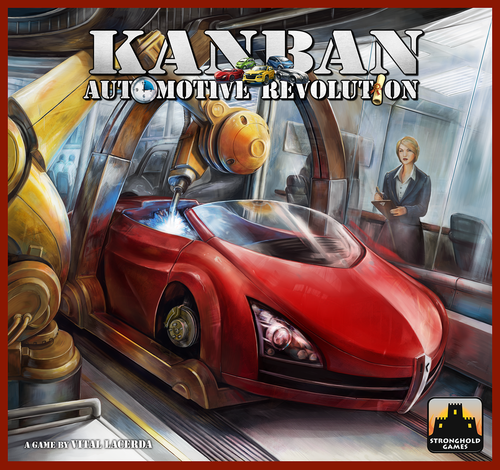
Ring Side Report-Board Game Review of Kanban: Automotive Revolution

pic2041406_md

Product– Kanban: Automotive Revolution

Producer-Stronghold Games

Price– $60 here http://strongholdgames.com/store/board-games/kanban-automotive-revolution/

Set-up/Play/Clean-up– 60-90 minutes (2-4 players)

Type-Euro

Depth-Heavy!

TL; DR– Almost too complex…Almost 90%

Basics-Who can build the best car?  In Kanban, each player takes the roll of a car designer in the Kanban Company.  Under the careful eye of your supervisor, players choose what departments they want to work in each day for three weeks or until there are three companywide goal assessment meetings.  I won’t go as in depth as the rule book, but here is a quick summary of the rules.  The departments players can work in each day include: administration, design, logistics, the assembly line, and testing and innovation.  Players can choose which department they want to work in and place a worker on one of two spots in that determent.  These spots determine how many shifts a player can take in that determent, usually two or three, an in which order they get to work with the first having fewer shifts, but being first.  Each shift in a department allows you to do a few different actions.  Here is a quick summary of the different actions:

Design: get car designs and car designs with upgraded parts

Logistics: pick up car part cubes for yourself or place part cubes on the main board for all

Assembly: spend car part cubes to build cars

Testing and Innovation: spend car designs to get cars OR spend car designs with upgrades and a car part cube to improve a car part

Administration: use one other area’s abilities

Players also have the option to train in each area.  By training players can unlock new abilities in each area as well as allowing more storage on their player board.  In addition, when it comes time to score points later, players order is determined by who is the most training in more areas.  The supervisor will move around the board, and if you take a shift in a location with the supervisor, the boss will evaluate your performance in that section.  Here is where the game adds an extra layer with two modes of play.  One mode the boss is nice and gives you extra points if you are being productive.  In the other, the boss punishes you if you fall short!  The boss also moves between sections to move the game forward.  When she moves back to administration, she advances the week marker.  When the game reaches the third week, the game is over.

Also, when players use car designs to put cars in their personal garage on their player sheet, this moves a pace car in testing and innovation depending on how far back the car they took was.  When the pace car in testing and innovation moves to a certain point on the testing track, you have a meeting at the end of the business day.  Meetings are the major way to score points.  As you do other actions in the different departments, you will earn chairs at the business meeting.  Some of the actions to earn chairs are building specific cars or training in a number of different departments.  At the meeting, players can place chairs on goal point cards to score those points.  Most cards will allow you to have multiple chairs, but the boss will want to hear less and less about the same topic, so scoring later on the same goal card will win you less points until no one can score on that goal at all.  Also, each player can play one card from a hand of goal cards as a pet project that they and anyone else can now score on.  The first set of public goal cards are random, but the second and possibly third set of cards all come from the players hands as you start with three, use one each meeting for a pet project and then play one as a new public goal before being dealt two more cards.  The most important thing to know here is if you don’t have seats, you can’t score points!  The game can also end when the third meeting happens.

The last thing the happens at the end of the game is players can use seats to score points on the game goal conditions.  These end game goals can be scored by as many players as are out there and, as an examples, are having five cars, being training in so many departments and so on.  Then, players get points for each car they have in their player board garages, and they score points for how upgraded each car they have, but only if they have they have the upgraded the car part in one of those cars he or she has.  Players also get points for being first, second, or third on each sections training track and for how many resources they still have at the end of the game. Person with the most points in the end is the winner and best designer in Kanban!

Mechanics– WOW there is a lot going on in this one!  But, honestly in a one page summary without the pieces to play with, it’s a bit harder to digest than when you sit down and play.  It’s still a lot to digest, but it’s not nearly as bad.  The hardest thing for me to wrap my head around was scoring.  How to get the chairs at the meeting is really important, but you can make up for blowing a meeting if you have the right cars and upgraded car parts at the end of the game.  It’s a ton of fun making sure you choose the right department and actions at the right time.  It’s not too hard, and it is a lot of fun.  But, it is a brain burner to understand initially. 4.75/5

Theme– Now, the theme of being an office worker in a car company might not sound like the most fun thing in the world (I’m from Michigan, I know this!).  But, it does feel like you’re part of a company competing to be the best.  Having to get seats at the meeting does feel like you maneuvering politically to get noticed by the boss at the right time.  Having to move between the department really did feel like you were doing different jobs each day to make sure that you got everything lined up to succeed.  Even the limits on the number of activities you could do feel like a really like job.  I can’t work 30 hours in a 24 hour day.  It all adds up to some positive stress that makes a good Eurogame fun!  It’s not perfect though.  While I know Ford gives some good discounts on cars to its employees, you don’t just get to take them home for free!  It’s a few minor things that break some of the illusion of the game.  It’s fun and feels like the real offices experience, in a good way, but some minor things do break the fourth wall a bit. 4.5/5

Instructions– The instructions to this game are good, but they are not perfect.  The game comes with a link to an instructional video, and that really helps.  Also, the designer is spending a ton of time answering anybodies questions on board game geek in a thread.  It’s a really great effort by Stronghold to present this game to the players and to make sure everybody knows how to play it.  That said, the rules by themselves are ok, but it’s got a lot going on!  Even the rules themselves say that you have to read everything!  That should go without saying, but if you skip a little bit of say the Splendor rulebook, you’re going to be ok.  Miss or skim a paragraph in this one?  You will be lost and play the game completely wrong.  But, if you just want to complete board game experience without any internet guidance, the rule book itself will teach you how to play, but you have to make sure you really read this one! 4/5

Execution– As I’ve been doing lately, I made an unboxing video for this game!  Here is a link to the video https://www.youtube.com/watch?v=6628QbxggOs  All I have to say to make my day with this one is: CAR MEEPLES!  I love what’s in this box.  It does come with some bags showing that Stronghold Games does love me!  It also comes with a ton of cardboard for seats, tokens, and car designs.  The car designs are nice chunky cardboard, which makes it hard to shuffle, but it also makes it easy to pick up and play with, so I’m happy. The art on the tokens and the main board is also great.  It’s got a lot going on, but it also doesn’t overwhelm you.  One problem I do have with this game is the same problem I have with many of Stronghold’s Eurogames.  The box is somewhat thin.  I’d like the box to be made of a bit more sterner stuff. Overall, this game has some top notch components that really stand out. 4.8/5

Summary– I really like this game.  It’s truly a puzzle.  Kanban has levels and layers that will make even the most determined and smart players have to really consider what they have to do next.  That also makes it a bit harder to explain, teach, and understand.  I love this game, but I had to work at it to get to that point.  This game is almost too hard for me to understand.  That’s the double edged sword of Eurogames.  Too simple and no one will play it.  Too hard and no one CAN play it.  This might not be my favorite Eurogame of all time, but this is one I will keep going back to as, no matter what I do, I still see new options in this game all while having a blast playing it.  If you want something simple to play game at the end of the night after you might have had too many beers to do calculus, then this is not the game for you. However, if you want a well done, extremely intellectually, surprisingly quick game, then this is for you.  I know I can’t wait to get it back to the table.  90%

Ring Side Report- RPG Review of Baker Street

142228-thumb140

Product– Baker Street: Roleplaying in the world of Sherlock Holmes

System– Baker Street

Producer– Fearlight Games

Price– $20 here http://rpg.drivethrustuff.com/product/142228/Baker-Street-Roleplaying-in-the-world-of-Sherlock-Holmes?term=Baker+Street

TL; DR– If you want to investigate some Victorian crime, you can’t do better. 93%

Basics– Holmes is dead, but the world still needs heroes!  In Baker Street, the players all take the roll of inspectors hired by Scotland Yard to help solve cases that would normally be throw to the late Sherlock Holmes.  Are you on the case?

Mechanics or Crunch– This is its own complete system, so let’s break this up.

Base mechanic- This is completely a skill based system.  You only have a handful of trained skills, and when you do an activity, you choose a skill and roll that many six-sided dice along with a Sherlock die.  If you are not trained and you need a skill, you roll two six-sided dice.  You succeed on a 4, 5, or 6.  The Sherlock die will add some randomness to the other dice.  The Sherlock die has a 1, 2, 3, Watson, Moriarty, or Sherlock face.  The 1, 2, and 3 sides of the Sherlock die make the 1s, 2s, or 3s successes on the other dice.  Watson gives you a free assist to help another player or an extra success.  Moriarty makes all non-successful die faces count against the successes!  The final face Sherlock, Sherlock himself, allows you to name a dice face number and those dice now count as successes.  The last thing to mention is professional skills and specialties.  When you use a professional skill (think a skill you have ranks in) any 6’s you get on dice allow you to reroll the die for extra successes.  This can continue until you don’t roll a 6 again!  Specialties allow you to gain two extra dice on a check because of your degree of training in a particular area.  The whole system is quick and easy.

Combat-Combat happens, but this isn’t the main push of the system.  Sherlock fights some foes, but that’s not the big pull of the books.  However, this game does have some interesting twists to fighting.  The basics of combat work just like any other skill.  If I try to hit your character, you would roll you dodge skill, and I would roll my weapon or attack skill just like the base mechanics above.  If your dodge roll has more successes than my attack, you didn’t get hit. However, if I have more successes on the attack, I roll a weapon damage roll.  This weapon damage roll works just like above, but I use a chart to determine how many dice I would roll for the attack instead of a skill.  I still roll the Sherlock die however.  The most interesting thing is combat is not done with initiative like any other RPG.  It’s done by naming another character or the game master.  Players start, then after the first player goes, and he/she chooses who gets to go next.  However, keep in mind if all the players go, and choose the bad guys run by the GM to go last in the round, the GM can choose to have the bad guys go again at the start of the next round almost taking two turns in a row!  That’s a simple turn order mechanic, but it does lead to some interesting thoughts and discussions around the table!  It’s also fun to see a novel way of managing combat in a RPG.

Investigation- Here’s the real meat and potatoes of Sherlock Holmes!  When players investigate a murder or a crime scene, they enter a new phase of the game to gain and eliminate clues through several sub-phases.  First, players Observe the scene revealing clues. One player rolls the dice for their observe skill, but every other player can give that player half their dice pool rounded down for their observe skills.  The number of successes reveals clue cards that the players can begin to investigate.  Each clue has a description as well as three leads that may go deeper down the rabbit hole or throw them off the trail.  After the Observation round, players then do a Reason round.  One player rolls his/her reason skill and other players aid as above.  This will eliminate a number of clues that are false or erroneous.  Finally, players then enter the Deduction round.  Just like the previous two phases, one player rolls deduction while the other players help.  This phase gives players a number of times they can ask the GM about different leads on each card to ask if they are real or not.  Some leads on a clue card are not useful at all, while some are the next area that they players must observe or interrogate to determine who did the dastardly dead.

Threat-Sometimes a player want to ask more questions to a NPC then there is time to do.  Sometimes a player want so re-investigate a room.  Sometimes a player just wants to ask the GM for an assist to find the best way forward.  When that happens, the threat level of the investigation raises!  This is a behind the GM screen level of general tension that can only hurt the players.  When the threat level rises, some bad events may occur like thugs ambushing the players, making the Sherlock die’s 1 phase not work, or just adding extra bad guys to the final fight.  It’s an addition to keep pushing the players forward in their quest to solve the crime while preventing them from spending days looking over the first room.

Characteristics-This game doesn’t have feats like Pathfinder/DnD, but what it does have are characteristics.  You start with two personal characteristics, two professional characteristics, and two negative characteristics.  These characteristics not only give you roleplaying hooks, but when you invoke a professional or a good quality you get extra dice on that skill roll.  The negative characteristics give the GM some story hooks in you as well!

Resolve-I love story candy for my players.  Resolve is that currency in this game.  It’s used for several things from adding dice to a dice pool to preventing damage when you are hit with a weapon.  Also, when a GM invokes a negative characteristic of your player, you can spend a point of resolve to avoid the flaw.  If you don’t have some resolve, then you follow your darker impulses and do something that most likely won’t end well!

Summary- Overall, this is a good system, but it does some minor flaws that are flaws in how investigations are narrated in all stories.  You know every day you sit at the gaming table that there will be an investigation scene, kind of like every episode of CSI will have an investigation scene.  If you can’t get past that or don’t want that in your game, then this system might not be for you.  The system of investigation means that pretty much every charter has to have some ranks in the three skills used to find and discard clues and leads.  Now, that isn’t too much fun to have some of your character planed before you get to play, but then again you are playing a criminal investigation game!  The basics of the skill system and the ease of it use do work really well.  It’s quick, fun and easy to play this game, even if I’d like a bit more flexibility in the game overall.   4.5/5

Theme or Fluff- You want some classic Victorian crime novels?  You got it!  This game has some great world building describing in vivid details the different classes of servants the upper class has to the various different kind of criminals that stalked Whitechapel in the 1890’s.  Baker Street is set up to tell a Sherlock Holmes’ story well, and it succeeds in spades!  Even the provided adventure looks like it’s printed on a newspaper from the time!  5/5


Execution– Overall, this book is really well set up, but there are some problems.  The general character building and how to play are all done well.  It reads quickly and has some good spacing, all of which are very important to me.  The PDF is presented like an old book with some wear and tear, which does give some excellent flavor.  However, the PDF isn’t really hyperlinked well with the hyperlinks just listing all the pages.  Also, the adventure that is presented has great flavor as it looks like an old newspaper, and I’m happy to see an adventure here to help me run my first game.  However, the use of Victorian newspaper format makes it harder to really read and digest quickly.  You can’t really scan it to find what you need in a hurry as it isn’t really spaced well.  It’s some minor complaints, but these small things did hurt my overall experience slightly.  4.5/5

Summary-This is a great way to run an investigative RPG, but the problems you might have are if you want an investigative RPG.  This game solves the absolute hardest and worst problem to correct in a RPG investigation-are the players and GM out-thinking each other?  Much like old school point-and-click adventure games, investigation in a RPG might stall out because neither side of the GM screen finds the train of logic from the other side.  The investigation system here is top notch allowing for really deep stories to be told.  However, my only real problem with this system is its build really well to do what it does.  If you want to do something that the system isn’t designed for like run a Sword and Sorcerery campaign on Mars, this isn’t what you should use.  Also, you need to want to play a criminal drama and build your character for that.  Pathfinder/DnD will have this one beat for variety, but if you want some really well done Victorian sleuthing, then you can’t do better than this out of the box!  93%