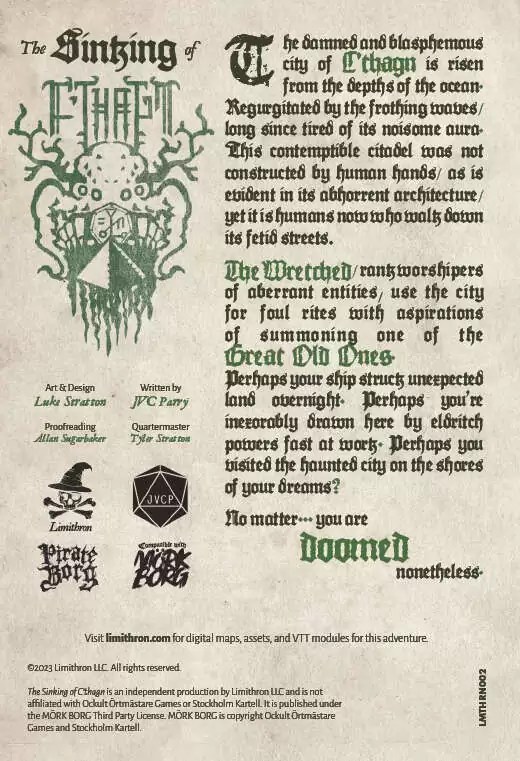
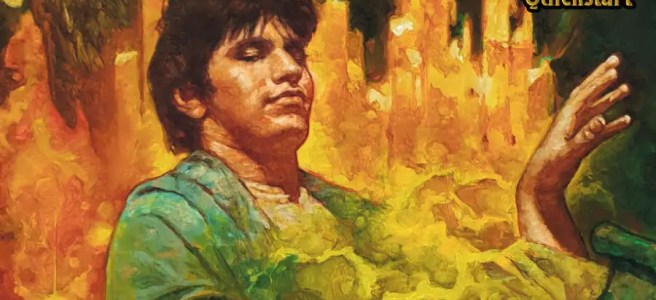
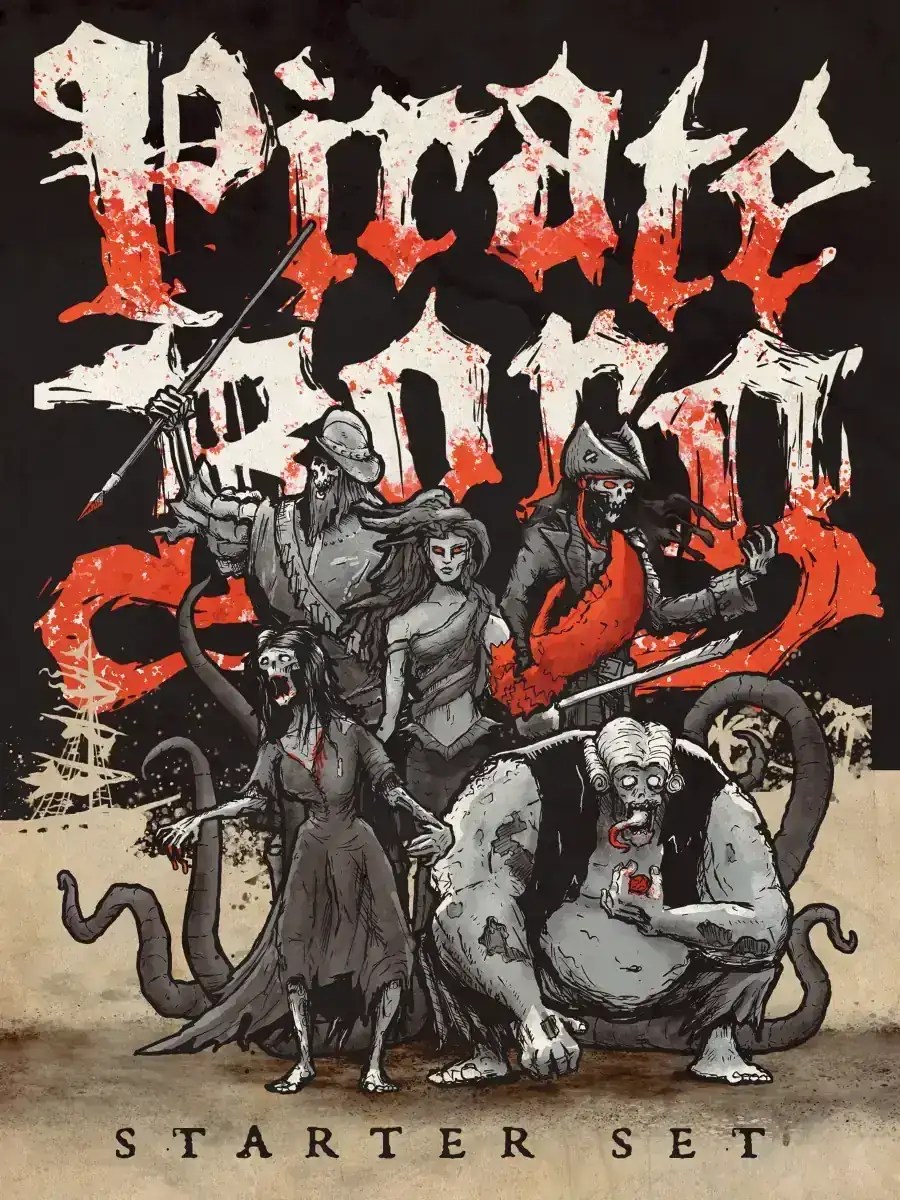
Basics: Where are we going now? This adventure is a two-page city. It has multiple random tables and things that can happen while in the city.
Mechanics or Crunch: The crunch is good here. It’s got enemies, tables, and things to fight along the way. It works well 5/5
Theme or Fluff– What’s here is solid, but what’s here isn’t enough. The adventure is really more of a city description. There are groups, but it’s mostly a map and tables for random stuff to happen in town. If you have a plan, it’s good, but if you want an adventure and you get this five minutes before game night, you are stuck in the same boat you were before. 3.5/5
Execution: I like what’s here, but it’s expensive. Pirate Borg is less is more, so I understand not needing a hundred pages for an adventure, but this is two pages and costs more than most full adventures on DriveThru. That said, the art, layout, and city are well done. Just a bit pricey. 4/5
Summary: I love me some Pirate Borg, and I love me some Cthulhu. This has both. But its a city. A well-done city, but this is more of a location. That said, it’s a really good location if you wanted to do some city adventures or wanted a springboard for other stuff. Just don’t expect a canned adventure when you buy this one. 83%
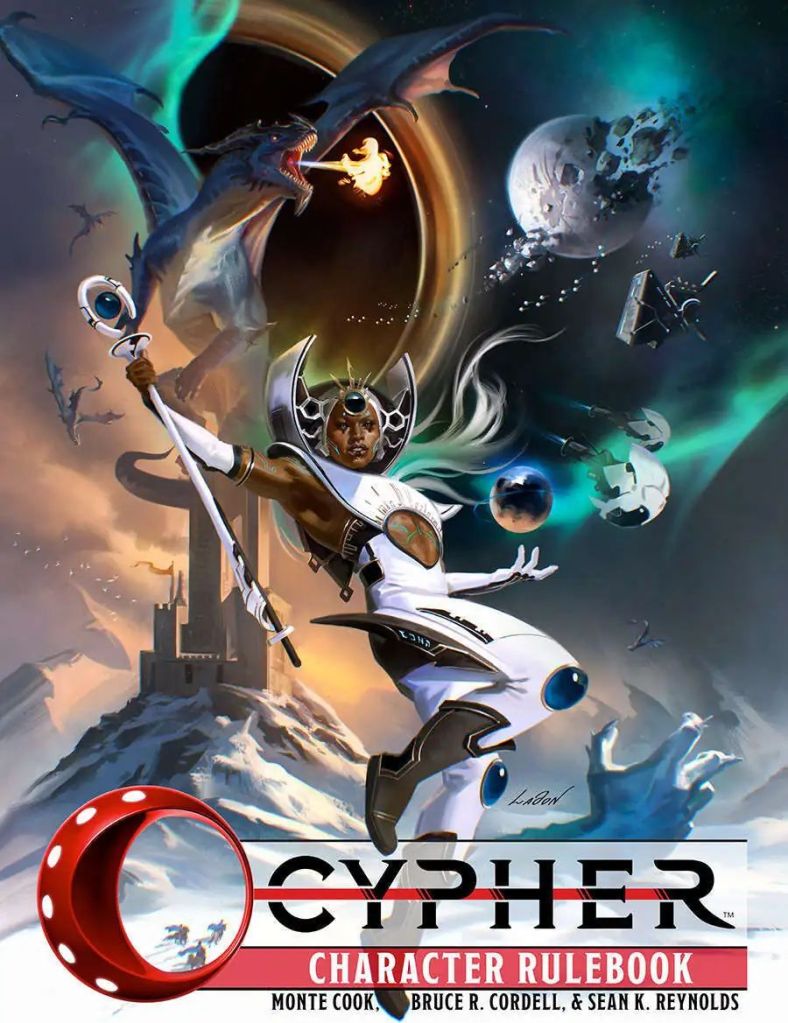
Basics: I’m still a BLANKING BLANK who BLANKS! Time for an update to the cypher system! Let’s look at the base mechanics.
Basicsmechanics– Cypher is still d20 rolled to hit a DC. Things you are trying to do or kill have a level. The DC you are trying to hit is that DC times 3. That’s it. You have skills to reduce the DC by different levels. You have effort, where you spend points from your three different stats to reduce the DC. That’s it.
Hit Points- The basic Cypher system didn’t have hit points. You lost points from your different pools of ability points. Now you have different wound levels. Characters are a bit tankier now, and this system frees up your ability points for doing stuff instead of just being your HP.
Cyphers– The major change is cyphers are no longer just magic dodads that do “stuff”. Sometimes they are abilities you get for a bit, or spells cast on you, or something else strange. It’s more about having one-time abilities sometimes and less about carrying random magic stuff. You still cycle them and use the fast, but it changes the world differently.
Combat– Combat really didn’t change. Just like the base mechanics, its roll against level while spending ability points. You take damage when you fail a dodge or block roll, but you now fill out damage boxes of escalating problems.
Ok, that’s the base changed game; let’s look at my thoughts?
Mechanics or Crunch: I liked the old Cypher system, and this just builds on the good. You have the same strange player-only rolling that built the last one with amazingly simple mechanics. The biggest changes I see are to your last BLANK. These now act more like feat trees for a character. They are awesome and include a diagram showing how you gain and move between abilities as you level. As an old-school 3.5 DnD player, I love what’s here, and the changes feel like well-implemented feedback. 5/5
Theme or Fluff– I love the weirdness of the Cypher system. It’s just gonzo crazy stuff. That said, the book has to cover ALL the ground. Want realistic games? We got you. Want crazy cyberpunk? But of course! Want horror? There you go! But that means some things have some edges cut off. One reflection of this is the character sheets. These used to be a bit crazier. Now the character sheets look like Shadowrun or D20 Modern sheets. It’s not bad, but the change reflects a more centered stance on everything. But it’s all here and ready for playing. 4.9/5
Execution: This is a well-done book. It reads fast, skims easily, and has all the information you need right at your fingertips. Monte Cook knows how to make a quality product. 5/5
Summary: The opening of this book said it’s a new edition. I honestly don’t feel that. It feels like a solid update, but not really a new edition. The changes are all good from the first edition. They reflect the quality of play and life changes I am looking for. The options are solid, but this book has the buffet problem. You do everything decent, but it’s harder to do one thing amazingly. The individual books are built that well, but this book gives you way more than enough to make characters in any setting. I can’t wait to start playing this new edition. 99%
Basics: You’re a wizard, Harry! Academia Arcana RPG is a DCC expansion where the characters are students at a wizard school. What problems can you solve as you attempt to get a passing grade?
Mechanics or Crunch: This book expands the DCC world, but only up to level 5. The classes are basic wizard, wizard thief, familiar, and even a magical girl. Characters get backgrounds, build covens, and all the basic parts of the Harry Potter books. It works well. You do not get a funnel in this game, but the crunch of every Harry Potter book is here. 5/5
Theme or Fluff– DCC is a solid choice and a misstep for this book. The DCC mechanics are executed well, and all the pieces are here. I love what’s in this book in terms of theme. But you don’t have Dumbledore throw 4d4 students into the forbidden forest and have 2d3 return. The game is missing some of the strangeness that makes DCC DCC. What’s here is solid, but it misses the funk that makes DCC DCC. 4.5/5
Execution: This is pure DCC 3rd party in the best way. You have spells, abilities, a world, and more all built into this book. The book is modern RPG-ready with hyperlinks, art, and an easy-to-read flow. This book is well put together. 5/5
Summary: I liked Harry Potter when I was a kid, and I love DCC. This is a good combination of the two. I do miss the gonzo of standard DCC. That is the one part I don’t love about this system. But if you want a rules-light RPG, then DCC is the thing to choose. I do like all the other pieces here, and the fact that magical girl transformation enters the RPG is a solid, fun addition. Academia Arcana RPG is a good, semi-strange addition to the DCC line-up that I am glad I kickstarted. 97%
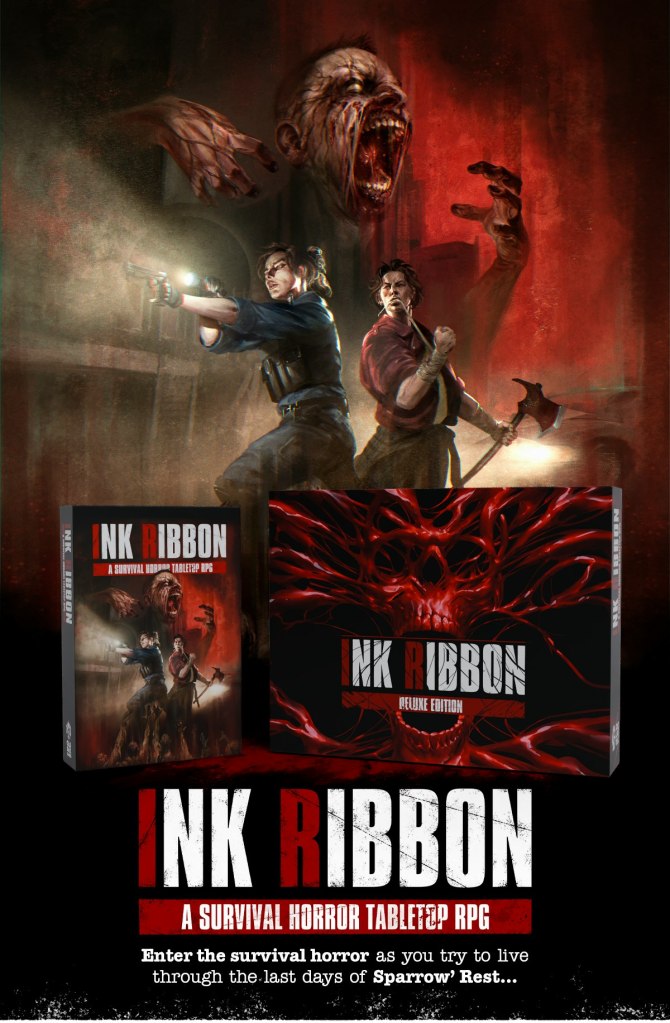
Basics: 4 Itchy tasty… Ink Ribbon is a love letter to old school Resident Evil. You play survivors in not Raccoon City as a pharmacy giant has a lab failure and the whole town is full of zombies or worse! Let’s break this down
Base Mechanics– This game is a d6 dice pool game with different target numbers. Simple targets are a 2. Hard targets are a 6. When you do something, you take a number of dice equal to an attribute and a number equal to your skill level in the thing you are doing, learn your target number, and roll! If you get at least one die equal to the target number, you succeed. Extra successes can be banked or even reduce your stress.
Advantages and disadvantages– Advantages and disadvantages represent times when you have good or bad circumstances for an attempt. You get +1 die for each advantage, and you get one less die for each disadvantage. Then you roll as normal.
Adrenaline– Adrenaline is the control the characters have. You have adrenaline points, and you can spend them before a roll to double your dice pool, or you can spend them after to reroll failures.
Stress and Horror- It wouldn’t be zombie horror without stressing out characters and the horror of it all. Stress represents strain on the characters. Stress measures how bad things are. For each point of stress, reduce your dice pool by one. Stress rises and falls as story events happen. Stress can even cause a panic roll. Here you experience a panic attack, and it might get better or a whole lot worse! Horror measures the story’s progress and crazy effects. It affects your search results. When the movie first starts and the horror is at 1, the characters find items that help, but nothing crazy. When the horror hits the fan at 5, the movie characters find rocket launchers and more! Horror affects how much good the characters have and what they find as the game continues.
Combat and damage– Combat is easy. The GM rolls a die, and either the players or monsters go first. Then it’s one character on a side till all characters go. When you attack, the mechanics are the same as the base mechanics. Every character and monster has a defense, which is the TN for the attack roll. You can use additional successes for additional damage added to your base weapon’s damage. Then the target subtracts armor from that damage. Damage first affects the target’s toughness. Then damage spills into an ECG tracker. As damage flows into the ECG, the target gets more stress and adrenaline. Go too low, and you die!
Ok, now the review .
Mechanics or Crunch: This game feels like Shadowrun and DnD had a baby. It’s a dice pool system with different target DCs. It’s fast and easy, but it’s got enough to build on that I am intrigued. I like what I see and enjoy how quick this one is. Solid, fast fun. 5/5
Theme or Fluff– I played RE on a PlayStation before it was called a PS One. This brings back memories from long ago. I love the games, and this honestly feels like less of an homage and more of a copy in some solid, fun, good ways. Honestly, I a surprised by how close this game gets to Resident Evil without copyright strikes. But, I love RE, so I love this one as well. 5/5
Execution: It’s free. That’s the first thing that I need to say, so check out the quick start. From there, you see this is an absolute labor of love. The game has four pregens, maps, a full four-hour adventure in a police station, and handouts. This is everything I want to see in a quickstart for money, but IT’S FREE! I honestly want to run this before the Kickstarter ends. It’s that well put together. 5/5
Summary: I entered the world of survival horror long ago. This quickstart has everything I want to take away and bring to the tabletop. It’s solid, quick gameplay. It has all the pieces I remember from long ago and from modern Resident Evil games. It’s well put together. This is just a solid product that is 100% free to try. I love what this is, and I can’t wait for more. 100%
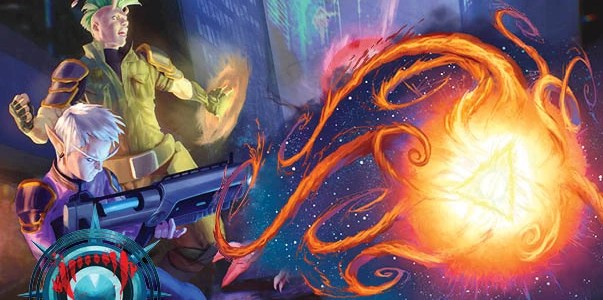
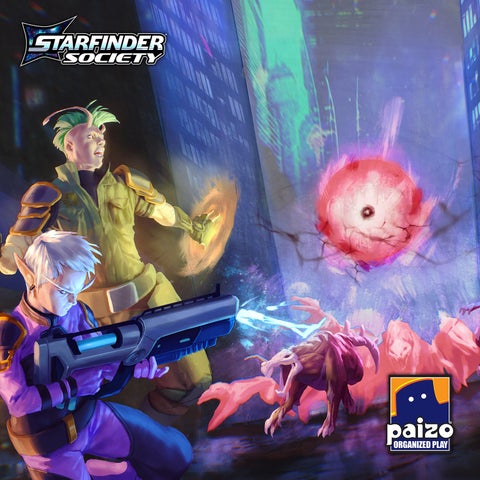
Basics: A Star is born! Literally! The starfinder society is invited to watch the birth of a new star. What will happen as it enters our universe?
Mechanics or Crunch: This adventure is a short one. There is one fight, some skills, and a ship adventure. All the math works well, and things feel balanced. The crunch is good if a bit short. 5/5
Theme or Fluff– This is really good world-building in this adventure. The world of Starfinder needs adventures where Starfinders explore the galaxy. This adventure makes the society seem less like a mercenary group and more like Starfreet. Solid fun meeting people and exploring in this one. 5/5
Execution: The adventure is too short. It’s got solid adventure parts that Paizo knows how to publish, but this is just too short. The adventure has a social part: see the stuff that happens, fix the ship, fight, then evade the crazy space stuff. It’s all well done, but there is just not enough to do. This is about a solid hour of work if the players roll ok. This just needs more. 4/5
Summary: This is a tough one for me. I like all the pieces, but there is just not enough of them in this one. The adventure has solid universe building and mechanics. I just want more of them. For the price and the time goal, I don’t think you get enough. It’s a good adventure, but if you schedule this one, your eventing will be over pretty quickly. 93%
TL; DR– A solid handbook for the recently deceased. 92%
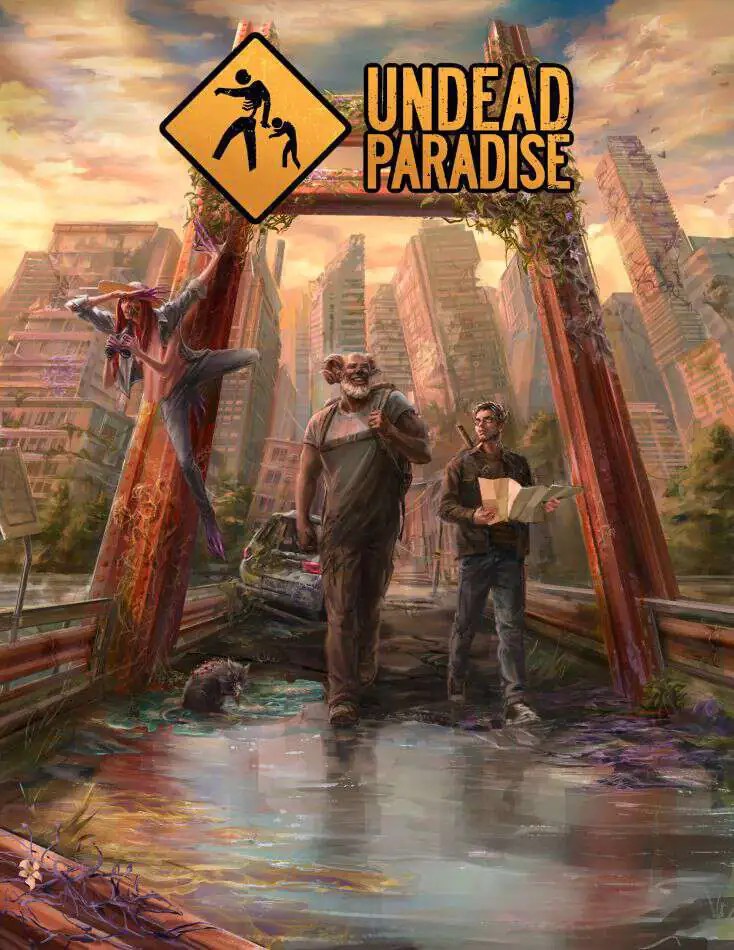
Basics: So… you’re dead, now what? Undead Paradise is for the after. After humanity fell and all areas were lost, what happens next? Some undead get better! They regain bits of themselves and begin to attempt to move forward. Not the mindless zombies, but now the inheritors of the lost earth. What will you do? Let’s break down the game.
Basics- Undead Paradise uses a simple 2d6 + bonus method to determine success and failure. Basically, when you want to do anything, you roll 2d6 and add a skill bonus from your attributes and skills. A 7 succeeds against a simple issue, but a 13 is the highest you can expect to encounter. The biggest number you will normally add to a dice roll isa bout +5.
Advantage and disadvantage- Situations make life easier or harder. This is represented by advantage and disadvantage. For advantage, you roll 3d6 and take the best two dice. For disadvantage, you roll 3d6 and take the lowest two dice. When people help you in a task, you get advantage.
Memories and damage- In this game, as you awake, you remember things. These are good and bad memories of what you were. These are also your hit points, as each memory has three parts. When you take mental or physical damage, you lose one of the three parts of that memory. When you lose all your memory parts, you risk going feral. Feral is kind of dead for the undead, as you basically go back to the mindless zombie.
Combat– Combat in this game is as simple as task resolution. When combat happens, players get three action tokens. An action takes a token. But some more awesome actions take more. When you use your token, they go to the GM. When the GM uses theirs, it goes back to the player bank. Players go first unless there is surprise.
Ok, now to my thoughts
Mechanics or Crunch: This is a solid player guide, but I’d like a bit more crunch. This book gets you making characters and ready to play. My one criticism is you can play, but running is a bit beyond this one. I wish I had more crunch to really understand the rules of this one, but it’s not bad. It’s got enough to get you making and playing quickly. It’s also not a crunch-heavy game. That’s not bad, but that is a key fact you need to know going in. 4.5/5
Theme or Fluff– This book doesn’t fully build out the world, but it gives you a solid start. There is more here than you can see in this player guide. That is not bad, but it’s a bit simplified. That also leads to mysteries you can investigate. The character art and class structure describe different events leading to your custom ghoul. They describe everything from fungal infections to insect plagues. I’m intrigued by how it all happened. I want more, but this is a good intro to a fun zombie world. 4.75 /5
Execution: I like this book, but it makes a misstep. The book reads easily, describes well, has amazing art, and a good walkthrough of how to play and make characters. The one issue I have is no hyperlinks. It’s short, so it won’t kill me to scan up and down the book, but hyperlinks would make life easier. Aside from that, it’s a solid, well-put-together book. 4.5/5
Summary: This is a good book to get players playing fast. It will not get your whole table playing fast, as this is just the player book. You will need more. The game is a bit more roleplay than rollplay, so keep that in mind for your table. DnD dungeon crawls are fun, but this is not the RPG for that. The theme is fun. I want to know more about how the world fell apart. That is a good hook, but I’d like a bit more to get me involved. The book is well crafted, but give me a few hyperlinks to get me moving fast. Aside from some minor issues, this is a solid RPG book. If you want to play the zombies in the zombie apocalypse, check this one out. 92%
Basics: Welcome to the Dark Caribbean! This box set has a ton of stuff and enough to help you get playing quickly. Check out our unboxing video here: https://youtu.be/FgXEPdMvink . Let’s dig into this game and box set.
Mechanics or Crunch: How much crunch do you need? This box set has a small rulebook and enough tokens, player sheets, and maps to get you playing in all of 10 minutes. This ruleset is d20+ a number between -3 and +6 to hit a 12. That’s most of the actions. The rules explain that well and get you building characters in about 10 minutes. I love the Borg mechanics and simplicity. And this box set teaches that well and quickly. 5/5
Theme or Fluff– I love all the stuff in the story here, but I the story has a small plot hole. The basics of the story are: you are hired to find a thing, get marooned, find half the map, learn the rest is in a British anti-pirate port, and then go find the thing. It’s fun and teaches the basic rules well, but I think the link to the British is a bit light. That said, I love what’s here. Sure, its a bit of a knockoff of Pirates of the Caribbean, but I DON’T CARE! It’s just fun, especially when you mix in the fact that there is magic dead guy drugs that can make you a god running around. 4.9/5
Execution: I do love me some intro boxes, and honestly I think this might be my favorite. Why? Sure, this, like any other good intro box, has dice, maps, tokens, a small intro book, character sheets, and an adventure, but it’s also got DRY ERASE MARKERS! You build a character in about 10 minutes, and they can die fast. This gives you dry erase markers and laminated character sheets. That right there in this kind of game is a godsend. 5/5
Summary: You want some crazy Pirate fun in the Caribbean? Here you go. The system is fast, fun, and low rules. The story is good. And the box itself is my ABSOLUTE favorite. And the physical box is about 40 bucks. The PDFs are a solid value at 20 bucks too. This is something you need to get and have fun with. 99%
Basics: WHY ARE THE BALLS OF BLOOD IN THE SKY!? Absolom station is under attack, maybe? It’s time to gear up and save the station. This book is a guide for new and old players, with information about the Starfinder society, new backgrounds, a new race, religions to consider, and more to help players.
Mechanics or Crunch: This is a free book with lots of crunch. There are whole new character options for players to try. The fact that a whole race with feats is provided is amazing. Solid start to the new season. 5/5
Theme or Fluff– This book is short but gives enough info to get you started. The book can’t solve all the mysteries of the season. But, I’m intrigued. The book also builds out multiple world pieces to give me things to do and explore. I’m interested in what’s here. 5/5
Execution: I like what’s here, but would like a bit more art. The world, layout, text, and new materials are all well done. But, I want single art of the main characters. Give me a way to easily show those characters off to the players. It’s being eliminated from the adventures, so put those in the player guide. 4.75/5
Summary: I love society play. Paizo has started to make player guides for the new season, and it’s a smart, well-done move. The only thing I want is end pages with the pictures separated liek the old adventures. But what’s here is amazing! 99%
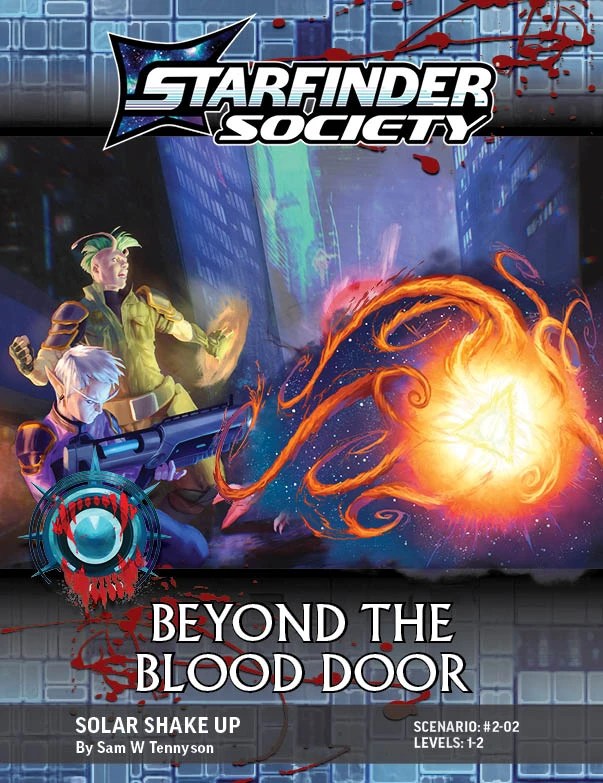
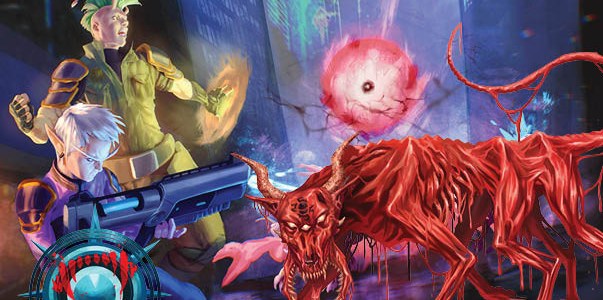
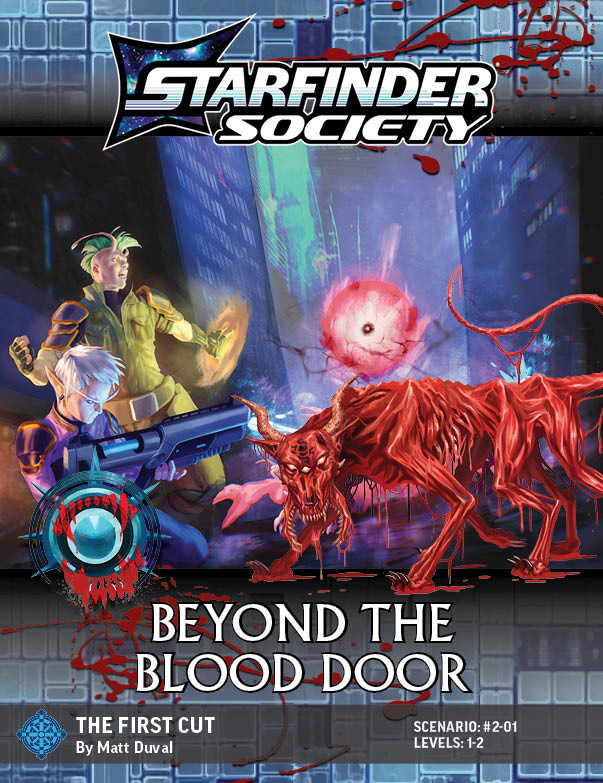
Basics: Ah, a nice normal day WHAT IN THE SARENRAE! Balls of blood appear around Absolom station and pop out monsters made out of blood that attack everyone. Can you save them all?
Mechanics or Crunch: This scenario is combat-heavy with a bit of skill-based challenges where you attempt to stop all the violence. It’s combat heavy, so a social character will be a bit out of sorts. So will exploration-based characters. Skill characters will have things to do. It’s not bad, but you can’t do everything in 3 hours. 4.5/5
Theme or Fluff– Bad stuff happens, and you stop it. That’s the theme, and it does that well. It’s a solid year intro adventure. The story is light, but you are rushing between different issues to try to save as many people as possible. That’s a fun ton of problems to solve. 5/5
Execution: There are new monsters and enough pictures in this one. The monsters have pictures for you to include in the adventure, along with stats for them. There is enough new here that you don’t have to consult too many outside sources to play this one. It also reads quickly and requires only two maps to run. Good old Paizo polish. 5/5
Summary: I like what’s here. It can’t be everything to everyone, but it’s fun. You kill bad things, save people, and stop the problems. All in a day’s work for the Starfinders. It’s also well written and well laid out, so you can read this fast and easily. A good start to a new season. 97%
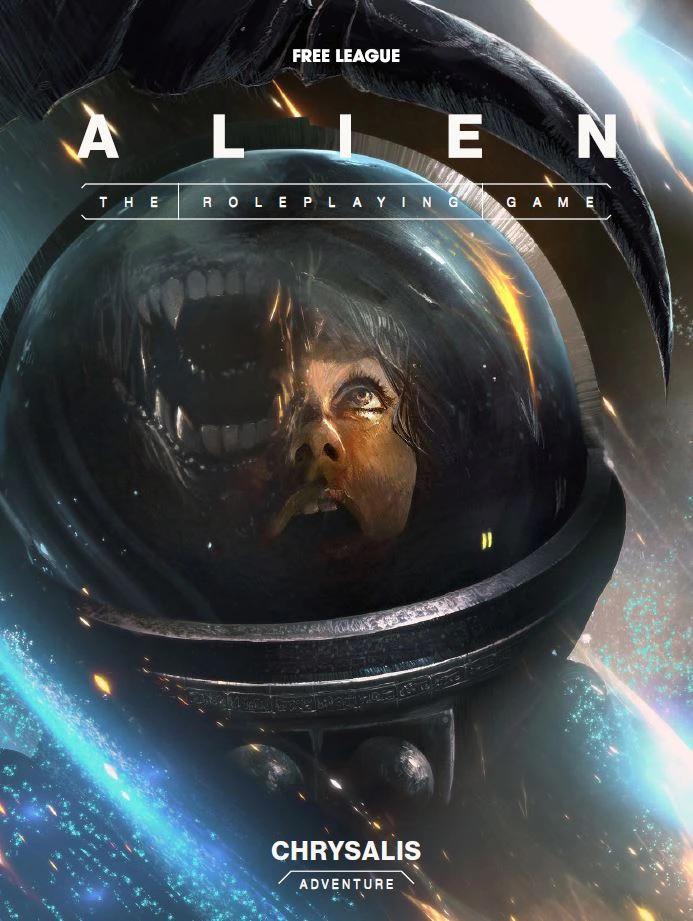
Basics: Time for a fresh start on a new planet. Wait, what did they just load into the hold? Chrysalis is a one- to two-hour demo adventure for Alien RPG Evovled edition. It’s got pregens and maps with some horror-based fun along the way.
Mechanics or Crunch: This adventure has all the pieces for a good intro to the mechanics of Alien. You have a time crunch that illustrates how long actions take. You also have a little combat and a little skill-based checks and a tad bit of panic in there. All the basics are covered to learn this system quickly and well. 5/5
Theme or Fluff– I don’t hate the theme here, but I do think the story needs a bit more direct suggestions. The game has a short intro, but most of the plot takes place aboard a crashed ship. The ship has horror things in it, but you also have to put them where you feel they fit. That’s good, but for a new GM, I’d directly say “put this here” and “do this there”. Also, I like the combat, but I feel it doesn’t belong as much, say, in other events. Honestly, I want more direct Alien corporate evil than the random evil that happens on this adventure. Not bad, but not as Alien as I would have hoped. 4/5
Execution: This is well done, but doesn’t belong as a separate thing. There are maps, pregens, and pieces to help the players really learn this system. But, this honestly belongs at the back of the base book. The base book missed an adventure, and this was it. Also, at GenCon, this was over $ 10. This is a one- to two-hour intro adventure. That is WAY too much for this. It’s good, but that’s too much. 4/5
Summary: This is a great intro adventure. At GenCon, this was being run in the Free League room every other hour. And, this adventure did exactly what it’s supposed to do-it entertains and teaches the basics. I love that. The theme is a bit off, with the Alien being more of a random problem and less about corporate machinations, but that’s ok. The big issue is price. It’s pretty expensive for what you get. It’s good, but it should be a free PDF and given out when you get the main book. 87%