
FIGHT ME!
Guardian Splash Feat 2
Guardian Splash
Frequency three times per day
RIGHT HERE! You gain the guardian’s Taunt class feature that you can use three times per day.
Thoughts?

FIGHT ME!
Guardian Splash
Frequency three times per day
RIGHT HERE! You gain the guardian’s Taunt class feature that you can use three times per day.
Thoughts?

Don’t follow!
Tech Visual
Price 1600 credits
Usage installed in armor
Bulk L
This small canister bolts of any set of armor. When you move, as a free action or as a reaction when a creature moves into the space you vacated, you can deploy the caltrops within that space. The creature moving into that space must deal with the caltrops as normal. After this item is used, you must spend two actions to reload new caltrops into the upgrade.
Thoughts?
I saw that!
Investigator Splash
Frequency twice per day
I have a plan!. You gain the investigator devise a stratagem class feature that you can use twice per day.
Thoughts?
Bend reality
Splash Witchwarper
Frequency once per day
Duration One Minute
The universe bends to you. Choose a witchwarper paradox. One time per day, when you roll initiative, you can warp reality and activate the paradox of your choosing.
Thoughts?

Don’t turn your back on me!
Fighter Splash
Frequency three per day
Oh you can’t walk away. You gain the fighter reactive strike class feature that you can use three times per day.
Thoughts?
Product– Pathfinder Lost Omens World Guide
System– Pathfinder 2nd Ed
Producer– Paizo
Price– $36.99 -here https://store.paizo.com/pathfinder-lost-omens-world-guide/
TL; DR– The best book you should buy and not read through. 100 %
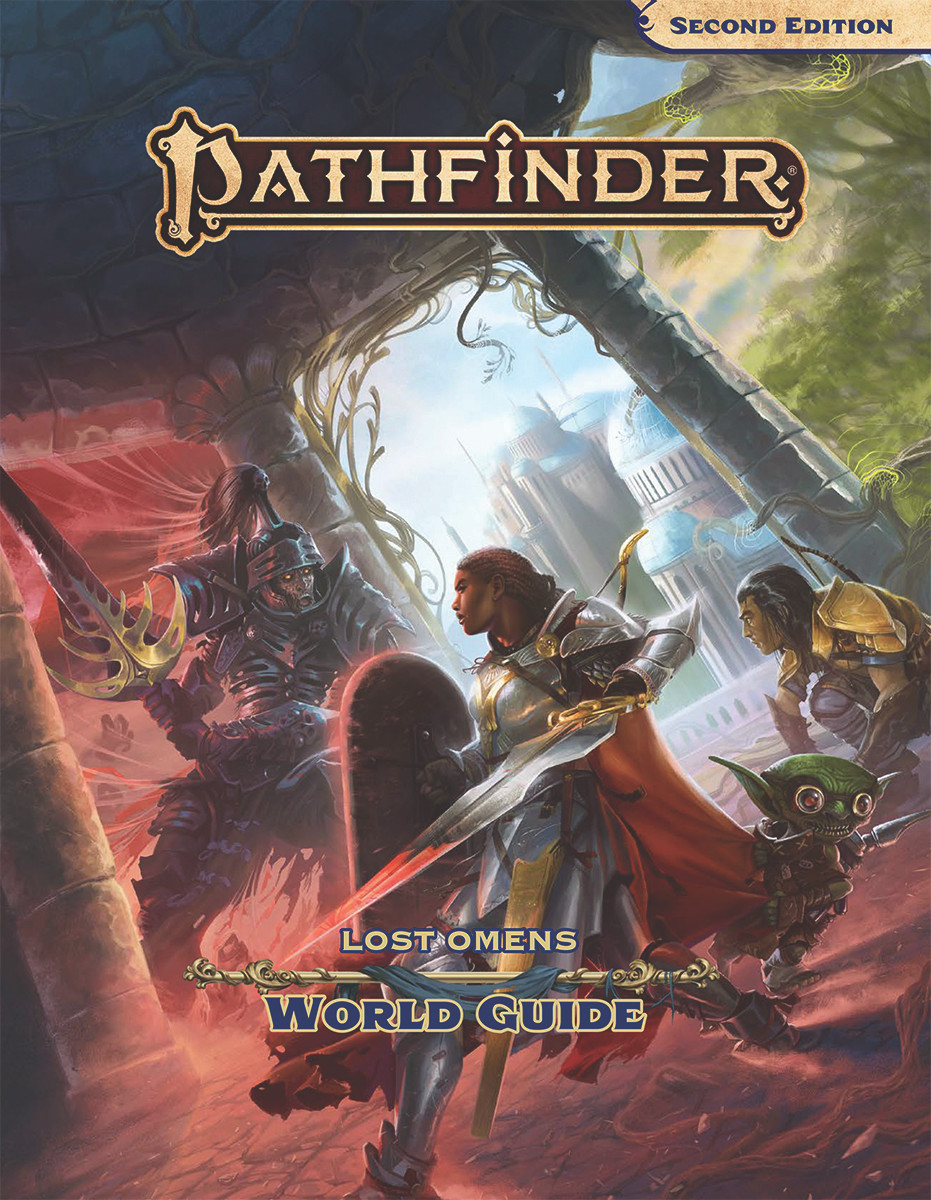
Basics- TIME FOR GEOGRAPHY! Lost Omens World Guide is a section by section world guide introducing the basics of Pathfinder’s main setting. It’s over 100 pages and moves through the world describing different locations and events that set the stage for the current events.
Mechanics or Crunch: Surprisingly, there are mechanics in this book. Each area has backgrounds and an archetype that is specific to that section of the world. This book is by no means a splat book for any character, but it is nice to see the book build options for the characters. 5/5
Theme or Fluff– This is what this book is designed for. The world is built out and the histories explained providing a rich place to play in. The one issue is the sections are short. They have to be because in 130ish pages you have to explain the entire history of the world, the people, the geography, and the governments that shape the lives of billions. It’s a well done source book to understand the world at large. 5/5
Execution: Paizo does good books. I love the set up, layout, and text that’s here. It’s even hyperlinked to make it easier to navigate. Solid book. 5/5
Summary– This is the best book you should buy and not read cover to cover. Honestly, this book is best used as a refresher. If you run Pathfinder Society, you should read a section you need, and then run the game you are set to play. There is a lot here, and you won’t need it all the time. Come back as needed for the games you want to play, but definitely get this book. 100%
SEE THE FLAG!
Commander Splash
Frequency once per day
Duration up to one Minute
The flag STANDS! You gain the commander Commander’s Banner class feature that you can use once per day. The banner provides its bonus for up to one minute.
Thoughts?

That one!
Envoy Splash
Frequency once per day
Duration up to one Minute
That one!! You gain the envoy Get ‘Em ability. You can use this once per day, but you can sustain this ability for up to one minute against a single opponent by using one or two actions, depending on the version originally used, each round to do so.
Thoughts?
Listen here!
Bard Splash
Frequency once per day
Duration up to one Minute
Listen to me! You gain the Courageous Anthem spell. You can cast this once per day, and you can sustain this spell for up to one minute by using one action each round to do so.
Thoughts?
 Throat Punch Games