Casting Time:1 action Range:60 feet Components: V, S, M (a blue marble) Duration: Concentration, up to 1 minute
A 1-foot-diameter blue sphere of light in an unoccupied space of your choice within range and lasts for the duration. Any creature that ends its turn within 30 feet of the sphere must make a Wisdom saving throw feels the crushing weight of failure. The creature has disadvantage on checks saves and attacks while within rage on the sphere on a failed save. On a successful save the creature is not affected. If a creature leaves the area and reenters, it must attempt a save again.
As a bonus action, you can move the sphere up to 30 feet. If you move the sphere onto unaffected characters, they must attempt the save again at the start of their turn.
When you move the sphere, you can direct it over barriers up to 5 feet tall and jump it across pits up to 10 feet wide.
TL; DR– Good light pulp adventure game with a few flaws. 87%
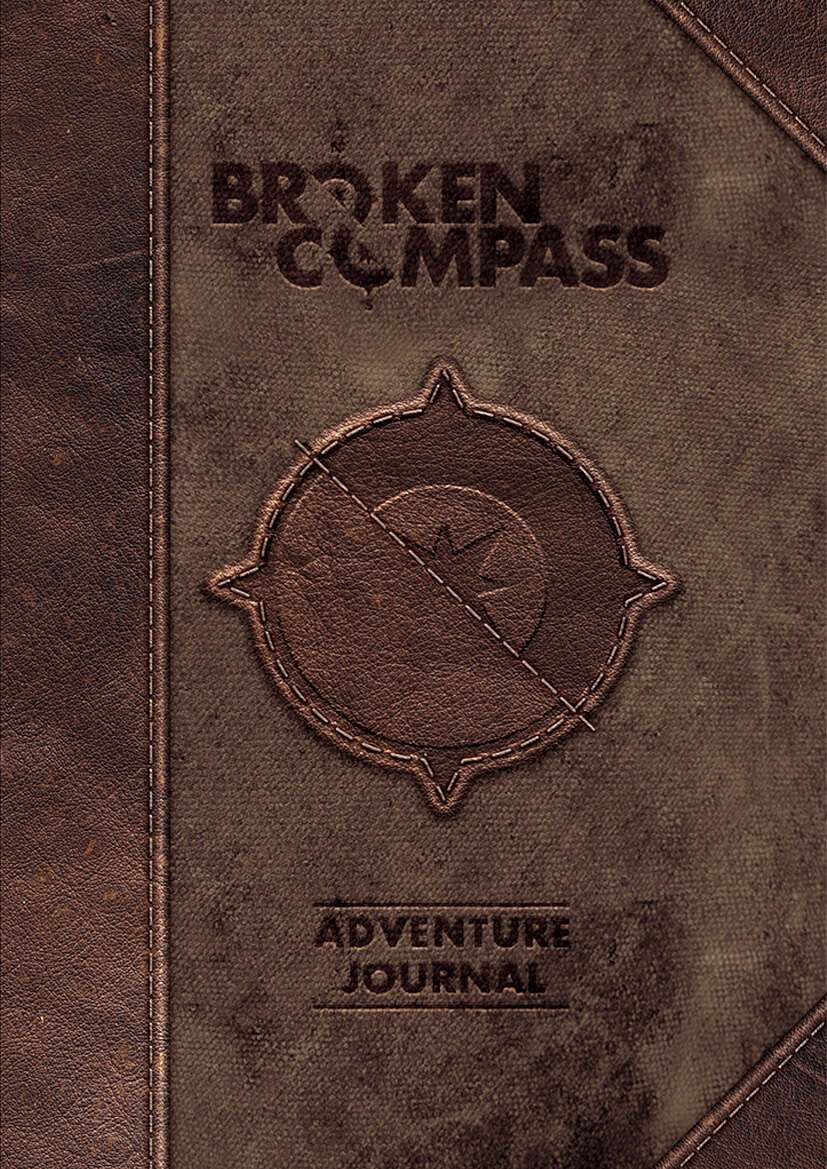
Basics– Onwards to adventure! Broken Compass is a classic pulp RPG where the characters play adventurers like Indiana Jones as they run across the world solving ancient puzzles and surviving gun battles with groups of minions among the skeletons of those that have come before. This is much more of a rules light, roleplay heavy game. Let’s see the pieces themselves.
Character Build- Character generation and build is incredibly easy. Each character has a bunch of skills that you can think of as attributes in DnD and fields you can think of like skills in DnD. Each skill has multiple fields that are linked to it. All players start with 2 ranks in each skill and one in each focus. You get the skill and foci for your character via choosing two tags the describe your character in two words. You also choose expertise that further describes what things your characters are good at. You then get a bit of gear and you’re done. It’s VERY quick.
Base Mechanics-Fitting quick character building, the mechanics are also very quick. When you face a problem in this game, you choose a skill and a field within that skill. The GM called the fortune master may give you additional dice called advantages or make you lose dice called disadvantages. In addition, you may get additional dice or penalties depending on your condition aka how you feel. You roll a number of six sided dice equal to this total. The goal is to get sets of dice with the same value like three of a kind. For basic challenges, you need two of a kind. For challenging encounters you need three of a kind and so on. Some conditions and events require you to get multiple sets to succeed like shooting a gun as a challenging encounter while driving a car in a storm as a basic encounter. If you fail but have one set but not enough of that set, you can risk the result and reroll any dice you want to hopefully get the successes you need. In addition, if you have expertise from your character background in what you are doing, you get a reroll for free on that activity.
Challenge vs danger– There are differences between reading an ancient scroll and shooting a nazi. This is reflected by challenges and danger. Challenges are fail forward encounters where a player attempts something that might fail, but if they fail the story continues. This may alert the enemy or cause you to miss a vital clue yet find the hidden temple just not notice the trap at the entrance. Dangers are fights or traps that might hurt a player. If you fail a check, you take damage in the form of luck. Basic challenges cause you to lose one luck while more advanced things cause you to lose much more luck. When you are out of luck (the book is VERY pulp heavy!), you have to spend a luck coin to stay in the fight. Between fights, you can rest up and get back your luck.
Let’s dig deep into my thoughts on this game!
Mechanics or Crunch-This is a fast game that is not for crunch heavy gamers. The game is very light and lets the players just free form ideas as long as the GM goes with it. It’s also reminiscent of Numenera as the GM doesn’t really roll dice. Players roll dice and success or failure determines what happens, not GM rolls or attacks. When a player is attacked, the player tells the fortune keeper how they avoid the attack. It’s very fast. The one problem I have is I would like a bit more complexity. It’s solid enough, and I like rolling d6s and hoping for sets. But, I like a bit more crunch for the system. Feats or special abilities would help a bit here. Also leveling up doesn’t really get you much. That’s good as the players can hop in to basically any adventure, but it also means long term play doesn’t net the characters many gains. The system I compare this the most to is Numenera, and in that system when you level up, you get a bit more. Also in Numenera, there is just a bit more crunch for players to dig into. Broken Compass is fun and light, but I want a bit more crunch in this system. 4.5/5
Theme or Fluff-Hands down this is an amazing, fluff filled game. Every character is set up to look like a pulp stereotype, both modern and old school. The adventures are written to be replaceable and generic but relatable in that classic way as things like OLD MAN, ANCIENT TEMPLE, RIVAL are used to be plug and play with different characters but the fortune master is given tons of different materials to help make the story. Is the OLD MAN a survivor of the great war who saw the temple in the Jungles while on patrol or is the RIVAL a silicon valley billionaire out for world conquest with the Eye of Ra? Its light in a good way so you can put this into any time or place with that good pulp feel. Stories flow from Amazon adventures to exploration under the Egyption pyramids. Every page has lots of fluff and art that makes a player or a fortune master feel like they are part of a classic pulp book in the discount bin of a grocery store. If you want to feel like your Indiana Jones or at least someone reading an Indiana Jones story, this is a solid book to read through. 5/5
Execution– PDF? Yes. Hyperlinked? Yes! I like this book, but don’t love it. The book reads well, is well laid out, and has great art. There are even pregens and a quick adventure where the players and the fortune master can get playing asap instead of having to figure out character generation and adventure creation on their own. Those are all great reasons to check this book. But, the major fault of this book is I need more on how to run the game. There are explanations of how single players encounter things, but I need a bit more on how multiple players encounter a thing. Does everyone face the threat or just one? Even fighting one on many, how does that work? A bit more would really help me better understand how to run this game. This is a solid game, but it needs a bit more explanation to make it rock solid. 3.5/5
Summary-I like this game, but it has some small faults. The idea of rolling a bunch of dice and hope for sets of numbers is a fun one. The theme is great and well presented. The book overall is a solid read and way to get into the game. One major issue I have is I want more crunch, so players feel like they are progressing. Good for one shots or short campaigns, but longer multi story arcs might not be as much fun. The other major issue I have is I need more explanation on how to run this as a fortune master. The system works, but I have questions if I’ve done it right. That’s never a good feeling to have. If you play with people who just want to have a good time, it will be fun. But the power gamer out there won’t enjoy this as much. If you want some good pulp, this is worth your golden idol. If you need a bit more crunch and a bit more explanation, maybe look in another tomb. 86%
Heard about the skinwalker ranch and how they feared the blue sphere the most. It made them feel full of anxiety. SPELL IDEA!
Sphere of Anxiety Spell 2
Traditions arcane, occult Bloodline fey Deities Bes, Kofusachi, The Lantern King Cast
somatic, verbal Range 30 feet; Area 1 5-foot square Saving Throw Will; Duration sustained
You create a blue sphere of light in a square within range that saps the targets will to live and do anything. The sphere must be supported by a solid surface, such as a stone floor. All creatures within 30 feet of the sphere must attempt a Will saving. If a target leave the area, it is no longer affected by the spell. If it reenters the area, it may need to make another saving throw again. On subsequent rounds, the first time you Sustain this Spell each round, you can leave the sphere in its square or roll it to another square within range
Critical Success The target is unaffected. If they leave and come back, they will not be affected by the spell again until you cast the spell again. Success The target becomes clumsy 1, enfeebled 1, or stupefied 1 for one round ( your choice). After the condition ends, they can stay in the area and not be affected again by the spell. If they leave and come back, they will not be affected by the spell again until you cast the spell again. Failure The target becomes clumsy 1, enfeebled 1, or stupefied 1 (your choice) until they leave the spell. Critical Failure The target becomes clumsy 1, enfeebled 1, and stupefied 1 until they leave the spell.
Here is what I REALLY wanted to make yesterday. We need the first thing to make the second.
Bomb of Tricks
consumable, uncommon
Several different versions of this bomb exist and all are color coded to the bag of tricks item they work as. When you throw this bomb, a random animal from the same colored bag of trix appears within 30 feet. You comand the animal as if it was summoned from a bag of tricks. The animal last as long as if it was summoned from a bag of tricks and the bomb is expended after it explodes and summons the creature.
No bag of tricks in Pathfinder 2e? What is this!? Time to get to work.
Bag of Tricks Item 4+
Conjuration Extradimensional Magical Usage held in 2 hands; Bulk 1
This small sack appears empty. Anyone reaching into the bag feels a small, fuzzy ball. If the ball is removed and tossed up to 20 feet away, it turns into an animal. The animal serves the character who drew it from the bag for 10 minutes (or until slain or ordered back into the bag), at which point it disappears. As an action, a character can give the creature two actions as per the animal companion rules. Each of the four kinds of bags of tricks produces a different set of animals. Use the following tables to determine what animals can be drawn out of each.
Animals produced are always random, and only one may exist at a time. Up to 10 animals can be drawn from the bag each week, but no more than two per day.
You can inspire you and your allies during a full day rest. If you and your allies within 30 feet spend a full day resting, doing no strenuous activity, casting no spells, nor making any checks, you gain a +1 moral bonus to attacks, skill checks, and saves for 24 hours or until you lose your stamina points.
At 6th level, you can spend 1 Resolve Point to increase to bonus to +2.
You know how to help people unwind. If you play this song while you and up to seven other people rest for a full 24 hours and you do not perform any strenuous action, cast any spells, nor perform any action that requires a skill check, you and your audience gain a +1 status bonus to all attacks and skill checks for 24 hours or until you gain the wounded condition.
Thoughts? What do people think about being bolstered on the first day of a journey?
I don’t see many uses for downtime days. Would you spend them for a benefit?
Restful
Sometimes you just got to relax. If you spend one complete day resting with no major physical activity such as fighting, no skill checks, nor casting any spells you gain a +1 bonus to checks, skills, and saves for 1 day or until you are reduced to zero hit points. Up to five other creatures can vacation with you and gain the benefit, but they must also do no activities as well.
Thoughts? Is this a given? Is this too OP? Is it something you already do without a feat?
Push through the pain! Three times per day, when an effect would cause you to no longer be able to perform actions such as confusion, being rendered unconscious, or losing control such as being dominated, you delay the start of the effect for one turn. If you damage the caster or creature who made the effect within that round, that must make a concentration check to maintain the effect or spell possibly ending the effect before it begins. If the effect is not ended after the delayed turn, the effect starts as normal.










 Throat Punch Games