Ring Side Report-Board Game Review of I Hate Zombies

Product– I Hate Zombies

Producer-Board Game Geek

Price– $ 8 but only through the kickstarter so far

Set-up/Play/Clean-up– 30 minutes (2-12players)

Type-American

Depth-Light

TL; DR-A great, simple game to get a group playing quickly. 95%

2015-08-27_1440648743

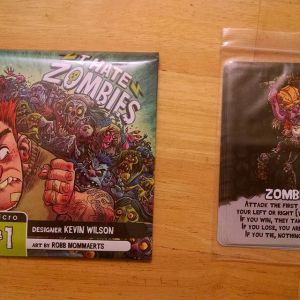
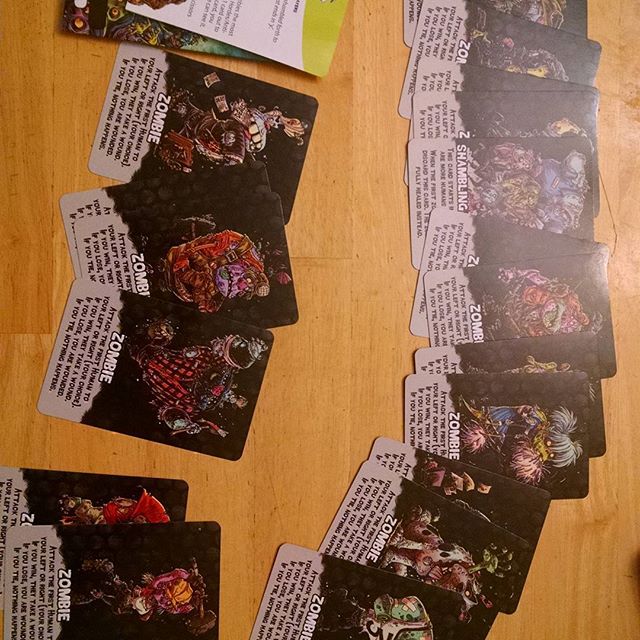
Basics-Man, I HATE ZOMBIES!  I Hate Zombies is a quick party/social game where players get to be either zombies or humans.  After everybody is dealt a card, every other player flips their card from the human side to the zombie side.  Zombies, and only zombies, then attack a human on their right or left by playing rock paper scissors.  If a human lose, they take a wound and turn their card.  If a human takes two wounds, they become a zombie!  If the human wins, then the zombie takes a wound.  Three wounds to a zombie, and that player is out of the game.  Every human has a power that ranges from healing to insta-killing one zombie!  If only humans remain, then the humans have won.  If all the players become zombies, then the zombies win!  It’s that simple.

2015-08-27_1440648789

Mechanics–   This game is crazy combination of Coup and Rock Paper scissors.  It’s fast, fun, and crazy.  However, only the zombies attack.  That’s kind of boring for the human players as they have to just endure the attacks from the zombies.  It doesn’t make me hate the game, but it is a bit boring.  However, it does move fast enough that players get a great taste of the game quickly keeping them from getting board.  4.5/5

2015-08-27_1440648836

Theme-This is a crazy American style game.  Play moves fast, so it does feel like a zombie hoard.  Overall, it’s great.  The humans all feel distinct, but the zombies all just feel like the same old thing.  That could be intentional as the zombies are now a hoard, but I’d like for the zombies to feel a bit distinct.  Furthermore, there isn’t much story here.  It evolves as you play if you play with a great group, but the game itself isn’t a story powerhouse. 4.5/5

Instructions– The rules to the game are short enough they could be written on a napkin.  It’s that simple. It’s also simple enough to be quick playing and easy to explain.  Good job!  5/5

2015-08-27_1440648914

Execution–  This game is a bunch of cards, a bunch of people, and rock paper scissors.  You have to try to screw that up!  What I did get was some awesome art, great physical card stock, and a nice pouch to hold it in that fits in a CD holder.  And the best part is this game costs somewhere around eight bucks.  You get a whole microgame that can get a whole room of people playing for about the cost of a hot and ready pizza from Little Caesars!  5/5

Summary-This is a simple fun game.  It’s not the most complex game out there, and it lacks a little in theme, but it makes up for that in simplicity, speed, and fun.  If you need to get a whole room of people playing a game to break some ice, you would be hard pressed to find a better game than I Hate Zombies! 95%

Ring Side Report-Board Game Review of Diamonds

Ring Side Report-Board Game Review of Diamonds

Product– Diamonds

Producer-Stronghold games

Price– $ 25 here http://www.amazon.com/dp/B00NFSBU9Y/ref=sr_ph_1?m=A7YAR2WDYOPTK&ie=UTF8&qid=1440129851&sr=sr-1&keywords=diamonds

Set-up/Play/Clean-up– 30-45 minutes (2-6players)

Type-Euro

Depth-Light

TL; DR-Best parts of several trick tacking games. 92.5%

basics

Basics-Time to throw Eucker, Hearts, and Spades into a blender!  Diamonds is a trick taking game that combines the best of all of the above.  Players are dealt 10 cards, and the dealer will decide to trade one to three cards.  All players then choose that many cards from their hand and pass them to their neighbor.  Next, the player to the left of the dealer will place one card down.  These cards have values between one to 15 and have the four suits found on any normal deck of cards: hearts, spades, diamonds, and clubs.  Each player then has to place a card of the leaders suit, if they have any, or play any other card, if they don’t have the same suit as this trick’s lead card.  Here is where the game becomes more than just a trick taking game.  Each suit has a power associated with it.  Diamond cards place a diamond behind a small screen called your vault.  Hearts place a diamond in front of the vault in your vault.  Spades take a diamond from the front and place it behind your vault.  Clubs steal a diamond from in front of another player’s vault and places it in front of yours.  Whoever played the highest card with the lead’s suit gets to take all the played cards and set them next to his or her screen and then take that suits action.  If you couldn’t play a card with the lead’s suit, you just take the action associated with your suit.  Playing off won’t get you cards for the round’s end, but it does get you whatever power the card you played has.  Whoever won that trick then becomes the next lead player for the next trick.  After 10 tricks each round, all players separate their cards into four piles based on the suits.  Whoever has the most number of each suit gets to take that suits power again.  If you didn’t get any tricks, and thus have no cards, you get two free diamonds placed right into your vault instead.  Play then continues with a new dealer.  After each player deals one or two times, depending on the player count, each player counts their diamonds with diamonds in your vault worth two points and those in front being worth one.  The player with the most points wins!

2015-08-21_1440178740

Mechanics–  I’m from Michigan, so I knew this game from another game called Eucker.  Eucker is fun, but it lacks depth.  This game is amazingly deep for a trick taking card game.  Sometimes you do better by playing off than ever winning a single trick.  Sometimes, you need to win every trick.  That evolving strategy is amazing.  Also, the game isn’t hard to play.  I do love me some 8-hour, math fueled, Euros where I build cars, but you will learn this game in under 3 minutes, master it in 10, and have a chance of winning in 15.  Honestly, this is a well done game.  5/5

Theme-Theme is a hard concept in your average trick taking game.  What’s here is ok.  There really isn’t a story here.  But then again, I’m not really looking for one.  I’d like more, as I’ve seen some reskinned trick taking card games with more theme, but I didn’t expect too much going in.  The components are nice and do build a bit of a world, but don’t play this game if you need something like Dark Moon’s story.  3.5/5

Instructions-That paragraph above is all you need to play this game.  The rulebook is as short as it needs to be.  The game is an extremely simple to play game, so the rules don’t have to be too difficult or cover too much territory.  The extremely helpful thing included in this game is a cheat card for every player giving some quick iconography on how the different suit powers work.  Honestly, this is a slick, simple rulebook that will get you playing in about 5 minutes even if you’ve never played a trick taking game before. 5/5

2015-08-21_1440178787

Execution-This game is a small game, but not a poorly put together one.  You can see all the components here: http://youtu.be/dugtHKid-Ko . The game is about a quarter the size and weight of most of my other games, but that doesn’t hurt its delivery.  The game comes with cardboard standee vaults, a deck of cards, and plastic diamonds.  What is here is well done and beautiful.  The art is distinctive, but not distracting.  The diamonds are nice plastic pieces that you want to collect.  It’s a power-packed box.  5/5

Summary-Diamonds is the game I bring with me when I hang out with my family in Michigan.  It’s got the simplicity of Hearts, but the depth I need in a great board game.  It has great components and instructions.  My only real complaint is the theme, and the only reason I ding this game on theme is I play too many RPGs, and I want theme in everything I play.  If a games story isn’t the most important thing to you, then this is an amazing, easy to play trick taking game that’s a great game to add to any collection.  92.5%

Ring Side Report-Board Game Review of Game of Crowns

Product– Game of Crowns

Producer-AEG

Price– $ 25 here http://www.amazon.com/Game-of-Crowns-Board/dp/B00V8Y2P78/ref=sr_1_2?ie=UTF8&qid=1439267414&sr=8-2&keywords=game+of+crowns

Set-up/Play/Clean-up– 30-45 minutes (4-9(!) players)

Type-Euro

Depth-Light

TL; DR-Love Letter Evolved. 94%

pic2456462_md

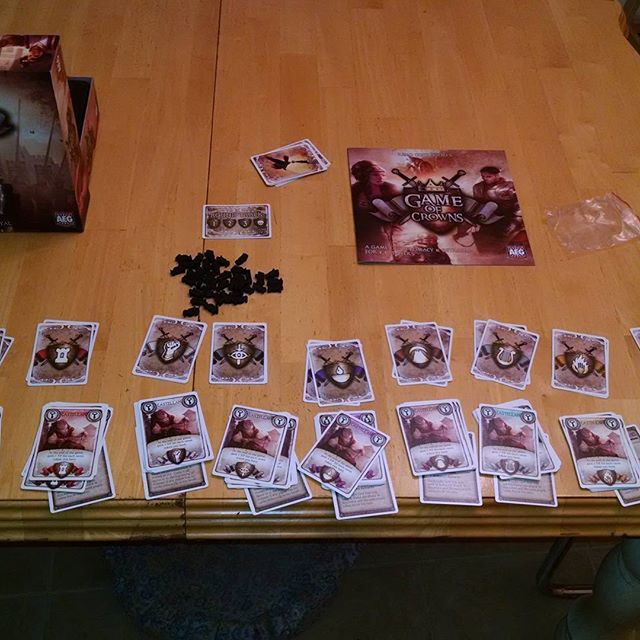
Basics-In the Game of Crowns, you manipulate, scheme, triumph or you die! Game of Crowns is the next step in the evolution of Love Letter.  Players take the role of one of several different noble houses trying to take the top spot in the kingdom.  This is done over the course of three turns.  Each turn, a player will play one card or attempt to trade cards.  Trading is simple.  The active player offers one card.  Then, all other players have to offer a card in response.  The active player can add a second card to his/her offer, and all players have to follow suit.  Any player can sweeten their deal by offering crows (the main currency in the game).  Finally, the active player chooses one other player, and they exchange cards.  Playing cards is equally as simple.  On a player’s turn, that player selects one card from his or her hand, and plays it for its action.  You start with coinage and knights.  Coinage is just choose a player, steal a random card, and then give them coinage.  Knights are the main combat power of the game.  When you use a knight you choose a player.  Then, all players choose secretly if the defender or the attacker is the winner.  After all players reveal their chosen side, all players can then spend crows to increase the power of their chosen side.  Whoever wins gets to look at the other player’s hand, choose one card, and steal that card or to take a card from a random deck of cards that provides new ways to score points.  The knight that started the fight is then discarded, and the losing side gets all the spent crows.  After three rounds, players score points based on the cards in their hands.  Some cards only give you points such as the trader (coinage), princess (knights), and castilian (crows).  Another card, feud, gives you points if you have the most of it compared to all the other players.  Who ever has outmaneuvered their opponents the best and has the most points at the end is the winner and the new king!

Mechanics-This game is simple and quick.  It’s the the speed of Love Letter’s draw one, play one, and the added depth of microgame Dominion.  I like the variety of different ways that players can play this game by focusing on the different paths to victory.  It’s not perfect; if your group of friends just won’t see how you losing to your other friend makes them all lose, you won’t enjoy the combat much.  Pick your battles well, but keep in mind that the people shape this game to a high degree.  4.5/5

2015-08-12_1439345391

Theme-AEG is a great company for theme.  Sure, you could play this game and ignore the theme completely, and some players will.  However, AEG builds on this game by having a few pages that must describe the families in the game. They didn’t need to do that, but those touches help draw me in that much more.  It’s not perfect as you’re still only do some minor story things in game terms, but I do feel like a noble family maneuvering through intrigue in this game.  4.5/5

Instructions-The game has great instructions with only one fault.  I wrote the instructions out in one paragraph above, and that right there is all you really need.  The rule book does that well, and give you a bit more.  The only real problem is the Feud cards.  There is some debate if Feud provides exponential points or just increases as you gain more cards.  If you check Boardgamegeek, you find that those cards are just scored according to the most cards, but other sites say the opposite.  I’d like a bit of clarification, but overall, if you decide among your friends how that is played, you will easily be able to pick up the game and play this out of the box no problem in under 10 minutes.   4.75/5

2015-08-12_1439345465

Execution-I’m going to complain about something I thought I would never say-the game box is too big!  That’s pretty weird to hear me say, but this game almost fits in a Love Letter bag no problem.  That said, that’s an awesome problem to have.  Too many games don’t fit in the box they came in.  This game has great card art, good card stock, and crow meeples!  Top notch work, AEG!  In fact, if you want I’ve made an unboxing video here (http://youtu.be/5B7hC3svWng) if you want to see all the components of the game.  5/5

Summary– I love AEG.  They constantly put out top notch games that don’t require hours to play.  Sure I love my 4 hour Euros, but this one is a simple game that plays quick, and can even include non-gamers without spooking them away like a round of some other games.  And the player count is amazing!  Up to nine people can play this game.  That’s a true blessing.  I’ve had way too many game days at the local store where they couldn’t handle the fifth player.  Now you can run that fifth player and his friends.  Good rules, great mechanics, and some well-written, if slightly flawed, rules all make this game a pleasure to play.  This game isn’t that expensive and if you want a bit more meat on the bones then Love Letter gives you, Game of Crowns is an excellent addition to your library.  94%

Dual Review!  Ring Side Report-Board Game Review of The Duke AND Jarl!

TWO reviews in one!  First The Duke, then Jarl!

pic1688903_t

Product– The Duke

Producer-Catalyst Game Labs

Price– $ 40 here http://www.amazon.com/catalyst-games-CAT13000-The-Duke/dp/B000BU6F5I/ref=sr_1_2?ie=UTF8&qid=1437752656&sr=8-2&keywords=the+Duke

Set-up/Play/Clean-up– 30-45 minutes (2 players)

Type-Euro

Depth-medium

TL; DR-Chess, now with a touch of random.  94%

2015-07-19_1437343926

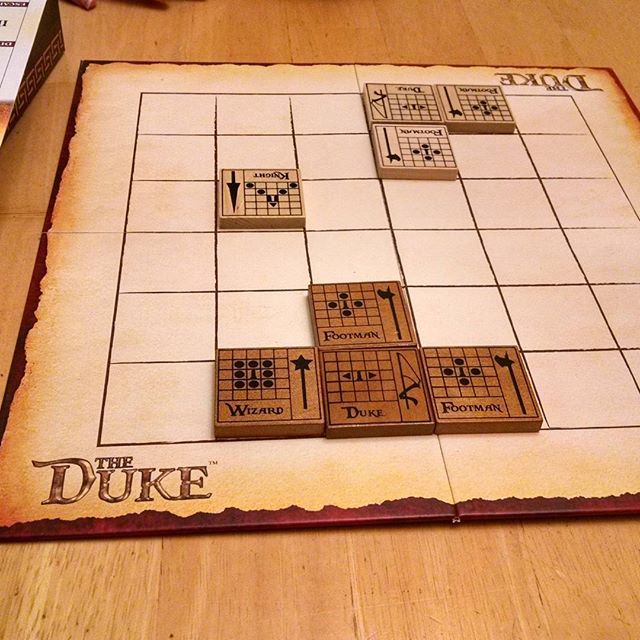
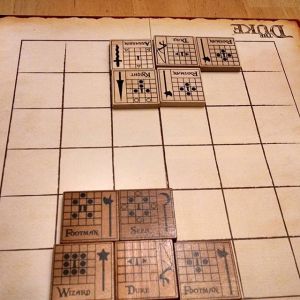
Basics- Two meet on the battlefield, but only one can rule!  The Duke is a miniature war between two dukes.  The main goal of the game is to capture the enemy’s duke.  If this sounds like Chess, then you’re on the right track.  Two new mechanics separate this from Chess: 1) random piece draw and 2) variable piece movement.  On a turn, you can do one of two things: draw a new piece or move/activate a piece.  The pieces themselves have a miniature board on them indicating how they move, what squares they move to, and any special powers in each square.  Some actions are moving across spaces,  some are hopping over spaces, some moves are not moves as they just attack spaces at a distance.  What is interesting is after a player does use a tile, that tile flips to another side, thus providing two different tactics for each piece.  The other option is to spawn new pieces.  Each player has a bag of tiles, and when they spawn a piece, the player randomly draws a new tile and places it adjacent to his/her duke.  Play goes back and forth between the players as they capture tiles, move across the the board, and try to outwit one another to capture the opponent’s duke.  Last duke standing is the winner.

Mechanics-I’m not a Chess player.  Sure, it’s fun, but it’s never been my go to game.  The Duke, though, is fresh enough to draw me in.  The constant flipping tiles and random tile draw makes this an innovative game as pieces can change from a knight/bishop hybrid to some new version of a jumping rook.  However the best part of this whole thing is the new moves are all balanced, as well as easy to use.  No one peice will completely break the game, and no piece will leave you scratching your head as to how to play them. 5/5
2015-07-25_1437830747

Theme-Theme is hard to do in a Chess game.  This game has some nice wooden pieces as well as some decent board art.  The tiles all do actions that their names would imply.  Overall, its a well done version of a war between two flat kingdoms.  4/5

Instructions-The rules to this game are a bit long.  The Duke has a lot of ground to cover, but does it well.  I’d like them to trim down the rules a bit, but they do have some excellent game aids to get you playing quickly.  Those extra cardboard sheets will be the thing you most often reference as you plan out your attack.  I’d rather have less than more, but sometimes more is not exactly more.  4.75/5

Execution-Chess is a classic game, but this not only improves on that, it adds new game modes.  You can fight a dragon, you can add new terrain to the map to challenge both players, and the game is expandable by adding heroes from classic literature.  I love what comes in this box.  See all the parts in our unboxing here! http://youtu.be/QvLnLKnO360  5/5

Summary–  I’m not a Chess player, nor is my wife, but we both liked this game.  The simple nature of each tile really makes this game approachable.  The random nature of the tiles also means that veteran players will have to adjust strategies on the fly, while new players won’t instantly be squashed.  It’s got great components.  I’d like to place the rules on a diet, and possibly give it a tad more theme, but overall, this is a game I can play.  The true test is that this is a two player, head-to-head game and my wife will ask to bring this one to the table.  That right there tell you that this is an excellently balanced, fun, fast game. 94%

The Duke was the base game.  Now let’s look at the stand alone expansion-Jarl!
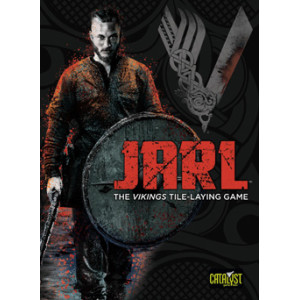
CYT77010

Product– Jarl

Producer-Catalyst Game Labs

Price– $ 40 here http://www.coolstuffinc.com/p/214869?gclid=CjwKEAjwxMetBRDJx6Sz2p7DsQ0SJADJHAqNSkh_fdZr_-s-PcavakfffwNNRmfdKrrIvPH6X2q4lRoC0ejw_wcB

Set-up/Play/Clean-up– 30-45 minutes (2 players)

Type-Euro

Depth-medium

TL; DR-The Duke, now with a touch of Vikings.  93%

2015-07-25_1437831013

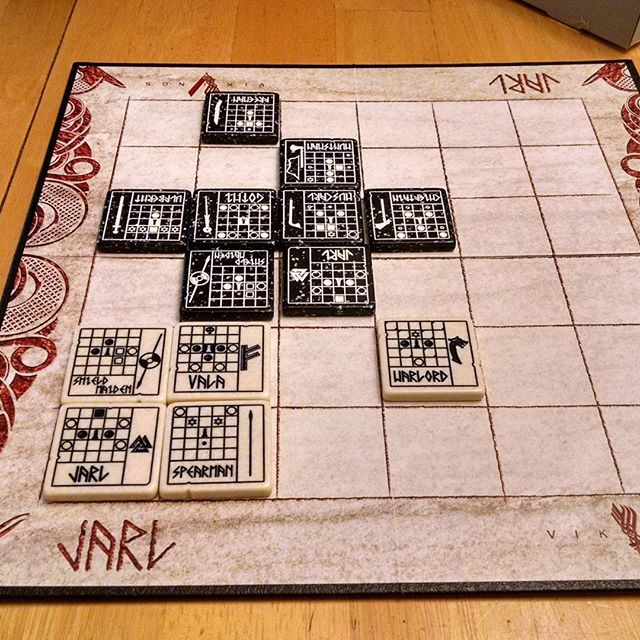
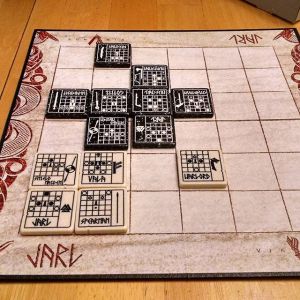
Basics- It’s time to go to war!  Jarl is a stand alone expansion for The Duke.  Just like The Duke, players start with a few pieces on the board, and on a turn can either move a piece which causes the piece to flip at the end of its movement, or randomly draw a new piece and place it on the board.  Aside from that simple introduction, this game plays like Chess.  Players attempt to maneuver their opponent into a situation where their king or Jarl will be captured.  Last man or women standing is the winner

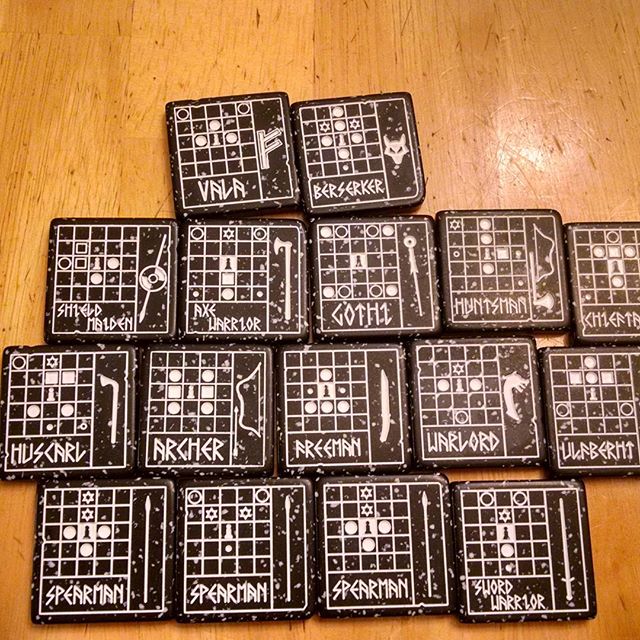
Mechanics-This is chess, but fun.  The Duke has awesome, simple mechanics.  Instead of remembering how each piece moves, the simple diagrams provide all the explanation a player needs to make smart choices.  The flipping of each piece is just amazing as the quick transition is easily pulled off and creates a dynamic play experience.  I even love the randomness that comes out of this game.  Master players will always have to adapt to new pieces, while novice players won’t get steamrolled like most new chess players might.  5/5

Theme-This game is chess, so there is only so much you can do for theme.  I do like the nice touches to the pieces like the lettering and the rune like carving and imperfections on the tiles.  those are great additions, but as a standard game, you don’t have much motivation beyond kill the other player.  That’s fine as this is alternative chess, not a session of DnD or Shadowrun.  4/5

2015-07-25_1437831200

Instructions– My only significant problem with The Duke was the rules.  I felt the rules were a bit too long.  Jarl trims down the rules to a few simple pages while still keeping the awesome cheat sheets for moves.  That’s what I asked for, and it’s exactly what I got.  5/5

Execution– Here is where I sound like a hypocrite.  I love theme in games, but there is a bit here that hurts the game.  I can’t read some of the tiles as the runic alphabet is a bit hard to make out.  I can still easily play the game, but I can’t read the pieces out loud.  Not the worst thing I’ve seen in a game, but it’s a bit of a problem.  Also, this game comes with fewer pieces.  That’s not horrible, but you don’t get the raw variety of game modes as you do with the Duke.  This game doesn’t even come with a mountain tile to make some terrain on the battle field.  None of these are game ending or even game changing changes, but it is a slight step back from the awesome parts in The Duke box.  See all the pieces here: http://youtu.be/QvLnLKnO360  4.5/5

Summary– Jarl feels like The Duke with Viking Additions.  That’s exactly what it should be, so this is a homerun from that standpoint.  It does have improvement such as trimmed up rules.  It also has some back steps like the smaller tile count.  Overall, if you like Vikings more than medieval kings, Jarl is an excellent addition to any two-player gamer collection.  93%
2015-07-25_1437831280

Jarl vs. The Duke!

Let’s say you only have $40 and you step up the the Catalyst booth at GenCon-What are you going to buy?  Jarl and The Duke play extremely similarly.  Jarl and The Duke both have the exact same mechanic of either activate/move a piece or draw a new piece.  And, both do that well.  Jarl pieces tend to interact more with shield maidens protecting other pieces and so on.  The Duke pieces tend to be much more straightforward, not simpler, actions.

The major difference between the two is execution.  Jarl has less in the box but better theme.  The Duke comes with more pieces, options to make your own pieces, and even a dragon expansion in the box.  Jarl has more theme as the pieces are runes carved from almost bone and a runic alphabet.
So, you have your 40 bucks, what do you buy?  Well, I’m more of a fantasy guy, so I vote The Duke. I do like a bit more complexity in my games, but The Duke give me extra pieces, and more game options.  But, it’s a tough choice.  If you can’t get The Duke, and a copy of Jarl is nearby, that is an excellent alternative.

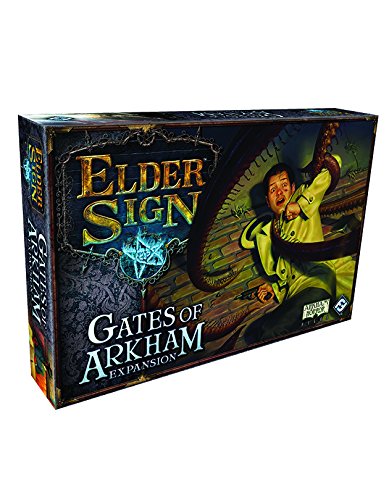
Ring Side Report-Board Game Review of Elder Sign: Gates of Arkham

Product– Elder Sign: Gates of Arkham

Producer-Fantasy Flight Games

Price– $25 here http://www.amazon.com/Elder-Sign-Gates-Arkham-Expansion/dp/1616619198/ref=sr_1_2?ie=UTF8&qid=1436731542&sr=8-2&keywords=elder+sign%3A+games+of+arkham

Set-up/Play/Clean-up– 45 minutes per scenario (1-8 players)

Type-American

Depth-medium

TL; DR-Arkham Horror in Elder Sign! 97%

51y8XUwB-iL

Basics- Time to leave the museum.  Games of Arkham is the second expansion to Elder Sign, and now players will explore Arkham trying to stop the spread of the Old Ones.  For the most part, the general mechanics are the same.  Basically, each round a player draws a mythos card.  This mythos card adds new challenges and opportunities for the players.  Then, players take their individual turns.  First, they move to open locations.  These locations have a number of dice symbols in rows on them.  A Player rolls the dice and try to match their symbols to all the symbols on a row.  If they can complete a row, they place those dice on the card, reducing the number rerolled, but succeeding on part of the task, and rerolls the dice.  If not, they remove a die, and rerolls the dice.  That player either solves all the rows of dice symbols, or they fail.  Each location has a success results and failure results.  Then the player advances the clock, and play continues.  When the clock advances four times, either from players taking turns or location effects, a new mythos card is drawn.  The game continues until either the ancient evil coming to destroy us all arrives… and destroys us all or the players amass a number of elder signs to hold the eternal evil off for a bit longer.

Gates of Arkham adds a few new things.  One, a new deck of locations that are all locations in town and not rooms in the museum.  Two, new locations enter play upside down with effects on their back!  Unlike in the base game, cards now will affect the players before they enter play thus forcing players to go to hard locations because these locations have effects that are worse if they are not dealt with.  Three, a new mythos deck dedicated to the town of Arkham instead of the museum.  And four, new gate mechanics.  Gates are now tied to locations as each gate has little standyies that tie a location and an other world location.  You have to enter a gate to to to another world locations cards.  Gates are just as hard, but if you can’t place a gate because all the standyies are out, then bad things are about to happen!

2015-07-12_1436735471

Mechanics– This is the ultimate step in the right direction for an expansion.  I LOVE Arkham Horror, but it’s 45+ minutes to just set up the game without touching a single die!  This game is 15 minutes of set up the first time you use it and less than five after that.  The core mechanics of Cthulhu yahtzee haven’t changed, and that’s great as they are still simple and fun.  The new ideas of location effects, enter locations semi-blind, and tying Arkham and other world locations together are all amazing and reflect the Arkham Horror mechaincs.  My only real problem are the expansion characters.  Most you will look over, then decide to not use.  This new round seems a bit too topical to be that useful.  They are not broken, but not as great as many of the others.  The game is still as American style as it can be.  You WILL lose because you will roll poorly.  You WILL not have enough time.  But, it WILL be fun!  4.5/5

2015-07-12_1436735548

Theme-Take Arkham Horror, remove ¾ of its game time, and you have this.  If you read the cards, locations, and fluff text, you have an amazing Lovecraftian experience in under an hour.  It’s a game the builds its own story organically, and something you will enjoy as it does.  5/5

2015-07-12_1436735657

Instructions– I’m honestly impressed.  The game has great instructions.  It’s not hard to understand, the rules flow well, and they read fast.  5/5

Execution-First, the complaint-there is too much in this box.  The box itself is offset in shipping as there is just too much here.  I know that’s a horrible complaint.  WIth that soft complaint out of the way, the game is amazing.  I like the art.  The card iconography is well done.  The cards themselves are great quality.  I even love the standyies!  They don’t destroy the components when they are assembled!  This is honestly a well done expansion.  You can see all the pieces during our unboxing video here: http://youtu.be/R–M3ZSPZfQ !   4.95/5

Summary-This is as close to a one hour Arkham Horror game as you’re going to get.  Sure it’s got the American Game problem of chance.  But, if you and your friends can enjoy a bit of mutual misery as you all die from creatures outside space time, you will absolutely love this game.  It’s not perfect.  I’d like a slightly larger box and some changes to the new characters in this set.  However, those complaints pale in comparison to how much I absolutely love what’s in this game.  If you want a quick, fun, and easier version of Arkham Horror or an expanded version of Elder Sign with just the right amount of depth added, this is the game for you. 97 %

Ring Side Report-Board Game Review of Pathfinder Adventure Card Game: Skull & Shackles Adventure Deck 4 – Island of Empty Eyes

Product– Pathfinder Adventure Card Game: Skull & Shackles Adventure Deck 4 – Island of Empty Eyes

Producer-Paizo Publishing

Price– $18 here http://smile.amazon.com/Pathfinder-Adventure-Card-Game-Shackles/dp/1601256922/ref=sr_1_1?ie=UTF8&qid=1436362585&sr=8-1&keywords=Pathfinder+Adventure+Card+Game%3A+Skull+%26+Shackles+Adventure+Deck+4+%E2%80%93+Island+of+Empty+Eyes

Set-up/Play/Clean-up– 45 minutes per scenario (5 scenarios in the game)

Type-American

Depth-medium

TL; DR-Great theme in this one. 90%

PZO6014

Basics- You’ve joined the upper ranks of the pirates of the Shackles, and now it’s time to prove you’re the best.  You and your friends have been given an island.  Can you clear the former inheritance from the island, uncover its secrets, and throw a killer party for the other pirates of the Pirates Council?  This game uses the basic Pathfinder Adventure Card game mechanics, so I’ll focus on what’s in this box alone.

Mechanics– Things are as fun as they can be, but the mechanics are not varied as much as I like.  Several of the locations on the island are the same, with several of the same locations used repeatedly.  Now, it’s an island, so there are only so many locations to use, but it did feel a bit stale.  Also, maybe it’s just my impression.  This adventure pack gives you a new option for one scenario as you can become possessed to fight the monsters, but only a few of the characters can really use that ability.  Overall, it’s fun, but once you have a working strategy going, the island encounters tend to get a little over-repeated. 4/5


Theme– This is an interesting mix.  Overall I love what I’m seeing with this expansion as it does add some fresh ideas to the game.  You get to have an island clearing adventure, with some piracy, and an awesome final encounter as you throw a party, have to stop a secret bomber, and keep your guests happy.  You even can get possessed by a ghost to get extra powers in one of the scenarios.  This adventure has the most theme homerun I’ve seen yet for a ship-the Bloodmoon.  Across both this set and the previous set of the Adventure Card Game, were-creatures get a bonus when the top card of the timing/blessing deck is a blessing of the gods.  As this is a werewolf ship, when you use this ship, you too get a bonus when you use the Bloodmoon when a blessing of the gods is on top.  However, I only know that this ship is from the werewolf captain since I played the adventure path in Pathfinder.  If I didn’t have that extra information, then I wouldn’t know that and this would just be another ship.  So, I love what’s here, and it feels great to be a pirate.  But, I still think extra information beyond the cards is needed to really bring me completely into the story.  4.5/5

Instructions– The cards work well at adding new information to the game.  Almost everything was clear, except for one location-the teleportation chamber!  This room has a thread on the Paizo forums (http://paizo.com/threads/rzs2rsrq?Rules-Question-Teleportation-Chamber#1) that is way too long for a card with less than 100 words!  Since you’ll see this car a lot, it makes every time you see it a bit of a headache!  If you can get past that one card, then the rules are well done though.   4.5/5

Execution– Overall, I like what’s in this box.  Sure, you might want card sleeve for your cards if you plan on repeated use, but overall, the cards are of decent card stock.  All the art is well done and evocative.  The thing that makes me so happy though is what they did since the first expansion of this season of the Adventure Card Game-SIDE OPENING FLAPS to the boxes.  Since I don’t have to destroy the boxes to get the cards, this is hands down an improvement.  5/5

Summary– This was a fun expansion to play through.  I like what’s here, but what is here is a bit repeated.  That does cost it a bit of fun; however, it’s still got enough action to keep me in the game.  For the theme, it’s got a great story, and I do feel like a pirate.  But, I still feel like those who haven’t played the Pathfinder adventure path won’t get as much as they should.  This is still a great game, but a bit more will make this a grand slam.  90%

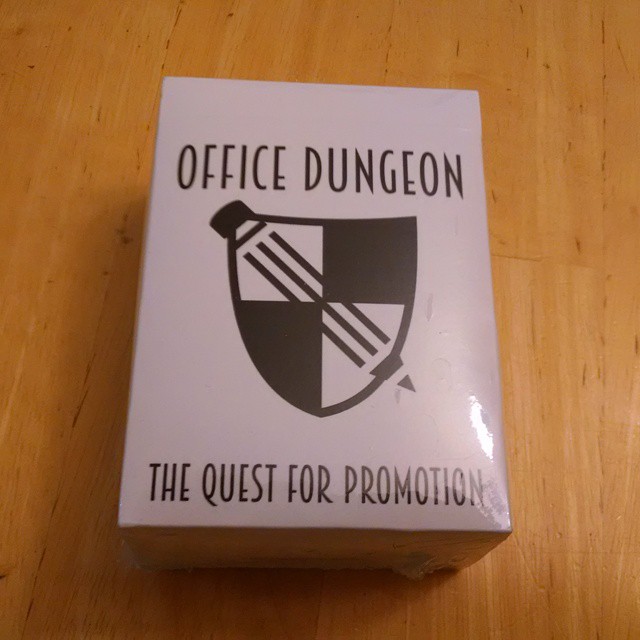
Ring Side Report-Board Game Review of Office Dungeon

Product– Office Dungeon: The Quest for Promotion

Producer-Writer Monkey Games

Price– Not quite yet!

Set-up/Play/Clean-up– 15 minutes (2-4 players)

Type-American

Depth-light

TL; DR-A strong beta of a game.  83%

2015-06-23_1435017871

Basics- This week I was able to score a demo copy of Office Dungeon: The Quest for Promotion!  Do you have what it takes to beat the boss, score the most prestige, and decimate Peggy from accounting to get the one cubical with a view of the window?

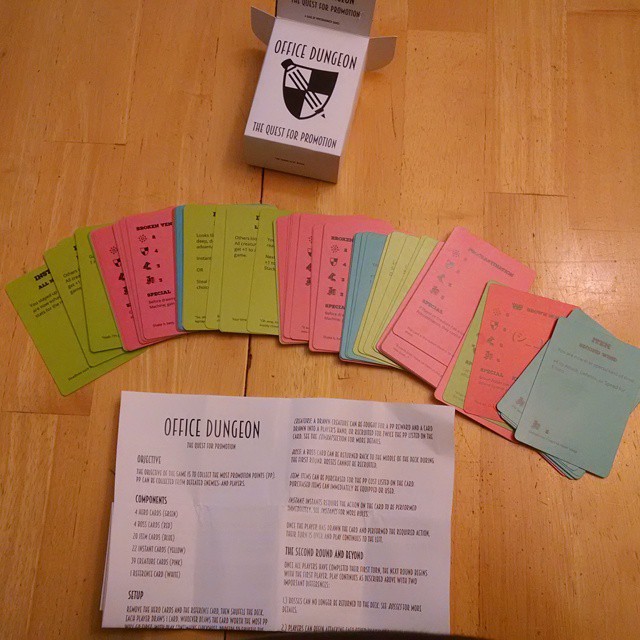
This is a simple game.  After each player chooses a starting class, you draw four cards.  Cards come in a few basic types: enemies, items, instants, and bosses.  Enemies can be bought with prestige, the points of the game, to fight on your side.  Items are constant bonuses to your character.  Bosses are extremely hard monsters and the way the game ends.

Each turn a player can play one enemy from his/her hand to fight for you as well as buy any equipment from your hand.  Next a player reveals one card from the deck to encounter.  If it’s equipment, the player picks it up.  If it’s an instant, it instantly happens. If it’s a monster or boss, combat happens!  Combat is determined in a number of steps.  First, the player chooses who fights the enemy.  Then, the enemy and the player or the players bought enemy compare speed scores with the higher determining who goes first.  Whoever is going first uses its attack against the others defense.  If attack beats defense, then the creature is wounded.  Players have a number of hit points of damage they can take, and the enemy, player bought or from the deck, have one.  If the defender isn’t killed, then the defender attacks in reverse.  If the player wins, the monster or boss is defeated and the player gains the prestige points listed on the card.  Players can also avoid combat entirely by spending double the enemy’s listed prestige to instantly hire the enemy.

Players can also opt to not draw a card, and instead that player can attack another player!  Combat acts as above with the player loosing prestige to the attacker if they lose combat.

Play continues until the players have defeated a number of bosses equal to the number of players or all the cards are exhausted.  Then, the player with the most prestige wins the game and gets promoted.

2015-06-23_1435018032

Mechanics– This game’s mechanics are extremely simple, but at the same time the feel a bit like D&D.  You have a speed stat that you use to determine attack timing.  Then, you have attack and defense to determine if your attack will kill the enemy.  It’s pretty quick and easy to understand.  However, the game isn’t quite that easy.  It’s most definitely a screw your neighbor game, but that’s the experience you’re going for in this game of cut throat office politics.  My major issues with the game are the attack values on the bosses and the attack and defense stats.  The bosses seem to be a bit over powered, and the only way to defeat them is the use some coworkers power to instantly kill them.  Sure that might be built in, but it’s not very much fun to simple lose most of the boss fights.  My other issue is attack and defense.  Many of the values tie, and players win ties.  However the rules are not exactly clear in some cases (more on that later).  Maybe I’m a bit simple, but my wife and I had to make a few judgment calls to determine what should happen in the game.  That’s not bad, but some players will most definitely not like that mechanic. 4/5


Theme-Let’s be honest, this game is amazingly similar to Munchkin.  That doesn’t make it bad by any stretch of the imagination, but I want to get that out there to discuss the theme.  That said, the idea of Munchkin hasn’t been done in an office, and this game does it well.  You get coworkers to help you, you try to get your promotion, and you have to be absolutely cut throat if you want to get it!  It’s very on point with emoji art for the characters and witty quotes for extra theme; however, you will have some strange thoughts pop up in play.  “How does my foam assassin kill a very irate customer?”  “How do I actually beat a paper jam with an attack?”  If you can look a little past that and just enjoy the game, it’s a fun experience of braving the office to win the one desk with a view of the parking lot. 4.5/5

Instructions– I’ve been hard on instructions lately, and this one is going to suffer the same fate.  The rules are “ok”.  Ok is an ok place to be, but this game’s rules hurt the fun of the game as they need maybe another page of rules to explain the game.  As it, the rules are one page that is reasonably well done.  But, there are lots of corner cases that arise that you and the other table members have to agree one.  Do instants instantly trigger when drawn off the pile?  Do you sell equipment from your character for half value?  And so on.  This is a rules light game, but the rules could use another pass or two to really shine.  It won’t stop your fun, but your group has to be fine with making a call and sticking with it!   3.5/5

2015-06-23_1435020005

Execution– The game itself is well done, but as a game in the same vain as Munchkin, it needs some outside pieces to really work well.  A few d20’s and d6’s are needed to keep track of your score and your life total.  That’s not horrible, but it does make the small size of the game somewhat deceptive.  However, if your gaming group has those, then you’ll be fine.  The cards are on nice card stock, but the most interesting thing are the colors.  The colors of the cards all look like the colors you’d encounter in an office.  That’s a small detail that will really make your enjoy the game that much more when you see it.  The art, style, and words are all minimalistic, but overall well done.  It’s a decently put together card game. 4.5/5

Summary– This is a fun game if you want a pocket game of Munchkin at work and you have some post-it notes lying around that you can use to track your stuff.  Honestly that might even make the game better but furthering the office worker theme!  What is here is a strong beta test of the game.  It’s reasonably quick, easy to play, and funny.  It does need another coat of polish before it’s completely sent into the wild, but this game is much less broken then some of the finished games I’ve played in my time.  I’m honestly looking forward to this final version of this game!  83%

Ring Side Report-Board Game Review of Albion’s Legacy

Product– Albion’s Legacy

Producer-Lynnvander

Price– At your local con.  Gaming Stores can’t get this one yet!

Set-up/Play/Clean-up– 120 minutes (2-4 players, expansion to 6)

Type-American

Depth-Heavy!

TL; DR– Arthurian Arkham Horror 93%

albion

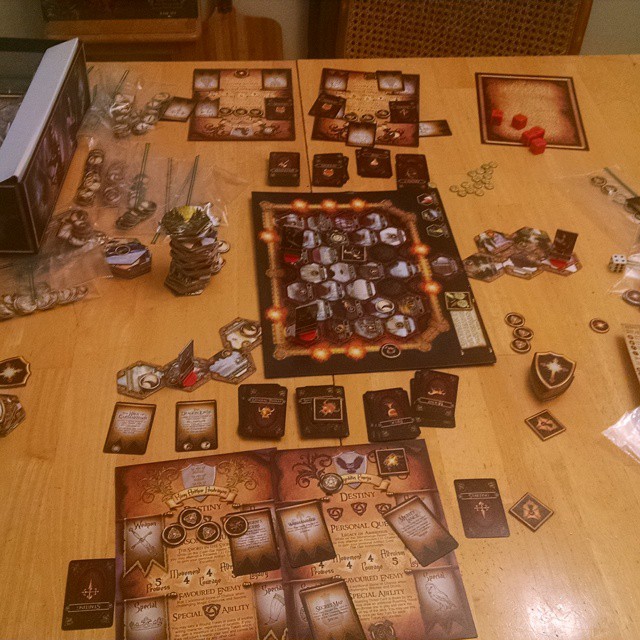
Basics- The kingdom is threatened and Arthur must ride out to face the threat!  In Albion’s Legacy players take the rolls of various heroes (and in the expansion villains) of Avalon who must stop different threats to the kingdom.  There is a lot to this game, but it’s also surprisingly simple to play.

Players start by selecting a hero.  Each hero has a power and a personal quest.  The power is a constant power they have through the game, and the personal quest is a character specific goal that will grant the character their awesome ability or item that will make them that much more powerful.  Each hero also gets a starter weapon and armor.  These don’t do much besides block hits, so better items are a must.  Players also get destiny points that are used in challenges (more on that later).

Players then select a quest to go on.  The quest is the way the players will win.  Each quest outlines specific places the player must go, enemy’s to kill, and with the expansions adds extra enemies and locations for the players to visit.  These describe how set up is modified as well.  Players also select a start player who starts with a key token.  This key token is used to keep track of the number of rounds the players have played as well as determining when the game itself take a turn to move all the enemies and effect the players as needed.

After setup, players all start in the round table room of the Camelot board.  Camelot has several different locations for the players to go, with all the different locations revealed.  Starting with a key players, each player gets to move their characters around the board.  The characters all start with a move of four spaces, but they don’t have to go all four spaces.  For the most part, a character is free to move as many or as few spaces as they want.  Characters only cause events to happen when they enter a space that has an encounter marker on it or moves onto an enemy’s space.  Encounter spaces cause the player to draw an encounter card, and any time a character and a monster share a space, all other play stops and the character must fight the monster!  I’ll discuss combat and monsters in a bit.  Character can keep moving until they use up their movement either moving on known tiles, or revealing tiles for them to move on.  The player’s turn ends when they stop moving and they can elect to use the location ability of their space.  These space abilities range from healing the character, repairing armor/weapons, getting new items, or other good effects.

Combat is quick in this game.  Each character has several knightly attributes ranging from courage, prowess, altruism, and so on.  Every monster or challenge has different attributes that must be select for a combat along with a number of successes that must be obtained.  After the player has selected their attribute, the player rolls the number of dice their character has for that attribute.  These dice are six sided dice with five of the sides being the different attributes and the sixth being a mana burst which is worth two successes.  A player rolls these dice and counts the successes.  If the player succeeds, the monster is beaten or the challenge won.  If not, the player now must make a few choices.  The player can take a wound and continue the challenge, break (flip the card over) an armor or weapon and continue the challenge, discard a armor or weapon to flee combat, or spend destiny points to reroll dice.  The destiny points allow a player to select a second symbol on the die, reroll one die, and see how the combat progresses with the player winning, spending armor/weapons, or taking damage.   It’s quick, simple, and VERY deadly as most characters only have one damage!  Take your second damage, and your player retires out of the game and you have to take a second (or third or more!) character.

After all players take their turns, the key player gets  a second turn.  When they finish their second turn, the monsters all have their turns.  Most monsters move, a brazier is extinguished, some events trigger, and the key marker moves to the next player.  Then play continues as above.  When the players finish their original quest, they win the game!  If they last virtue plaque is removed or last brazier extinguished, they Kingdome descends into darkness, and the players have lost!

2015-06-16_1434412961

Mechanics– I’ll compared this game to Arkham Horror.  The base mechanic is choose one of your six attributes, roll the number of dice you have in that attribute, and hope for that symbol or wilds to appear.  This is basically the same as the d6 with fives and sixes being successes of Arkham Horror.  Aside from that, the base mechanics of tiles revealing monsters and the basic ideas of the quest you’re on are the major story-based mechanics of the game.  All together, everything is easy enough to run, but hard enough to succeed at to keep players playing again and again.  My major problem is the game does not scale well for less than four players.  If you play one player, then you run all four characters.  If you play two players, then each player runs two characters.  If you’re playing three players then one person runs two characters.  I’d just rather see more scaling stories.  Instead of having to go to eight difference places to get fragments in one mission, why not make it two places per character?  Maybe fewer monsters on each threat card for fewer players?  The quest coins scale, but the rest of the game doesn’t.  That isn’t game ending by any means, but it a slight annoyance.  Otherwise, the game runs quickly and is quite fun. 4.5/5


Theme– Homerun.  This feels like a hard, but beatable, co-op game of Arkham Horror set in the world of King Arthur.  All the threats feel like Arthurian legends.  The monsters feel monastery enough, but also the variety of things needed to beat the monsters and threats is interesting.  Sure, the mechanics are basically choose a number besides 6 to roll, but the fact that the numbers of the six-sided die have different names makes this feel more like an RPG and a quest.  While I won’t quit Arkham Horror over this one as I still need my Cthulhu fix, Albion’s Legacy has found a spot in the co-op rotation of games that my wife and I will play when we want to go on a quest together and save the world.  5/5

2015-06-17_1434537092

Instructions– This game is an example of a game that has everything you need to play written out decently, but not laid out in a way that is as helpful as you might need.  Overall the rules have exactly what you need to play.   But, it will take you a few read-throughs to get all those pieces together.  The rulebook has pictures to really help guide you in, but there are a few blocks of text that could use a break up to make things smother.  But, if you need it, I promise it’s there.  Here is my example.  I was confused over the virtue plaques.  These are plaques that give your character a bonus, but if the players have used them all up, you all instantly lose.  My wife and I couldn’t for the life of us figure out how to use them.  But, after rereading the rules, they function exactly like any other space and resources on the board- go to a location, take your turn ending action to use the space, and get a plaque.  Its written right there in red and white, but something you, like me, might miss on your read through of the rules.  It’s not poorly done by any means.  Maybe I’m just used to having similar things spelled out repeatedly to me in different rule books.  It does read quickly, but you have to be extremely careful that you might miss an important rule that could drastically change your play experience!  4.25/5

Execution– Overall, I really like what’s here.  I even did an unboxing video of this game: http://youtu.be/KG6ZPLTsync   There are a ton of parts to this game!  The box is large enough to hold them all, but you’re going to need to provide your own organization!  While I love the game, I’d like some Ziploc bags to come with it.  It’s a minor complaint, but it’s an important one.  Games like this (Arkham Horror, World of Warcraft board game, Caverna et al) are full of awesome components, but if you don’t keep this monster organized, you will spend more time setting than you ever could playing!  But that aside, the art is great, the characters look good, and the cards read well.  I’d like a few more of the attribute cards to help you determine what the spaces mean or how to fight each type of monster, but again, that’s nitpicking.  Overall, that game is well put together, but a few more additions would help put this over the top.  4.75/5

Summary– Cards on the table, I’ve never heard of Lynnvander before.  I think they are a newer gaming company, so I’m honestly surprised by the quality and quantity of this game.  Albion’s Legacy is an ambition game for any company to put out.  Some multimillion dollar gaming companies completely blow the launches of games like this.  It’s FULL of parts, has a ton of options, and is simple to run.  And all that for the basic intro price of $45.  That’s not bad!  I went with the deluxe of $60, and I got extra characters, quests, and tiles.  That’s well worth the price of admission.  It’s got a few issues-the rules could use another pass/edit, the mechanics don’t scale exactly well with the player count, and I’d like some Ziploc bags for my parts.  But, what is in this box is amazing.  If you want a co-op game that works like a dungeon crawl version of Arkham Horror in Avalon, then it is well worth your time to check this game out. 93%

Ring Side Report-Board Game Review of Eminent Domain: Microcosm

Product– Eminent Domain: Microcosm

Producer-Tasty Minstrel Games

Price– $7 here http://www.miniaturemarket.com/ttt3003.html/?utm_source=boardgamegeek.com&utm_medium=feed&utm_campaign=BGG_Text_Ongoing&utm_content=Text_SKU-TTT3003_Ttl-4_Dsc-2_MMUrl-Yes

Set-up/Play/Clean-up– 5 minutes (2 players)

Type-Euro

Depth-Light

TL; DR– Bad rules hurt a great game. 83%

pic2521236

Basics-Vie for galactic dominance!  Eminent Domain: Microcosm is the two player microgame version of the popular Eminent Domain game.  The game is set up by separating the types of planet cards based on how many colonize/warfare it will take to get that planet.  These cards are placed face down.  Then, the main deck of action cards is shuffled and three are placed face up in a row to be selection.  Finally, the five different technology cards are placed face up for all the players to buy.  After set up, players take turn drawing a face-up or top of the draw pile card, refreshing the visible row, and then playing a card or drawing as may cards as the player wishes from his or her discard pile.  The cards have an action on them, a symbol for other actions, and a way to score end game points.  The main actions on the cards are research, warfare, and colonization.  When a player plays a warfare or colonization card for its action, he or she chooses a planet pile.  These planet cards have different values of both colonize and attack needed to take the planet, but these values are hidden to the player when he or she chooses.  Players can show, not play, other cards from the player’s hand to meet these values.  If the colonization is successful, then the planet is placed face down in front of the player.  Planets have a symbol that can be revealed to add to other played action cards.  If a player plays a warfare card and has the needed symbols, then the planet goes to the spoils pile.  Planets in the spoils are only worth end game points and cannot be revealed for their symbols.  But, warfare has an added bonus.  A player can declare warfare on an opponent’s colonized planets, stealing them, and making the game much more combat focused. The last major card type is research.  Research allows you to take a technology card from the center row OR move an opponent’s technology row to the center row.  If a player can shows three more research symbols on other cards, the player can take the research action again moving the same or other research cards around.  The technology cards provide extra symbols for research, colonization, warfare, or other actions.  Play continues until every card from the selection row is taken, and then the players score points based on the cards they have: one point per colonized or planet in spoils, one point per political symbol they have, and then they get extra points based on the extra point conditions on all the cards they selected.  Winner of the game has conquered the (micro)cosmos!

Mechanics– Quick, lean, and deep are not words you hear together too often, but this game has that.  It plays in less than five minutes.  It’s not full of clutter as every card in the deck could be the difference between a win or defeat.  And, deep as playing what and when are the hardest choices you have to make in a game.  Honestly, once you know how to play, you won’t put this one down. 4.5/5


Theme-This game feels like a contest between two players over planets.  It’s not perfect as the random nature can really limit what strategies you can employ.  But, the addition of conquering colonized planets really adds a new depth to the game.  As you scorched-earth conquered planets, that really add to the strategy AND the theme.  Are you a galactic empire bent of destruction or are you peaceful colonists who will co-exist with the planet and use its resources? 4.5/5

Instructions-Tasty Minstrel….. where do I begin.  These rules are just bad!  You have some nuggets of gold here, but a lot of that is fool’s gold.  This isn’t a game where scores are 3 to 90.  This is a game where scores will be 30 to 31.  Knowing how to score is the most important part of this game, and you don’t really teach players how to do it.  If you go to Board Game Geek, there are no less than four different explanations to the rules.  This is a microgame!  I shouldn’t need to use my Ph.D. to score the game!  I love that you added cards to your other games, but honestly, I’d like one extra sheet over cards to the base Eminent Domain game.  I’ve played several times, and I still don’t think I’ve scored properly.  Also, you don’t really teach me how to play.  The cards give the basics, but the rules sheet doesn’t do a good job of that.  If I don’t think I’m playing properly, and I’m not sure I’m losing or winning properly, I can’t enjoy your game! 1.5/5

Execution-Tasty Minstrel Games knows how to make a card game.  NO STICKERS!  That right there makes me love this game.  I kid, I kid (kind of), but what is in this box is top notch.  The cards are good quality, the art is great, and the extra cards are icing on that cake.  It’s a simple game that a ton of fun.  5/5

Summary– This is the lowest rated Tasty Minstrel Game’s product, and it all has to do with the rules.  Honestly, on game play alone, I love this more than Eminent Domain.  It feels more right in this game to mess with the other player than it does in Eminent Domain, even with the expansion.  On theme, this is better to as now I think I’m really fighting over planets, and fighting has costs.  Colonizing is quick, but a gamble as you can really lose some points if your opponent swings planets away from you with warfare.  The game itself is well put together, but it should be for a card game that is less than 35 cards.  What hurts is the rule sheet.  There isn’t enough there.  I know I sound like a broken record, but it’s no fun if I don’t know how to play and score.  I can more easily score Seven Wonders than this game as that rulebook walks me through it!  If you rewrite the rules on two sheets instead of one, I will love this game more than any other two player microgame I have and bring it with me everywhere like Coin Age.  Altogether, this is a spectacular game with bad rules.  83%

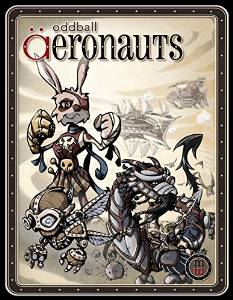
Ring Side Report-Board Game Review of Oddball Aeronauts

Product– Oddball Aeronauts

Producer-Maverick Muse Ltd.

Price– $18 here http://www.amazon.com/ToyMarket-obA-1-oddball-Aeronauts/dp/B00LHXITWA/ref=sr_1_sc_1?ie=UTF8&qid=1432780263&sr=8-1-spell&keywords=oddball+aeronaughts

Set-up/Play/Clean-up– 10 minutes (2 players)

Type-American

Depth-Light

TL; DR– A simple two player Munchkin. 78%

download (1)

Basics-Hard to starboard for an airship battle!  In Oddball Aeronauts, each player takes the role of one of two airship captains trying to destroy the others ship.  Each player starts with a deck of cards that is specifically created for each ship.  There are two types of cards in the deck: events and characters.  Events are one time occurrences that will randomly change the flow of the game as they are drawn to the top of the deck.  Characters have two major sections to them: statistics and tricks.  The statistics are broken down into three distinct areas: sailing, guns, and boards with a major skill number and a skill bonus (more on this in a bit).  The trick on each character is another ability the card might be able to add to a fight.  Players set up after shuffling their decks by taking three cards and placing them face-down in their hands.  Next, players then place the remaining cards from their deck face-up in their hands.  Players will then look at the top three cards in their hands.  The first card’s skill has to be used in the upcoming battle while one of the next two cards’ skill bonuses can be used and the trick from one of these cards can be used as well.  However, the trick and the skill bonus can’t be from the next card.  After looking over their three cards, each player starting with the lead (first player), announces how they will attack the other player via sailing, guns, or boarding, and the other player then announces how they will attack as well.  Both players need not say the same method of attack.  Then player will, after the count of three, announce how many of their top three cards they will use in the upcoming battle.  The cards are compared with the highest skill + skill bonus from the second or third card + trick ability from the second or third card winning the hand.  If the non-lead player won, then they become the lead.  All players then discard the cards that were used in the battle by placing them face down in the deck under the other face down cards already in the players hand.  Then, the method that the winning player used affects the decks.  If the players won by sailing, two faces down cards are flipped into the face up part of that player’s deck making them available cards now.  If the player won via guns, then the losing player discards face down two additional cards under their deck.  If the player won via boarding, then the winner gains one card to their deck, and the loser loses one card.  Play continues like this until one player has only face down cards in their hand and their air ship has crash!

Mechanics– To me this is a much quicker, much more two player friendly version of Munchkin.  It’s quick, plays fast, and is a fun way to spend 10 minutes with a friend.  However, it’s also pretty simple, so don’t expect a ton of thinking in this one.  And, the game adds some strange corner cases like magic.  Magic is a trick on very few cards, but some other cards have a shadow emblem.  You can’t use magic in a battle with the shadow emblem.  I don’t think that really helps the game’s flow as it adds some deeper rules for a simple game that I don’t think are really needed.  The game is overall quick, easy, and fun however.  4/5


Theme– This game has a theme, but it doesn’t hit you over the head.  It’s very subtle, and I think it needs a bit more.  It’s fun while feeling like an air ship battle, but I wanted more stories to this one.  The cards have some great art, and the manual has some added information on the ships, but it need more to build the world of this game. 4/5

Instructions-Hands down the worst part of the game.  That cards facing up/cards facing down part of the game that makes it so quick and easy to play, but that isn’t explained very well at all in the rules.  When I saw a YouTube video about it, then the game became crystal clear.  The rules leave lots out, and that makes the game somewhat frustrating as it’s a game that will take you longer to find on your game shelf than to actually play! Honestly, look up a let’s play or rules tutorial online to learn these rules!   2.5/5

Execution– A card game my wife and I can play while we wait in line at McDonalds?  Beautiful!  The box is compact, doesn’t have any unnecessary pieces, and the cards are of decent quality.  The art is good, the layout is eye catching and easily accessible, and something that you could quickly explain and play.  It’s just a well done small box game. 5/5

Summary-If you want a game you can play while in a bar standing around a high table, this is an excellent game.  If you want 12 hours+ of in-depth strategy, then this isn’t the game you want.  You want some quick steampunk while you’re waiting for you tea to cool?  Well worth your time.  If this game would rewrite the rules, I’d love this game so much more.  As it stands now, the rule book is what really kills this game.  The mechanics are good, not great as it’s a simple game, the theme is decent, and the execution is solid.  I hate when I have to go online to learn to play a game, and doubly hate when I need YouTube to teach me to play a game that’s uses less than 60 total cards!  But, if you can get past the rules, you will find an amazing little gem of a steampunk two player card game.  78%