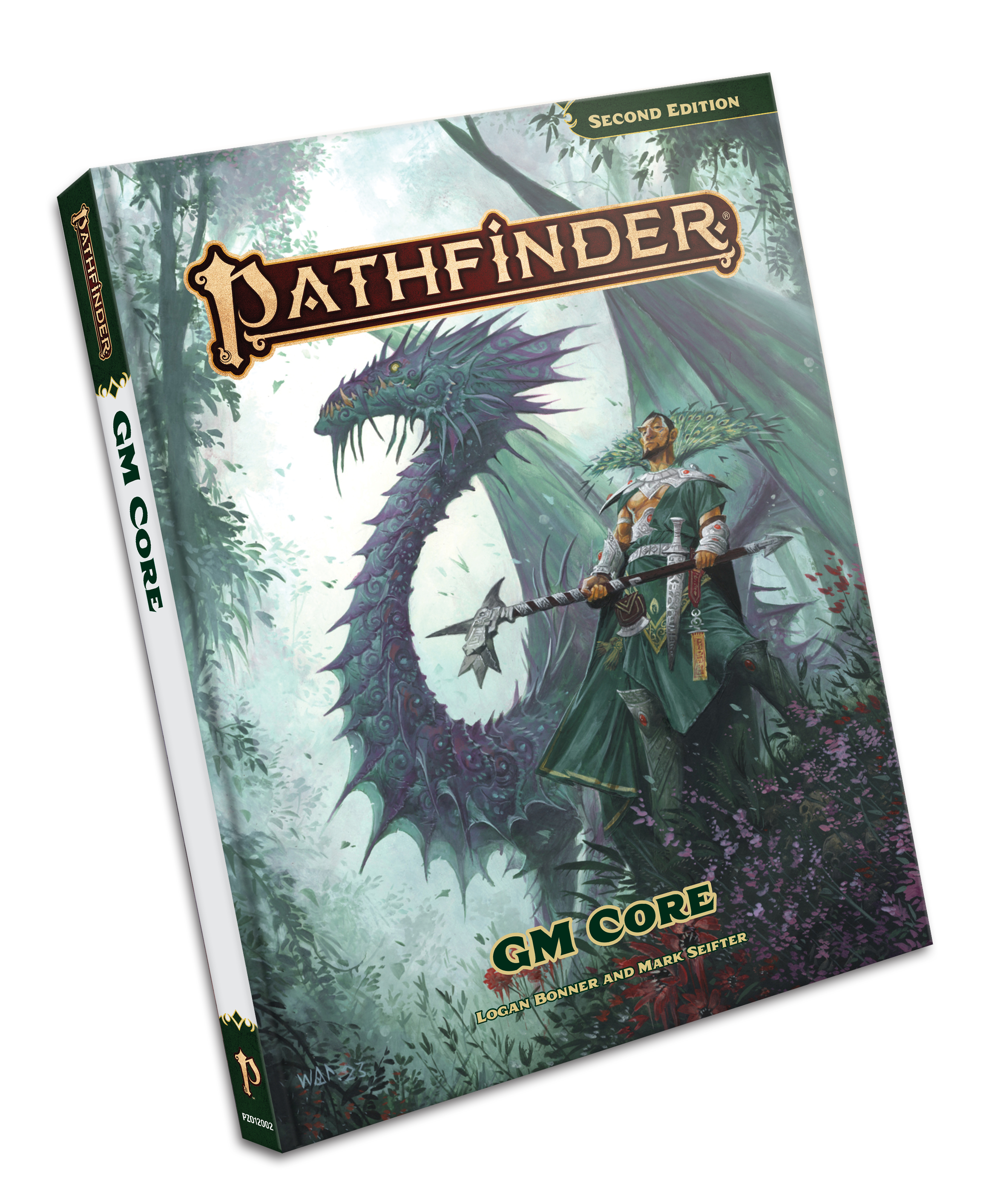
Basics– ORC TO THE RESCUE! GM Core is the new ORC version of the Pathfinder 2nd Ed GM book. That’s really it.
Mechanics or Crunch– What’s here is good and gives some solid advice for GMs. It covers everything from adventure building to treasure disbursement. I like whats here, but it needs more. I want a random item table. They have item tables, but throw in a random mechanic for what to give out. I can find it online, but if I’m dropping 60 for a book, I want to think a bit less. I also need a bit more guidance on some things. Crafting is ALWAYS a pain as players want free stuff and GMs need to keep the system from breaking. Some walkthrough would help a bunch here. What’s in the book is good, but I need just a bit more. 4.5/5
Theme or Fluff– Theme covers some ground in this book. You have everything here from how to deal with at-table situations to the world of Golarion. I may not need some of this but new GMs and new players to Pathfinder are going to find some use of this book. 5/5
Execution– It’s Paizo and they made a book. The book reads well, skims easy, and has hyperlinks. It’s all the things I need and want in a book. 5/5
Summary– This is a solid book. My main issue is what isn’t here compared to what is. I can find answers and tables online, but for the price I expect it here. Now, here is the issue- do I tell you to buy this book? And that’s a solid maybe. If you have the previous book, then you honestly will be ok without this one. It’s not bad, but Pathfinder 2nd Ed didn’t really change in a massive way between the OGL and ORC in my opinion. And honestly, I think that was the goal. If you know what you’re doing this might be a pass, but if you are new or don’t have a GM guide for 2nd Ed, get this book! 97%
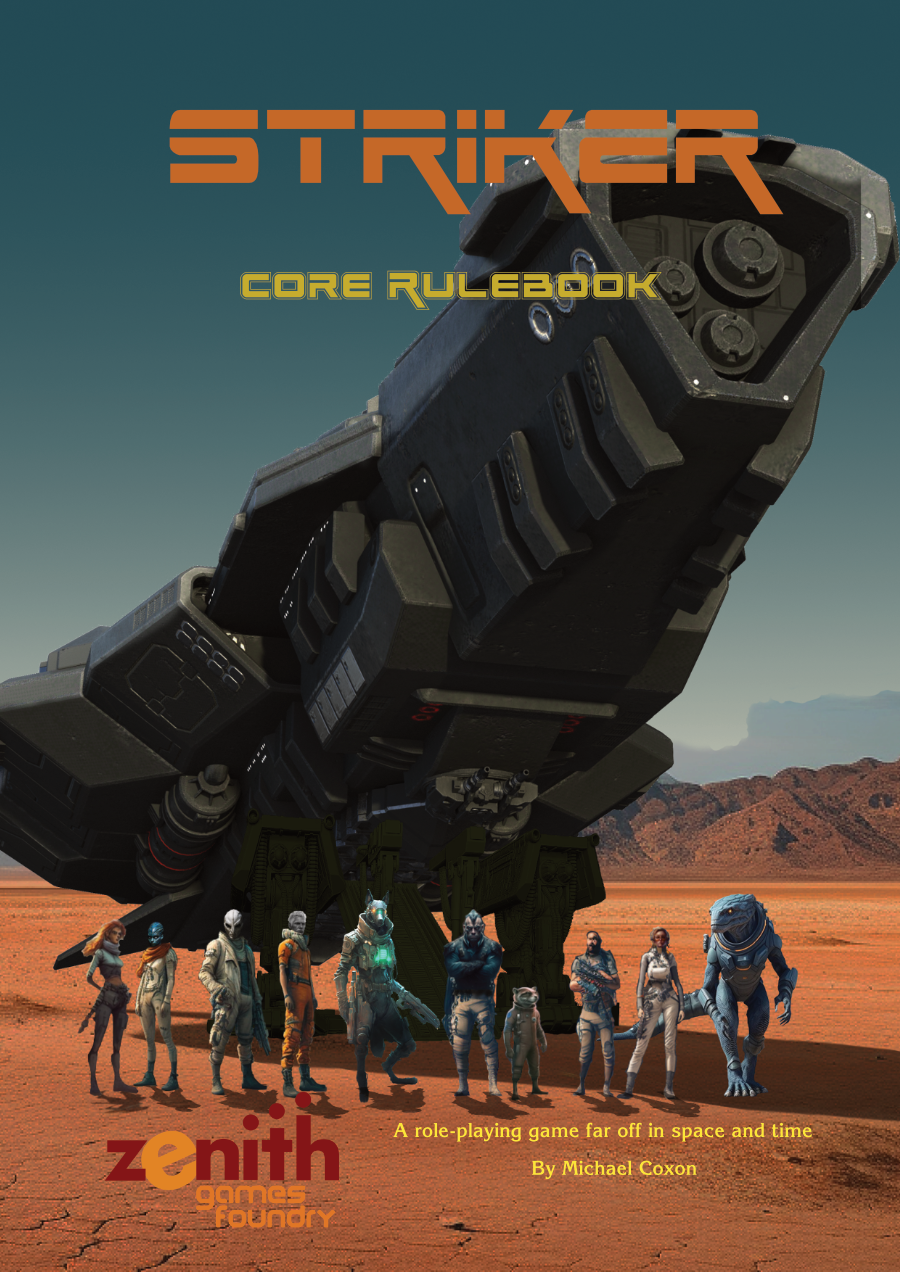
Basics– DnD 3.5/5e/Shadowrun IN SPACE! This is a new riff on the 5e system by building in classless systems into the basic math of 5e. The universe has gone to war in a way that nearly destroyed it and now at least four different dimensions are all interacting.
Let’s break down the system.
Classless, but not levelless– This system does use levels, but when you take a level you choose a profession and possibly an archetype within it. This gives you places to spend forte and fine-forte points. These are the equivalent of skill points. You can freely change profession when you gain a new level.
Base mechanic- 5e has proficiency, but you don’t really change your class in 5e. Here you do things a bit different. It’s still a d20+number, but how you get to that number is a bit more complicated. Your modifier is ½ ability modifier +½ forte modifier + fine-forte modifier. This way almost all things have the feeling of 3.5 DnD and Shadowrun skills as you choose where you spend skill points to make some better or worse depending on how you want to build your character. Saves, attacks, and skills all have this basic mechanic built in.
Powers and special abilities- Characters gain resources on level up that come back and are used like hitpoints, but this system also introduces focus points and energy points. DCs are determined just like basic 5e, with one exception being how we determine bonuses (described up above) When you do something cool or use psychic powers, you spend the points as needed. Again, it’s classless so multiple paths will get you the same powers and abilities.
There is always more, but that’s the basics to get you mechanically in. Ok, now to my thoughts.
Mechanics or Crunch– This is an interesting system that might be a bit over complicated. The idea of classless 5e is a fun one. I do miss the days of crazy class combinations (until I play some 3.5 with a friend who has at least five different classes in a 7th level character). But this builds nicely together. It’s a tad clunky as its DEEP point management at level gain, but that’s what the designer wanted. That’s not bad, but it’s an intentional thing. A cheese stick of basic 5e vs the fondue of this system. Both are highly rated and good, but it’s what you want when. Some streamlining may help with this system though. 4.5/5
Theme or Fluff– For the fuff, the big question is do you like Mass Effect? That’s the big question here. If you like the idea of flying a ship around and meeting creatures of multiple races with multiple different goals, then this is the game for you. I do, so this has some crazy fun places to go. 5/5
Execution– This book has some solid things, but some near unforgivable issues. Let’s start with the unforgivable that can easily be fixed: no pregens, character build walkthrough, nor premade adventure. As I get older, I want to pick up a book and play with six buds ASAP. Sure, I need to read how to do the dice things with this dice game, but give me an adventure and pregens and a four hour simple adventure I can print off and play after I glance over your rules. It has some pre-made things, but give me those please. For a new system, that is a requirement! Next, this is a pretty deep pool to dive into without a step by step walkthrough of one character build. That would make the issues I had in mechanics evaporate. There are examples of how to do some things, which are great. And, while missing those things is unfortunate, what’s here is good. There’s art to break up text. The text could be a different font or background to make it more readable, but it works decently enough and my tablet can zoom in. There’s hyperlinks in the text, so I can hop around quickly to get to where I want to be. Some of you may not like its Midjourney art, but this is an extremely small publisher with an over 400 page book and one author. That’s a feat! Just give me some quick start assets built in and I’d be much happier. 3.5/5
Summary– If you want 5e classless Mass Effect, then this is what you want. That’s the basic summary. I like the basic mechanic, even if I think its a tad overcomplicated. The theme is the sci-fi I love. The stumble is the lack of quick start and pregens to the book. I don’t even need a crazy space adventure with ships, just a dungeon crawl fighting something in a cave would be nice. Even a link to a free adventure would fix that need, but there isn’t one quite yet. One is coming, but not yet. However, I like what’s here enough to stay interested for when it does. 87%
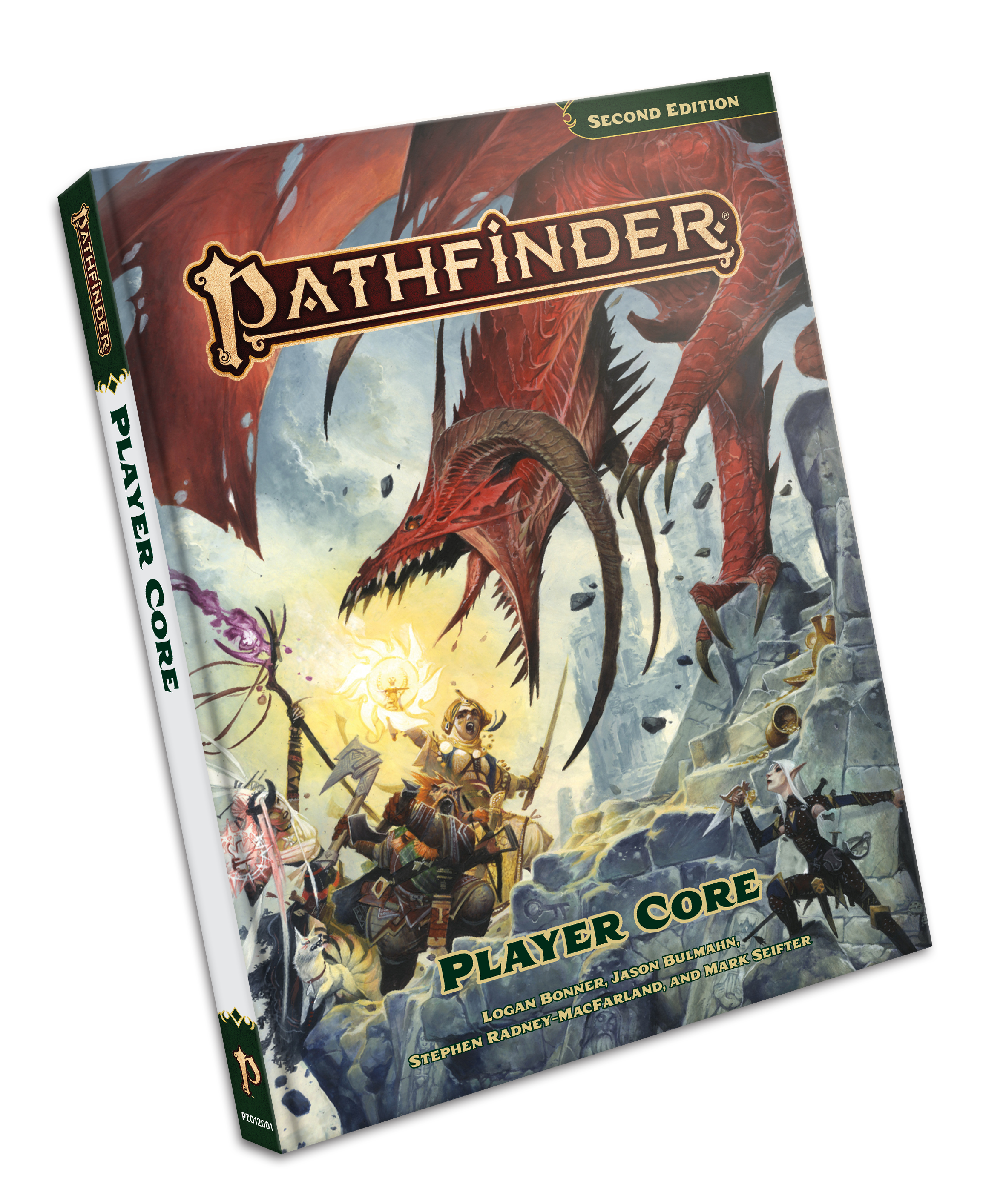
Basics– It’s Pathfinder 2nd ed-AGAIN! Player Core is the ORC approved, non OGL version of Pathfinder. Spoilers for this one- If you liked Pathfinder 2nd Ed, you’re gonna like this. If you HATED Pathfinder 2nd ed, you’re still not gonna like this! Let’s look at the parts.
Mechanics or Crunch– This is the exact mechanics you saw in the original Pathfinder 2nd Ed book. The system’s basic mechanic is level based bonuses with ability bonuses to a d20. If you would like a deeper breakdown check out our original review here https://throatpunchgames.com/2019/08/18/ring-side-report-pathfinder-rulebook-2nd-ed/. It’s a solid game. 5/5
Theme or Fluff– Like Golarion? If you liked 1st Ed and you like the previous 2nd Ed world, then you will like this. Nothing really changed in this book aside from switching out what classes made the cut: witch is in but paladin/champion is out. Things do not drastically change with this new book, but I liked the old book too. 5/5
Execution– Paizo does good books. Layout, text, pictures, and words all flow well. What this book does differently than the last one is some edits to explain some concepts better. I think this is the distinction between the two versions. Also, since we moved from the OGL to the ORC some game terms changed, and honestly despite it being mostly superficial, these are good changes I like. I can sum this up in one example spell LEVEL vs spell RANK. Those two things mean the EXACT same thing. BUT, too many new players get confused when you say level with spells, and anyone with any experience with games can tell you about a 3rd level wizard, shocked they only get 2nd level spells. Now, that’s gone. That right there is worth this five out of five. 5/5
Summary– Welp this review can be summed up as “if you liked Pathfinder core rulebook you will like Player Core, and if you hate Pathfinder 2nd Ed, you won’t come back for this one!”. And that’s about it. The elephant in the room is “was this needed?”. And honestly, not really and yes. Not really because this book’s biggest changes are cosmetic. The cosmetic updates are welcome, but are really just surface changes as the base mechanics haven’t changed. I like them, so that’s not an issue. And completely needed because WotC hinted at major changes and this book makes Paizo stand on its own with its own rules and systems. So, your mileage will vary as you can get quite far with an old player book and have a blast, but if you have holiday money and want to get into Pathfinder 2.1 (since this isnt as big a change as DnD 3 to 3.5, not even close), then this is a great book to buy and play. 100%
Basics– Want some free advice? Little Book of GM gems are articles from Knights of the Dinner Table providing ideas for GM of all levels. Let’s break down what’s here.
Mechanics or Crunch– This isn’t a setting or a crunch book. It’s an advice book, so there are no mechanics here. -/5
Theme or Fluff– If this is an advice book, how’s the advice? Honestly, It’s solid. It’s not new, as it’s from the Knights of the Dinner Table Comic, but it’s good. This is pretty timeless advice that new GMs can use and old GMs can use a refresher on. 5/5
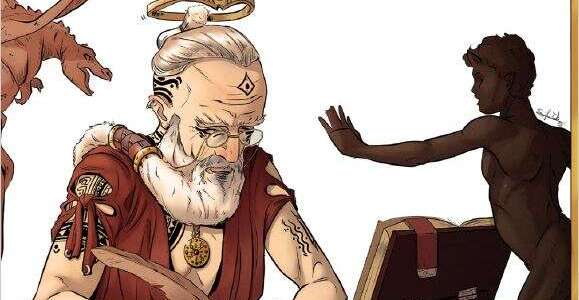
Execution– Overall, this is a well laid out book, but there are a few small issues. Hyperlinks, decent font, good layout, and pictures all make this an easy read. There are some issues with background and the use of a cramped cursive font in the intro of each chapter is a bit hard to read. This is good, but not perfect. 4.9/5Summary– This is a well done product, but if you should buy depends on what else you have. If you have every Knights of the Dinner Table comic, then this might not be the best purchase. I don’t (one day, but not now!), so this is a solid read as I get some good advice. I’ve gotten some of this advice before from older GMs at cons, but not everyone has that opportunity. This product fits that niche of passing along good advice to GMs who haven’t gotten the expertise from meeting other GMs. It’s not completely new, but it is completely good. It’s a solid product, but make sure you are getting what you want. 99%
Basics– The hunger never ends! This book starts the Blood Lords adventure path and provides information on new spells, an archetype, factions of the adventure, and the city of Graydirge.
Mechanics or Crunch– This adventure plays well. The monsters are right about where they need to be for combat, and the mix is fun. The new archetype is interesting, and the spells are something my players (who accidentally stumbled upon them on Archive of Nethys) already wanted. My one major issue is factions. Factions are done as well as they can be, but I feel it’s not well supported by the whole system. You can move up or down in the factions’ esteem, but I just can’t shake the feeling of, “Who cares?” I don’t have the mechanical background of why I want to make people like me in each faction. It’s a minor thing that I feel will build up more in the upcoming adventures. 4.5/5
Theme or Fluff– This is a a solid story. The story is fun, and my players had a blast playing in it. I felt equipped enough to make the characters and locations interesting. The world is fleshed out enough to make it a fun place to play, and all the new things are introduced well enough to make me either intrigued enough or disgusted enough in them to have a blast. 5/5
Execution– Welp, it’s Paizo and they made a book. Paizo is one of the industry’s best layout people, and this is no exception. It reads well, easily, and quickly. Hyperlinks make it a quick thing to read through and scan through. Solid work here. 5/5
Summary– My brother is the one who got me interested in this adventure path, and I am glad he did. It’s a fun story with new toys for both the GM and players that is just put together well. My one issue is a more system-wide issue of factions and influence, but that’s the one thing I can point to as something that just makes me unhappy with this product. My players and I can’t wait to hop into the next one ASAP! 97%
Basics– Let’s learn Pathfinder! This is the Pathfinder 2nd Ed Beginner Box. It’s got a double sided map and two level adventure. It’s got an introduction to character building, character sheets, AND pregens. It’s got dice. It’s full of standees and cardboard characters. It’s got it all!
Mechanics or Crunch– If you want the full Pathfinder experience, this is it. You get four pregens, rules on how to play, and even a multilevel dungeon. Now, the dungeon and the fights are nothing crazy complex, and you might even say they’re a bit easy, but as a new player, this will be fun. And as a new GM, this is a blast as well! You get the basics of Pathfinder 2nd Ed with real rules, so you don’t learn a system that doesn’t exist. You can also learn character building! This is a great intro on how to play. 5/5
Theme or Fluff– I don’t expect a ton of crazy things from beginner boxes, but I honestly got a solid intro to the world and a great adventure. You get a basic introduction to the world. It can’t be an epic tale of the world’s creation and current state, but you get a good, solid idea of the basics of the world’s story. You also get an interesting adventure where you can play and get a few sneak peeks into future adventures. It’s just a great way to invite both players and GMs to the world of Pathfinder. 5/5
Execution– I’ve gushed about this box so far, and this won’t be an exception. You get great dice, great books, great standees, EXTRA standees, solid pregens, and amazing books that help the players know how to play, and the GM run an an adventure on the fly. This is what I want as a player and a GM. 5/5
Summary– I’ve loved Pathfinder for a long time and played Pathfinder 2nd Ed since it came out. I also love Starfinder, but you can see there is more love for Pathfinder 2nd Ed from this box. Two levels of adventure, character generation guides for a few levels, dice, and standees make a great product. Also, that the rules in this box set are the same as the real game, makes me amazingingly happy. This is the kind of thing I will give to anyone who wants to learn Pathfinder. If you are on the fence, get this now! 100%
TL; DR– A solid implementation of a choose your adventure with combat. 85%
Basics– Choose your own insanity! Dagon is a necronomicon gamebook. These are a series of choose-your-own-adventures where you get to choose an action AND, like other games such as fighting fantasy, you may roll a d6 to determine combat. If you know the choose-your-own-adventure games from the 80s/90s you know the drill and may already be hooked!
Mechanics or Crunch– To determine if you will like this, ask yourself-”Do I like Choose-your own-adventure books with combat?” If you said yes and you also like Lovecraft, then this is right up your alley. This doesn’t reinvent the wheel of these games, but it doesn’t need to. You just choose your action and maybe have combat. It’s solid enough and fun. It might not be the most inventive for the base mechanic, but there are some stats you choose at the beginning and you have a solid time playing. 4.5/5
Theme or Fluff– Just like above, if you like Lovecraft and like choose your own adventures, then you will like this. This isn’t new ground. If you need some crazy new angle to Cthulhu, then you will not be happy. What is novel to this type of book is the Dreamlands. When you rest and when some crazy things happen, you have random visions that can make more crazy things happen as you drift off to another reality. It might not be the newest concept, but it still does the old standard story of the Lovecraft mythos well. 4.5/5
Execution– This is the most conflicted part of this book. The art is good. The flow is good. The story is good and easily readable. What isn’t great is the rules explanation and the hyperlinking. You jump around in the book, but on a PDF there are no hyperlinks. That’s bad in a basic RPG book, but worse in a book where I am going to have to repeatedly jump all over the place. Also, the explanation of rules is a bit off. Not mostly, but one very key thing is left out: dice. The game says use a die. Man, this is an rpg book aimed at nerds; it’s aimed at me with my Horrorclix Cthulhu staring back at me as I write this. If you say die, I literally have no idea what you are talking about. They mean D6. That’s not horrible for the normal person, but me with with over 100GB of RPGs and over 1000 board games in my basement spent 20 minutes trying to understand if they meant d20 to my crazy almost non-euclidean dice I bought at a crazy gaming convention that most people can’t remember for some reason. The things I am not happy with are not even close to stopping me from buying in, but it’s a small thing that escalates to larger things. 3.75/5
Summary– I like choose your own adventure games, I like simple combat in RPGs, and I like Lovecraft. This is a fun way to get new people into Lovecraft, a fun way to get literature nerds into RPGs, and a fun way to get people gaming. I like this product. It isn’t the newest story you will see under the sun or in a terrible old book full of secrets. But, like a classic hamburger from your amazing local diner, the classics are good and don’t need to be changed all the time. What isn’t great are some things I need in this style of product in 2023: hyperlinks and a bit more rules discussion. Tell me I need a d6 and give me a hyperlinked PDF, and I will love this thing nearly unconditionally. I am the geek this is aimed for, and I am glad to have gotten this. Check out the kickstarter now! 85%
TL; DR– Renaissance painting mixed with Vampire the Masquerade and Euchre! 93%
Basics– CONSULT THE CARDS! The Hidden Isle is a very rules light RPG where the heroes are agents of Dioscoria, a city, and are being sent on quests based on a seer’s visions. The cards rule the day as they are both the dice and the random draw that helps develop the story the players are working through. Let’s look at the basics.
Base mechanics- The Hidden Isle is very much a narrative game and the base mechanic builds on this. Each character gets dealt two tarot cards at the start of the game. When a character attempts an action, the character is deal more tarot cards based on the action and their Stats and the GM is dealt cards based on the difficulty. The GM and the character then select a card and the higher card in the suite of the action determines who wins. Simple and quick!
Stats- Each of the four major tarot suites is trump for each action a player wants to do. Swords is for fighting and study, wands is for reckless action and magic, cups for stealth and healing, and pentacles for finesse and observation. If you play a low value card in the right suit and the GM throws a high value card off suit, you win! Each character has a level in each of these stats and this determines how many cards they are delt when a character does anything. In addition, other characters can throw cards into the pool when you do an action. These cards can change suit so you can be in the correct suit for the action or adding three to the value of a card the player played. In addition, as you do things and get hurt, you take penalties to your stats and draw fewer cards when you do anything.
Ideals and Burdens and Vices and Virtues- This is a VERY narrative game. One way this is represented is ideals and burdens. If you act up to an ideal, you draw fewer cards but gain a bonus to your card value. If you give in to a burden, you gain additional cards. In both cases you gain experience, which you will then use to build up additional abilities or increase stats later. Vices and Virtues also follow these rules but you do not gain experience.
Magic-Magic functions just like any other skill. A player has ranks in a magical ability and then draws cards equal to the ranks in that ability. How big and awesome the spell means more cards for the GM to draw to determine if the spell succeeds.
Abilities and classes-This is a very rules and crunch light system, but there are still special abilities each character gets based on their chosen class. Each character gets two abilities at the start. These range from simple spells like Whisper, which lets you whisper into a creature’s mind directly, to other spells that just straight up kill a few creatures and possibly cause you to get take damage after.
Adventures- Adventures follow a pretty simple yet expandable outline. Characters have downtime where their vices give them 1 harm, friendships change, and the characters can do different actions around Dioscoria. Then the seer receives a vision as tarot cards are drawn. Next the players have their adventure. And finally the adventure wraps up.
Ok, thats the basics, let’s review!
Mechanics or Crunch– This is a fun game, but it is extremely rules light. This is a game for people who don’t need the crunch. There is fun to be had here, but if you just want to roll a twenty sided die and smash an orc, this might not be for you. If you want to weave a tale with your friends as the fates help you see threat, then this is the game for you. There is some crunch, but even the base random mechanic is VERY story based as you literally draw fate cards and see what happens. The characters have mechanics, but this is not a character toy based system. Your abilities are cool, but not the standard DnD “gain a feat every three levels” or “spell every level” idea that some players may want. It’s what can your mind do. Not bad, but something you MUST keep in mind if you play this. 4.5/5
Theme or Fluff– This is a Renaissance painting come to life. The story is defending the mystical land of Dioscoria and the authors say it’s in the Renaissance. Maybe it’s because I played too much Hades, but the art makes me think of Greece. Then again all the Grecian art I can think of is Renaissance, so it tracks! While the mechanics might drive a few away, the mechanics flow beautifully into the theme of the game. It’s tarot and story, telling a tale. The art in the book is good and even the just placeholder art in the free to play/pay what you want version is well done and tells the tale of a renaissance Mission Impossible group saving the day from visions seen in the cards. 5/5
Execution– This will be amazing, but a few fixes are needed. The pay what you want game has a solo game, all kinds of story toys, base mechanics, and even an adventure you can try out with your gaming group. It’s layed out well and reads well. The art and placeholder art is fantastic. What isn’t fantastic is NO HYPERLINKS! Fix that and this whole thing is easily a five out of five. 4.5/5
Summary– I like this RPG, but can’t recommend this universally. If your group wants to try what other styles of RPGs are out there and see what kind of fun they can make up together, then this is an amazing product for them. I also have a few friends who just want dungeon crawls and stabby stabby the goblins. They don’t like narrative things, so for those groups I would not think this is the game they want. If you are ok with more wishy washy rules and letting the GM have strong influence on determination of how things go and how hard they are, then you will be ok here. If you need straight cut rules on what is and is not acceptable, then this isn’t your game. Honestly, I love this one. I like a bit more crunch in my RPGs, but a bit of the Vampire the Masquerade side of gaming is fun. I also live in Michigan and my wife collects tarot cards, so Euchre is a mainstay and tarot is a fun addition to the RPG space. My one nitpick is the lack of hyperlinks in the PDF, but this is based on a pay what you want copy that even the authors are putting out for a two bucks suggestion. And it’s a steal for that! I strongly suggest you check this out if more narrative RPGs are up your alley! 97%
Basics– DON’T PLAY THIS GAME! Welp you didn’t listen and now you’re gonna die… or so the game starts. Don’t Play This Game or DPTG is a solo RPG that relies heavily on your own storytelling power. It’s got some randomness built in, but often it’s you building a story from the world around you or the fake world around you as you fight the entity that has come for you! You play you, a version of you that you want to exist, or some pretend person. That person is attacked by an entity that is after you for…. Some Reason. That’s where the fun really comes in. This game has some random tables and events. You move between an event that might be a funeral to a dream and then use a random table to build out the event a bit more. As you go through the events, DPTG has you write down information, take pictures of things, or even physically go to a place a do something (nothing crazy but maybe find a book at the library or take a picture of a place your character woke up at after a dream). As you go through the story it has several questions that help you build out your own story. This is VERY much a collaborative storytelling game with the designer.
Mechanics or Crunch– Mechanically this is a VERY simple game, but it’s not built to redefine how we roll a d20. The game has some random tables built in and some fights and events are just random rolls to see if you lose some health/sanity from an event. You have less control over the dice than you do in DnD, but there are some things you can do like use items, burn through resources, and even sacrifice friends! It’s simple and that might turn off some players, but if you are ok with sometimes the dice screwing you, you will have fun! 4.75/5
Theme or Fluff– DPTG is a solid story that I told to myself. This is something I have to emphasize-you and the writer are telling a story together. If you want a complete adventure where you read box text to your friends, this is not for you. If you want a choose your own adventure game where you read box text to yourself, this is not for you. Consider this almost like story prompts as you co-write with Charlie and Barney Menzies. They have major set piece ideas and you either randomly go to different ones or they give you a leading sentence and you build from there. It’s a fun bit of collaborative storytelling. I have a story that happened in my head that was a fun afternoon building. And honestly that was a fun way to spend the time. 5/5
Execution– This book is well put together. It’s a hyperlinked PDF that reads easily, with solid layout and formatting as well as pictures to break up the text. Parable did a solid job making this book and I didn’t have to squint or move around the tablet at all kinds of crazy angles to read it. I simply loved what they put together. 5/5
Summary– I am going to recommend this book to everyone, but with a hefty bit of discussion. DPTG is not a lot of things. It’s not a canned adventure. Love those, but this is not something you just buy and run on a friday night after beer and pizza. This also isn’t a choose your own adventure book. This is telling a story to yourself as you get story prompts from Charlie and Barney with random dice rolls thrown in for good measure. It could honestly lead to you writing a solid book. I had an adventure where swirling darkness that looked like Freddy started following me after my Grandfather died and he sent me a music box and I fought the darkness in a burned out factory on the edge of my town and I ended up hitting it with my car and barely surviving because I wouldn’t sacrifice my wife to it. Man is she gonna be pissed that I totaled my car! You won’t have that adventure. Heck you can read the exact same thing I did and have a COMPLETELY different story and thats the beautiful thing. I’m looking forward to a longer story and crazier stuff happening as you build a story. The full game has you do part of the story and literally hand off stuff to a friend who continues the RPG. What my wife does when I wake up from the hospital after I’m found in the burnt out factory with a totaled car would make for a fun sequel, or her strangling me with a pillow. Either way I’m invested and suggest you check this one out as well, if it fits your gaming tastes. 98%
TL; DR-New toys and adventures for things that go bump in the night. 97%
Basics– What goes bump in the night? Dark Archive focuses on all the stuff that gets thrown into your average Halloween party. It covers psychics, occult inquisitors called thaumaturges, archetypes, feats, spells, and a TON of adventures. Let’s dig in to this book!
Mechanics or Crunch– I love what’s here, but there are small problems that hurt things overall. The two new classes fit within the world of wizards, warriors,and clerics as now we have a mind wizard and an occult paladin. There may be a slight bit of power creep as these might be a bit better than the core classes, but it’s nothing absolutely game breaking. Feat, spell, and archetypes all fit solidly there as well. Interestingly enough, this book has almost MORE for the GM than the players. There are adventures and ways to upgrade monsters to add the occult feel like cryptids and secret societies. Aside from a bit of power creep, the other thing that I feel hurts this is the lack of inclusion into Pathfinder Society. PFS is the majority of the way I play an while I LOVE that adventures are included, new options that you only get when weird stuff happens to you are not given as options in the PFS documenting materials. What is here is well done, but balance and lack of inclusion into Paizo’s flagship gaming market hurt the book a bit. 4.75/5
Theme or Fluff– As a lover of ghost stories and campfire monsters, this book calls to me. I love the flavor here and the fact that crunch is being tied deeper into story. The new ways to add things like cults and monsters also helps. What’s here is amazing. I am slightly sad I didn’t see much Lovecraft lore here. We can make it, but I still want my crazy horrors from beyond time and space to make more of an appearance in a book where time magic and feats get put into the system. Couple that with adventures that GMs can drop in instantly, this is a solid book on the Pathfinder occult. 4.9/5
Execution– This is a physical book and a PDF by Paizo, so I’m almost automatically going to love it. Solid layout, fonts, formats, hyperlinks make this a great book and a breeze to read. My one minor issue is this is a book with almost as many pages for the GM as the players. It would be nice to have a PDF of the maps and pictures that I can show to the players like they do with their adventure paths. But, if my criticism is that I want more, that’s a good place to be in production. 4.9/5
Summary– I love me some crazy stuff, so I love me this book. I listen to too many podcasts about monsters, skepticism regarding monsters, and ghost stories to pass this book up. It has great additions to the system that might be a touch overpowered compared to things before. It has fun adventures with some amazing options that I wish PFS players could get their hands on. It has solid production, but a lack of web enhancements might hold it back a bit. What’s here is good, but I just want more ways to get at it. 97%