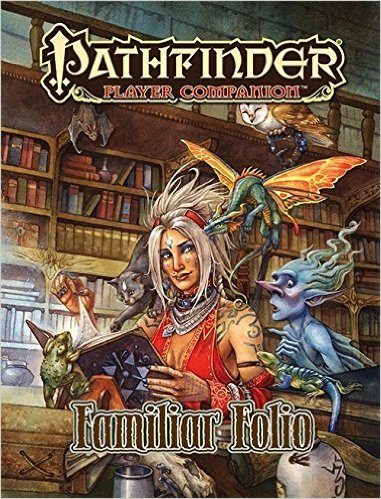
Ring Side Report- RPG Review of Pathfinder Player Companion: Familiar Folio

Product– Familiar Folio

System– Pathfinder

Producer– Paizo Publishing

Price– $12.99 here http://paizo.com/products/btpy9au2?Pathfinder-Player-Companion-Familiar-Folio

TL; DR– Useful if you already like familiars.  88%

61y-JGUoTNL._SX379_BO1,204,203,200_

Basics-Every great wizard has a familiar, why can’t you!  Familiar Folio is a Pathfinder Player Companion book discussing familiars, how to add them to new characters, and how to improve them.  Like every other book in the companion line, it adds new feats, archetypes, items, spells, and other options for players and their familiar’s alike.

Mechanics or Crunch-This book is amazing, if you already like familiars.  This book won’t really win you over if you didn’t already have a character concept for familiars.  Every option added in this book is great, but familiars tend to work just like alchemy in Pathfinder, great if you love them, bad if you don’t.  After seeing what’s here, I can say that if I played a character who wanted a familiar, I’d absolutely want what’s here.  However, if I played someone who had the options of not having one vs having one, I don’t think this book would win me over to the familiar side, even with a mascot (familiar). 4.25/5

Theme or Fluff- This book discusses some of the story aspects of familiars, but it doesn’t really go out of its way to add them in deeper.  The book covers topics like how to roleplay with them, and it does have a bit of how different locations in Golarion would use familiars and the types in those locations. But, it’s not much beyond that.  This is primarily a crunch heavy book.  4/5

Execution-This was put out by Paizo.  For anything you can say about Paizo, the unarguable truth is they know how to make a book well.  It’s got great art, great layout, and was a pleasure to read.  5/5

Summary-The simple question to this book is, “Will you use or want a familiar?”  If you said yes, then you get this book.  If not, then don’t.  Like I said with alchemy, familiars are extremely divisive.  You love your familiar, then you will love this book.  If you couldn’t care less about your wizard friend’s odd toad in his pocket, then you don’t want this book.  What this book is is well written, a bit light on story, but overall well put together.  Just decide if you want a tag along before you begin.  88%

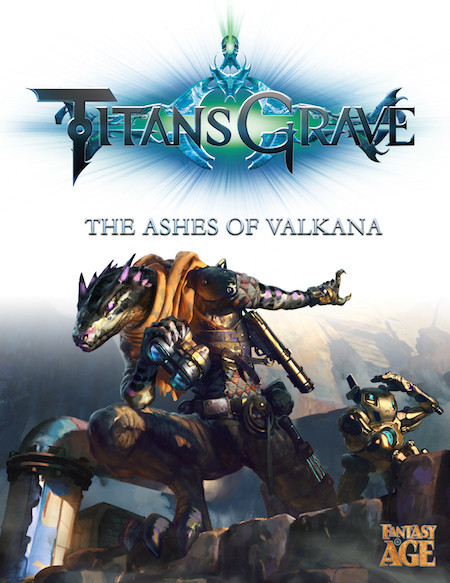
Ring Side Report- RPG Review of Titansgrave: The Ashes of Valkana

Product– Titansgrave: The Ashes of Valkana

System– AGE System

Producer– Green Ronin

Price– $13.99 here http://www.drivethrurpg.com/product/153950/Titansgrave-The-Ashes-of-Valkana?src=hottest_filtered

TL; DR– I only wish this had more. 88%

AGE_TG_AoV-450_1024x1024

Basics-Cyberpunk, fantasy, and Wheaton-oh my! Titansgrave: The Ashes of Valkana is the much hyped book using the AGE System and a setting designed by several RPG powerhouses and Wil Wheaton himself.  On the Tabletop YouTube page, Wheaton played several adventures of this game with his celebrity friends, and now you can play this game at home with your friends.  What will happen when you disturbed the ashes of a long dead war?

Mechanics or Crunch-Titansgrave demonstrates some amazing uses for the AGE system, but doesn’t quite hit the mark I was expected.  The book has some phenomenal new additions to the system like a completely new chart to spend stunt points for one creature type in combat.  Those kind of add-ons to a system show how robust and buildable the AGE system can be.  The book doesn’t quite keep up that new energy throughout however.  The basic Fantasy Age book introduces the system quite well, but Titansgrave doesn’t do enough to expand the system for this universe.  I wanted several new additions, spells, and mechanics, however, I really only got a new race, some new items, and a few character options in the first chapter.  They all work well, but it doesn’t do enough to really drastically enhance the system.  AGE is great itself, but I want more to really make the AGE system Titansgrave own thing. 4/5

Theme or Fluff- Titansgrave tells an interesting story, but sadly one you’ve kind of “heard” before.  The Titansgrave story is the fun romp from TableTop.  Which if you saw TableTop is awesome.  But, if you saw TableTop, then you have a general idea of what’s going to happen.  I was hoping for a bit more original stuff like added adventures, side quests, and a continuing adventure in the world, but there is some things here to keep your players guessing.  Also, the story is a bit linear.  You can’t go too far off rails on this as the story is written ahead of time.  4.75/5

Execution-If you like the layout from Fantasy AGE, you will do fine here.  This book is basically a giant version of the adventure at the back of the Fantasy AGE book with some serious additions.  I’d like a bit more here as the art is good, but I need a few more maps to throw to my players and some more breaks in the text to help me better read the story.  Overall, its well done and something that you can get through with general ease.  4.5/5

Summary-Titansgrave is the first big launch of the AGE system after it got its own push post-Dragon Age.  This book isn’t my favorite RPG book of all time, but I think it does a good job of introducing the system and setting in a big way.  The book provides a completely new world to play in.  I’d like a bit more mechanics specific to the world, but what’s here is well done.  The story is good, but depending on how much your players watch Titansgrave, they may have seen some of the high points.  The book is well executed, and overall a fun read.  After reading this book, I’m hungry for more in the Titansgrave setting.  88%

Ring Side Report- RPG Review of Pathfinder Society Scenario #7–01: Between the Lines

Product– Pathfinder Society Scenario #7–01: Between the Lines

System– Pathfinder

Producer– Paizo

Price– $3.99 here http://paizo.com/products/btpy9cu3?Pathfinder-Society-Scenario-7-01-Between-the-Lines

TL; DR– DnD-NOW WITH LSD! 92%

PZOPSS0701E_180

Basics-You’ve been summoned to help procure an item.  Fortunately, you know where it is, and even better, who has it.  They will even sell it to you!  What happens when you get what you want, and it does way more than you hoped for?  What happens when you play with an ancient box that stores the mental history of all who used it before?

Mechanics or Crunch-This is two adventures in one.  The first adventure is the standard one you know and love.  Run some errands, and then you get what you were searching for.  That’s all par for the course.  The second half is crazy, out there fun.  You enter a mental landscape.  That’s fine, but the map and the monsters are a bit off, and a bit more front loading and modifying of stat blocks would help GMs run this on the fly.  It’s not horrible, and if you read ahead (like you are supposed to!), you will be fine.  However, if you’re running this after just printing off your adventure, then you as a GM will be a  bit lost.  4.5/5

Theme or Fluff-  As I said in mechanics, this is two adventures.  Half is in the regular world, and that is something your players can easily grab onto.  This part is here more to help draw your players in.  The real meat of the adventure is the second part.  Here is where things go on and off the rails.  On rails because the players progress through a linear  dream landscape, but have to do so in a specific order.  Off rails because this adventure plays like a LSD trip-and it is amazing!  Lot’s a crazy imagery and fun ways for the GM to really ham up the crazy, psychic nature of the adventure.  I absolutely love this adventure for that.  5/5

Execution-This adventure has your usual Pathfinder Society polish.  What I don’t like is how the monsters are not customized to the adventure.  The players fight some crazy dream monsters, but the monsters are not really customized to the purpose at hand.  It’s ok, but it wouldn’t take much to really fix up the monsters here, so you’re GMs don’t have extra math to fight with.  This adventure will be a bit long if the players and the GM are slow.  Honestly, its about ¾ of two different adventures, so if your GM doesn’t manage his or her time properly, you will be done late if this is run at a convention slot.  I’m complaining that there is too much here, which is a good problem to have, but it can be a major problem if not dealt with properly.  4.25/5

Summary-Occult Adventures kicked off this season of Pathfinder Society, and it shows in here.  This isn’t completely a psychic adventure as it got strange occult influences, and I hope this keeps up through the entire season of Pathfinder Society.  This is a crazy adventure that really provides some great roleplaying opportunities as well as some great scenes for players and GMs to just go hog wild with.  I love what I see here, and I can’t wait for more.  It’s not perfect.  I’d like a bit of customization from Paizo for the monsters as a GM who has missed some important information might try to throw CR 6 creatures at a level one party if the miss the section detailing how the encounter changes.  It hurts the overall presentation a bit, but honestly, I had a blast running this adventure.  If this is any indication of what’s coming next, BRING ON THE STRANGE! 92%

Ring Side Report- RPG Review of Fantasy AGE Basic Rulebook

Product– Fantasy AGE Basic Rulebook

System– Adventure Game Engine

Producer– Green Ronin Publishing

Price– $16 here http://www.drivethrurpg.com/product/153066/Fantasy-AGE-Basic-Rulebook

TL; DR-A strong successor to Dragon AGE. 92%
153066-thumb140

Basics-The Dragon AGE has ended, but that doesn’t mean all the stories you wanted to tell in the AGE system have.  Fantasy AGE is the basic rule book for the previous Adventure Gaming System(AGE) system that came out with Dragon Age RPG providing all the basics any generic Fantasy RPG could need.  Let’s break this down piece by piece and see what I think of them individually.

Mechanics or Crunch

Game Basics- Fantasy AGE uses the same basic mechanics that Dragon AGE did; each player will roll 3d6 for an action, find the sum of the dice with some modifiers, and that will determine the outcome.  Contested rolls work exactly the same with the higher sum winning the roll.  This is a quick and easy way to have numeric diversity and an average in your dice rolls.

Stunts-One of the more interesting things with this system is stunts.  When you roll your dice, two of the dice are one color and the third is a different color.  If two of the dice have the same result, you get stunt points equal to the result on the differently colored die.  These stunts have point values and will allow you to add extra flare and effects beyond hit a guy, cast the spell, or bluff the guard. Each type of action has it’s own stunt point chart that you can select icons to spend your points on with the more points spent, the stronger the effects.  When I first read about this system, I was a bit put off, but then my math geek showed through.  It’s easy to think that you won’t roll doubles often, but out of three six-sided dice, you roll doubles a little less than half of the time! Again, this is a fun addition to the standard “roll dice, hit guy, next person in initiative” we’re all used to.

Character Generation-Fantasy age characters make a few important choices and have to let some dice fall. When you make a character, you get to choose your race, background, class, and then you let the dice fall where they may!  Lots of this system involves you randomly rolling for effects on your character.  This results in your average character of a race having some average abilities and likely traits, but overall, I don’t like that part of character generation.  While I’ve played older RPG editions, I prefer to let choice occur when you build your person.  This system does downplay the negative aspects of low ability rolls, but I still prefer point buy.  It’s an option, but most of the book tends to focus on rolling for your character.

Statistics:This game doesn’t have a ton of bonuses to your basic dice roll and that is great thing.  Each person has a number of statistics being: accuracy ( weapon accuracy), communication (talking to people), constitution (body toughness), dexterity (agility and coordination), fighting (heavy weapon accuracy), intelligence (what you know), perception (situation awareness), strength (physical ability), willpower (mental resolve).  You can generate these via point buy or just rolling 3d6 and hoping for the best, so your number will be between 3 and 18 white the modifier for your dice rolls roughly equal the modifiers most role players have from D&D.  You can further focus in these abilities by  getting ability focuses like Accuracy(Blades) where you add 2 to your dice results for all blades attacks.  Thus, you will really only add two numbers to the three six-sided dice rolls.  I do love any system that squashes power gaming at the start and builds in a mean and standard deviation for its die results!

Classes and Advancement-Much like the Dragon AGE RPG, there are only three core classes: mage, rogue, and warrior. These classes are much like you would expect.  Mages cast spells, rogues are nimble and skillful, and warriors are heavy people-at-arms.  Each level a character will get new options such as ability focus, talents (abilities in sequence like feat trees in DnD/Pathfinder), or class specific bonuses.  The talents provide the bulk of the customization in the game.  Every warrior has the same basic class abilities, but the warrior focusing on close combat and social interaction will be like that because of the talents he or she choose.  You don’t get that many choices, but you do get a method to differentiate yourself from the press of other individuals out there.

Magic-Magic in this system is a point based system where players have a mana pool that is spent to cast a spell.  Spells themselves come from the talents that players choose with each level of the talent providing more spells.  It’s a simple system that reminds me of Final Fantasy and the Dragon Age video games.  Not bad company to be in, but since you don’t get tons of different talents, you won’t have the abundance of spells you’re used to in different RPGs like Pathfinder.

Combat and Damage-Just like this games D20 cousins, combat flows in a turn based manner following every player rolling initiative. On your turn, you can do either two minor actions like moving or a minor and a major like attacking.  Players and monsters have a defense rating that you attack just like any other skill in this game.  If your attack roll equals the defense, you hit the enemy.  Damage is done in this game based on the type of weapon you’re wielding with armor reduces the damage that a character takes instead of providing a bonus to your chance to dodge the attack.  This doesn’t reinvent wheel, but why fix what isn’t broken?

Summary-You can see the Dragon AGE in the Fantasy AGE.  That’s not a bad thing as I liked the  Dragon AGE RPG and the Dragon Age video games for speed and elegance of the systems.  However, my major problem is that the character and players don’t have many options.  Sure, it’s fun, but I’d like a bit more crunch to my characters.  That said, it is a good, quick, and simple system that you can easily use in any fantasy setting.  4.5/5

Theme or Fluff- It’s always hard to judge generic RPGs for their fluff content.  By their nature, there can’t be a significant amount of fluff in this book since any fantasy setting should be able to be played with in this system.  But, the book does have nice art, good general fantasy additions, and all the standard fantasy pieces you will need for your toy box.  Just don’t go in here expecting Tolkien as this book can’t have that level of detail and still be general enough for everybody.  4.5/5

Execution-This book reads relatively quickly and has a decent layout. I can quickly get through the book, find what I need and make a character in under 10 minutes.  I’d like more pictures, and some extra tables to make scanning the book easier like in the talents section.  I prefer to see something similar to how Pathfinder does summaries of feats before the full descriptions.  The book even has a small bestiary with some monsters to throw at your players.  It’s not large, but for the $15 I paid for the book, I’m pretty happy to see a complete system, game mastering guide, and monsters in one book.  This book even comes with a small adventure, so you can jump into playing after you buy only this book.  Overall, good book with a few minor problems keeping it from perfect. 4.75/5

Summary-Fantasy AGE is going to be an awesome RPG if Green Ronin can bring more out for it. Titansgrave is coming out, and that will provide an awesome series of adventures and a setting for this game.  That is what this book really misses-the fluff.  The crunch is good.  It might not be my all time favorite gaming system, but it’s well-designed, thought-out, and easy to use-all the things a quality RPG needs to be viable long term.  I’d like more options, but that’s my old D&D 3.5 gamer heritage showing through.  As for the book itself, it might not be my favorite layout, but it is a great way to present a games information.  If you joined the Fantasy AGE for Titansgrave, you will not be disappointed! 92%

Ring Side Report- RPG Review of Steel and Fury: Combat Maneuvers of the Mighty

Product– Steel and Fury: Combat Maneuvers of the Mighty

System– Dungeon Crawl Classics RPG

Producer– Purple Duck games

Price– $7 here http://www.drivethrurpg.com/product/147952/Steel-and-Fury-DCC

TL; DR-A must have for the Dwarf or Fighter at the crawl! 97%

147952-thumb140

Basics-Cry havoc and let loose the dogs of war!  Steel and Fury is a Fighter and Dwarf supplement for the Dungeon Crawl Classics RPG.  This book focuses on the Mighty Deeds of Arms for both of those classes by adding several new deeds that are specific for the type of weapon you are using as well as expanding the deeds by adding mighty criticals and mighty fumbles.

Mechanics or Crunch-Hands down a home run.  Every mighty deed gets its own page with descriptions of what happening.  Also, the addition of mighty criticals and fumbles really adds to the dice rolling crunch of this system.  And, the book has an amazing resource- an end of the book table showing which weapons can do which deed (MORE BOOKS SHOULD DO THIS!).  As the cherry on the sundae, even the old deeds get a revisit by adding the critical and fumble rules to them as well.  This is well done and slick. 5/5

Theme or Fluff-  Again, another home run.  Every deed has a ton of story to it.  Not only does each deed have a description, but also the deed has a quote from an appendix N fantasy story.  That right there is awesome.  Also awesome is the art.  I honestly didn’t expect much art from a small publisher, but it’s here and well done.  You will feel every crunch from this one as Steel and Furry builds on to a solid foundation of carnage. 5/5

Execution-We’ve had two home runs, so it’s time for a foul.  I love the book.  It’s got great spacing, great writing, text, tables, and great art.  What I don’t like is the price tag.  This book is $7 bucks for about 60 pages.  That’s a bit much as much of this book is pages with tables.  $7 isn’t enough to keep me away, but I think this should be around $4 to $5 to keep up with other publishers’ prices. 4.5/5

Summary-This is a great book and addition to the DCC rpg.  Purple Duck Games really made a top notch product by supplying quite frankly a ton of new content to the system.  Every weapon get some love.  At the back is an amazing chart detailing what each weapon can do with the new and old mighty deeds.  Even old deeds get new additions with mighty criticals and mighty fumbles.  The story this book tells is great proving that a straight crunch book can bring some story and panache to the table.  I think the book is a bit over priced.  But, if you can stomach the price, this is a necessary book for any fighter and dwarf that hits the table. 97%

Ring Side Report- RPG Review of Shadowrun: Run Faster

Product– Shadowrun: Run Faster

System– Shadowrun

Producer– Catalyst Game Labs

Price– $25 here http://www.drivethrurpg.com/product/141788/Shadowrun-Run-Faster?term=Shadowrun%3A+Run+Faster

TL; DR– The Shadowrun edition catch-up book. 87%

141788-thumb140

Basics-Time to dust off that chrome plated centaur!  Run Faster is an edition catch-up book.  While the main Shadowrun book had a comprehensive book of characters, Run Faster fills in the smaller gaps by adding all the subtypes for each metahuman race.  This book also has a chapter discussing how to make your vampire and all the subtypes for that as well.  In addition, Run Faster adds new archetypes, qualities, quick start packages for traits and gear, and rules for how to build up your house.

Mechanics or Crunch-This is the edition catch-up race book with a ton of extra character options as well.  When a new edition arises, some people want their old, less represented races back.  Here’s the book for that.  Want to play a naga?  Here you go!  Want to play a vampire?  We got rules for that!  Want to play a centaur?  SURE!  Don’t like the new priority-based character generation plan for SR5?  We’ve got several new ways to make characters from scratch now.  It’s got enough chapters to bring some serious new crunch to your SR5 game.  Some parts are not a useful.  I’m a Shadowrun Missions game master, the entire section on vampires, while interesting, is completely useless to me. It’s well done, but something that might be better served as its own smaller PDF.  There are also chapters that I absolutely love like the section on how to kit out your house.  It’s amazing mechanics, but most of the Missions players will never be able to use them.  What does impress me is the PACK sections.  The preset packages will help you make characters quicker by giving you small, preset groups of skills, abilities, or items that you can plug into your forming character instead of slaving over the book for an hour.  That, as someone who teaches the game often, will be the most useful thing out of this book.   Overall, the book is amazing, but not the most versatile book for all players. 4.5/5

Theme or Fluff- The core book tells some great stories on how the 6th world works.  This book fills in gaps describing how individual creatures fit in it.  It doesn’t just give how the freaks of the world survive, but it also gives how a basic dwarf is seen and judged.  It’s got chapters on how the vampiric-ly gifted survive and try to thrive.  It’s full of stories that will give you ideas for your next run.  It’s a beautiful book full of great art to give you a picture of the world.  This book will help you better understand the world of Shadowrun as a (meta)person who lives there.  5/5

Execution-Oh, Shadowrun, Shadowrun, Shadowrun.  You honestly know how to tell a great story, but making that book useful, searchable, and easy to use is not your strong suite.  Like all Catalyst properties, don’t expect an index.  That right there hurts the book.  Also, organization isn’t their strong suit either.  Here is the textbook example of this boks problems.  In the chapter on vampires and other infected, the book gives a table on the different types of infected on their stats.  Thats a good start.  However, not listed on that chart are the base creature that changes when infected, the type of HMVV that infects them, or their powers.  Now that’s a large chart, so I can excuse the powers not being a part of it.  But, I have to look up the specific infected for each type of virus and the creature it mutated from.  As someone who hasn’t played a ton of the previous editions where that was a larger part of the game, I’m stuck reading text descriptions of each infected.  Those get the point across well, but they don’t get the point across easily.  And that’s the problem wit this book.  Give me more to your tables and more tables.  Give me a table with short descriptions of the qualities and the cost with them.  That was done for 3.5 DnD, and it quickly got the ideas across.  This book gets its ideas across, but not in a user friendly manner. 3.5/5

Summary-I am not an old gamer.  I can not call myself a proud and ancient grognard-one who’s seen the rise and fall of uncounted editions.  I’m actually a recent convert to Shadowrun.  I joined up late 4e, and I have fallen in love with 5e.  That said, I’m way behind my knowledge about the smaller details of the setting.  This is a great book to fill in those gaps.  I like learning how the individual races are treated.  I like learning about the nitty gritty of vampiric life.  I do think some mechanics are a bit useless to most of the player base, but that doesn’t hurt the book too much by providing extra information.  What does hurt the book is Catalyst’s organization of the information.  In the chapters where the book wants to tell a story, it tells amazing stories.  In the chapters where it has a ton of crunch information to bring to bare, it does its job but doesn’t get much help from the layout.  If you love Shadowrun, this is a fantastic book to learn about the world.  If you want to get new players options for your SR5 game, this is a fantastic book.  If you want to learn how to produce a book and need a guide as a refer to, this is not the book to look at.  87%

Ring Side Report- RPG Review of Pathfinder Society Scenario #6–18: From Under Ice

Product– Pathfinder Society Scenario #6–18: From Under Ice

System– Pathfinder

Producer– Paizo Publishing

Price– $4 here http://paizo.com/products/btpy9ch2?Pathfinder-Society-Scenario-6-18-From-Under-Ice

TL; DR– A THINKING humanoids mod. 97%

PZOPSS0618E_180

Basics-Chase a skykey under the ice of Irrisen!  The Pathfinder Society is looking for traces of a Dwarven city that disappeared many years ago.  Can you find where the dwarves went or will you anger either the Linnworm Kings or the Witches?

Mechanics or Crunch– This is a many angled mod that can be done in a straight forward way.  Like most of the mods, there is a counter mechanics for determining how well the PC’s succeed on their job or secondary tasks.  It’s not hard, but the mod isn’t so much about crunch, but how well the players think.  It’s well done and fun when you see the players analyze and understand a situation.  If the players are smart, canny, and show the proper deference, they will go through almost the entire mod without swinging their swords!  That shows the mod is awesomely stretchable, but some players, the kick-in-the-door-and-eat-some-goblins players, will be vary bored if things are going well. 4.5/5

Theme or Fluff- This is where the mod truly shines.  Sure, it’s got the necessary fights and counters that all good mods need, but how the players go about this mod really makes the story.  Are you simply smash and grab Pathfinders or are you social dilatants?  Do you understand your mission or are you simple out there to kill a bunch of people?  As a GM, watching that play out is a great roleplaying experience 5/5


Execution– Season six is the absolute best season for how these mods are put together.  Need the maps?  Here, we have blank maps for you to resize and print.  Need monster stats?  Here in the back of the mod are all the monster stats, so you don’t have to have 10 books open to run the game.  It’s still four bucks, but right now four bucks for ~ 30 pages seems to be the norm for most companies. Well done!  5/5

Summary– First, the elephant in the room-If you play this mod smart, you will not have many combats.  And, that’s what the success condition hinges on.  That right there will turn some players away.  You can’t make everybody happy, but in a mod that’s mostly going across borders and meeting people, combat is a many terrible thing!  The story makes world sense.  The mechanics work as well as they can.  The execution is absolutely fantastic.  As a GM, I enjoyed this mod.  My players did as well.  Just make sure you know what your players want to get.  Hack and slash need not apply!    97%

Ring Side Report- RPG Review of Shadows in Focus: City by Shadow Cheyenne

Product– Shadows in Focus: City by Shadow Cheyenne

System– Shadowrun 5e

Producer– Catalyst Game Labs

Price– $8 here http://www.drivethrurpg.com/product/144658/Shadowrun-Shadows-in-Focus-Cheyenne

TL; DR– Good summary, but needs a map!  88%

144658-thumb140

Basics– The previous Shadows in Focus focused on the whole Sioux nation.  Now it’s time to look at one city, the capital city Cheyenne.  This book discusses the people, places, locations, and groups in Cheyenne and how to run a game in the city of the Sioux.

Mechanics or Crunch– There just isn’t any here!  It’s basically edition-less which is nice, but at the same time, I would have liked something!  However, I’m not going to dock points because a book didn’t do something it isn’t designed to do. -/5

Theme or Fluff-   This book is full of fluff from stories of corruption to the different characters who run the dive bar down the street.  It’s got an absolute ton of information that is well written. 5/5


Execution– Want to know how to instantly make me mad at your geography text book about a place the doesn’t exist or exists in such a state modern information is out of date?  DON’T INCLUDE A MAP!  That right there makes me kind of mad.  Sure, I can look up the map of modern day Cheyenne, but why should I?  Modern maps also won’t include any of the new locations you discuss, so I have the painstakingly find the locations you talk about if I want to use your book.  Also, while the information in the book is well written, some of it feels out of place.  This book has all the members on the council of chiefs.  That’s great information to have, but honestly I think that should go in the Sioux Nation book itself.  Sure, they live in Cheyenne but they are much more of a national figure.  And that kind of sets the tone for the book-it feels like this and the Sioux Nation book were written as one book, divided along some lines to keep them equal length and send out to layout.  That’s not bad, but it is a bit distracting.  3.75/5

Summary– This is a pretty short review of a decent sized book.  This source book covers the city of Cheyenne well introducing lots of locations, people, and the town of Cheyenne itself well.  I still really want a map, and I also feel that some of this book belongs in the basic Sioux Nation book.  None of those sins make this a bad book, but it does take away from the awesome parts of the book.  Also, I’d like something mechanical for this book.  There isn’t any real mechanics to speak of, but the book’s job is to inform about the world, not the games underlying mechanics or add player options.  But honestly, here’s what will determine if you buy this book-do you ever plan to do a run in the Sioux Nation and Cheyenne?  If yes, buy this book.  It’s a good summary of the town and its people-even without the map.  88%

Ring Side Report- RPG Review of Valiant Universe: The Roleplaying Game

Product– Valiant Universe: The Roleplaying Game

System– Valiant Universe: The Roleplaying Game

Producer– Catalyst Game Labs

Price– $40  for the physical book here http://www.amazon.com/Valiant-Universe-RPG-Core-Rulebook/dp/1936876965/ref=sr_1_1?ie=UTF8&qid=1434994698&sr=8-1&keywords=valiant+rpg, $10 for a PDF here http://www.drivethrurpg.com/product/132548/Valiant-Universe-The-Roleplaying-Game, OR PLAY NOW FOR FREE with this PDF http://www.drivethrurpg.com/product/128948/Valiant-Universe-RPG-Quick-Start-Rules-Featuring-Unity

TL; DR– The heroic evolution of Cosmic Patrol 92%

132548

Basics– Step into the pages of the Valiant comic books.  Valiant RPG is designed to use the Cosmic Patrol light mechanics system in the world of the Valiant Comics.  You can fight alongside X-O Manowar or even start fights in the Harbinger Wars!  The book spends half its time setting up Valiant universe and half its time describing the system with adventures provided to jump start you into the system.

Mechanics or Crunch– There is a lot here, but it’s also quite similar to Cosmic Patrol

Non-Combat, Combat, and 90% of the system-Valiant RPG feels like the next stage of evolution for the Cosmic Patrol RPG.  Players use a d12 + a d4 to d12 for all the characters actions vs. the Lead Narrators roll of d20.  Just like Cosmic Patrol, the game is quick and easy to pick up.   For a much fuller explanation of the base rules read my cosmic patrol write up here: https://throatpunchgames.com/2015/06/05/ring-side-report-rpg-review-of-cosmic-patrol/ . Overall, it fits well with the comic book style of the system.  Players feel heroic being able to take blasts from large robots while facing odds that would decimate most small nations.

Powers-The major addition to the Cosmic Patrol system by the Valiant RPG are powers.  Powers are extremely varied with few if any rules guiding their creation.  Players spend points to choose a die type, a bonus to the die, and if the die replaces, if two dice are rolled and the better result taken, or if the two are added together.  How these dice are used is completely up in the air.  Since this is a superheroes game, the powers are all kept loose to allow for a variety of powers to come out.  Everything from flight to energy swords are powers the players can design and use in this game.

Summary-This is a very loose, fun game.  It does play well with all the characters feeling like superheroes.  It all works well as the Cosmic Patrol system is an amazing system.  The powers are a great addition to the system adding a wide variety of options at player creation.  It’s very flexible, allowing for the creation of any superhero a person could think up.  The only problem I have with the system is combat tends to drag a bit.  I’d like player characters to do a bit more damage to make them feel a bit more heroic.  Most people should go down in under one hit from the Eternal Warrior, but based on how damage is dealt, a Visigoth can go toe to toe with him for at least five rounds.  However, this is an area where the powers can be used to fix the system based on player creativity.  Otherwise, this system allows for players to battle through any adventure from the comics well. 4.5/5

Theme or Fluff-   The first half of the book is the quick notes of the Valiant universe.  I’ve read a bit of the comics, but this is a much better introduction to the world than I expected.  Each comic gets four to six pages of explanation as well as the general explanation of some of the major events of the universe.  It’s well done, and if you’re at all interested in Valiant Comics, it will draw you in and make you want to read some of the graphic novels. 5/5


Execution– I like what’s here.  Starting with the comic universe helps those who’ve never read the comics get on board in a hurry.  Also, it has enough depth that you don’t feel completely outgunned when the diehard comic guy/gal in the RPG groups starts talking.  It won’t give you a master class in the subject, but it will help you hum most of the harmonies to the Valiant Universe song.  Character creation is simple, and has a few examples to help you make the heroes you want.  I’d like a bit more for game mastering as, like Cosmic Patrol, players can do a round robin GM style with the lead narrator position rotating, allowing everybody to a chance to play.  But, just like Cosmic Patrol, the adventures are barebones.  It allows for quick, on the fly game play and mastering, but it also means that the current lead narrator has to have some serious improve chops.  I do like how much the writers provide by both giving you lots of enemies to fight as well as several adventures to start with, but I think this book needs a bit more to be completely new game master friendly.    4.25/5

Summary– Valiant and Cosmic Patrol occupy an interesting niche in the RPG market.  It’s got more rules then Fiasco, but much less rules then DnD or Shadowrun.  If you need every minuscule rule spelled out for you, then these are not games you will enjoy.  If you want a ton of improve opportunity, then you will enjoy this.  If you want ONLY improve, then you won’t enjoy this RPG.  If you want a bit of dice rolls and crunch, then this is your sweet spot.  It’s a great RPG that’s set in a fun universe with great comics.  It builds upon the solidly squishy base of Cosmic Patrol and adds a fun universe to play in with new powers to destroy it with.  However, it’s not without its faults.  Some combat can drag a bit, and I’d like a few minor additions to the GM section of the book to better teach how to run the game.  But, it’s still a great RPG with lots of options that are only limited by your imagination. 92%

Ring Side Report- RPG Review of Cosmic Patrol

Product– Cosmic Patrol

System– Cosmic Patrol

Producer– Catalyst Game Labs

Price– $ 25 for the physical book, or FIVE BUCKS(!) for the PDF here http://www.drivethrurpg.com/product/94125/Cosmic-Patrol-Core-Rulebook

TL; DR– Fun and light, but needs a bit more explanation. 87%

94125-thumb140

Basics-Time to rocket off to space with the Cosmic Patrol!  In Cosmic Patrol, players (and even the GM!) take the rolls of different patrol agents as the fight for truth, justice, and Space America!  This is a story telling RPG that takes place in the universe of 1950’s Sci-Fi.

Mechanics or Crunch– Let’s break this down.  There isn’t much, but it is slick!

Non-Combat-For any action that the players want to do where dice are needed like decrypting an ancient alien script, piloting the ship, or seducing the green women and men beyond the stars, players roll a d12 (a twelve sided die) and either their brawn, brains, or charisma die and add those two together.  Brains, brawn, or charisma dice range between d4 to d12.  The Lead Narrator (LN), this systems version of a DM/GM, rolls a d20.  If the player meets or exceeds the LN dice roll, then they succeed.  Players also have a luck value.  If any of their dice roll that value, they succeed.  That’s it.  This game is built for flat out speed and storytelling.

Combat-Want to shoot somebody with you atamo-blaster?  You roll your combat die, and they roll their combat die.  You beat them?  You shoot them.  Done.  Weapons do have ranges like close (fist fight), near (across a room), and far (sniper duel), and those will indicate if you can use the weapon across the space or if you take a penalty to the die result.  If you do hit, you deal damage indicated by the weapon.  Done.  Like non-combat, die rolls are kept quick.

Damage-Weapon do damage equal to their damage value.  Every character has armor with a number of damage circles.  When those fill up, characters start to take health damage.  As the health damage track fills up, you begin to take penalties to your brawn roll, then brawn and combat dice rolls, and finally you pass out.  While quick, it also has the hint of realism that I love in combat.

Turn order- Outside of combat, players act pretty much any order they choose.  In combat, turns are quick starting to the left of the Lead Narrator and going around the table.  Players get basically a move and an action to borrow terms from other RPGs, but this is pretty much just left up to the LN to adjudicate (Remember this is a super-light weight game!  No need for battle mats here.).  After all the players take their turns, then the Lead Narrator has all the enemies take their turns.  It’s quick and easy to keep running.

Plot Point-I love cheating points from other RPGs, and I love them here too.  Plot points give you narrative control over what happens.  You can increase or decrease a die roll, have the enemy’s rocket’s thrusters cut out, rip the man out of the evil kill bot suit, or any other action that will enhance the story.  But, every plot point a character spends is given to the Lead Narrator!  The Lead Narrator can spend those to add enemies to a fight, create plot twists, or anything else that might provide some narrative fun, but they can’t use it to directly hinder a player’s roll or action.  Players get more plot points by acting using their characters cues/characteristics or simply starting their turn with no plot points.  The fact that these points are currency for both sides of the game makes them fun, and the nature of how quickly you get them back really makes the plot full of cheesy 1960’s sci-fi events.

Summary- Cosmic Patrol is in a sweet spot for me.  You get the danger of DnD 5e, but you also get the off the wall narratives of Fiasco as everyone really gets to tell the story.  It’s a granola and yogurt parfait; it has just enough mechanics to keep it crunchy, but enough fluff-based fun to keep it smooth.  Also, whenever I spend a plot point as the Lead Narrator, I can’t help but make the organ du, Du, DUN noise from any soap opera at my players.  It’s just that much fun. 4.5/5

Theme or Fluff-   There is a ton in this little red book.  The book starts with world building instead of numbers, and paints a world where 1950’s Buck Rogers would happily live.  It full of all the tropes you love and room to add some more.  Yes, everything you do in this game will somehow be a cliché, BUT that’s why you play this game.  It’s full of a tons of crazy alien threats to mankind, and all the classic rocket shaped antics you can find. 5/5


Execution– I’ve had nothing bad to say about the previous two topics, but here things will change.  This game expects a lot from its LN, especially from its first game.  Sure I love the small, red book, I like the art, and I like the quick character generation rules and examples.  But, what I hate is the fact almost NO game mastering advice is given aside from some of the standard that should be there.  As a first-time game master for this system, I didn’t know how many bad guys to throw at my players.  And to answer the obvious question-yes this is a story system, but it does have crunch.  So, it does need some balance to keep it fun.  Throwing a full ship at everyone might be story wise ok, but crunch wise out of the realm of logic.  Adding just a few more pages describing how encounters should go would really help.  Also, the game provides some example missions, but again, those missions are extremely barebones about their presentation.  You get a few bullet points describing things like 1) Find ship 2) Deal with inhabitance 3) Neutralize death bomb! And as a GM from other systems, that just isn’t enough to keep my creative juices going.  Sure, I can make a game happen, but honestly that’s a tough pill to swallow.  I just need a bit more to really make this a fully out of the box playable experience.  3.5/5

Summary– If you want a game you can just pick up and play with your group on an off night, Cosmic Patrol is your game.  You get the rules in less than five minutes, and that is amazing.  The theme is something we’ve all seen and, for the most part, love.  As I was running this game once, my ring tone for my parents started, and as it’s the Flash Gordon Theme Song, it was most appropriate.  What isn’t as good as you might expect is the execution, and even that is really only not on point when it comes to the game mastering side of things.  As a book with art, monsters, and world building, it amazing.  I just needed a bit more to help me start running.  If you want a Space Opera game with a bit more meat on its bones than Lasers and Feelings, but you don’t want Traveler, then this is the sweet spot for you. 87%