Ring Side Report-Crawl! No.8: Firearms!

Product– Crawl! No.8: Firearms!

System– Dungeon Crawl Classics

Producer– Stray Couches Press

Price– ~$3 here http://rpg.drivethrustuff.com/product/121302/Crawl-fanzine-no-8?term=crawl%21+firearms

TL; DR– You brought a wizards to a gun fight! 93%


Basics-How about adding some guns to your DCC RPG game?  This book provides rules for adding firearms to your game spanning black powder cap and ball guns to laser rifles.


Mechanics or Crunch– Overall, the rules in this book are really well done.  This book provides different types of guns for however advanced a GM wants the guns to be in his/her home game.  The guns from different ages have distinct feels.  In addition to the standard gun y does x damage, there are new rules for duels as well as critical hit and fumble tables.  I like most of the added mechanics, but some of the things like a critical hit that disarms you I don’t like.  It’s good, but some things you might not completely agree with. 4.5/5


Theme or Fluff- DCC RPG has some of the best gonzo fantasy rules and themes of any RPG.  I love what I see here.  You can have modern day armies show up in a DCC RPG game and start drawing on your wizards and rogues.  It’s a blast! 5/5

.

Execution-This one was reasonably well laid out, but some of the tables were a bit off.  I could read everything well enough, but I would have liked the information separated into a table and then had a larger description of the tables contents in a separate area.  It felt a bit cluttered.  Nothing is horrible, but it wasn’t my favorite layout for a Crawl! magazine. 4.5/5


Summary-If you love DCC RPG as much as I do, then you are going to buy this anyway.  If you are not an addict, this is a good one.  It’s not my favorite, but it’s a good addition to the magazine.  There are some great rules for adding guns to a fantasy game.  It’s all optional, but if you want a touch weirder game by giving the warrior a blaster, this is a great way to handle the rules. 93 %

Ring Side Report-Victoriana 3rd Edition

Product– Victoriana 3rd Edition

System– Victoriana

Producer– Cubicle Seven Entertainment

Price– ~$25 here http://rpg.drivethrustuff.com/product/116730/Victoriana-3rd-Edition?term=victoriana+3rd

TL; DR– You can’t go wrong with Steampunk, Lovecraft, Penny-Dreadful Shadowrun! 93%


Basics-Ever want to mix steampunk with Victorian sensibilities and add a ton of Middle Earth to the equation?  That is the mix for Victoriana-an RPG set in 1856 where magic is semi-common place, steam power is beginning to conquer the world, and “heroes” are called from all walks of life.  This is a whole RPG in one book, so let’s break this down into its important parts and numbers.


Mechanics or Crunch– At this games core, it’s a simple d6 pool game.  Let’s see how that plays out on each level:


Base Mechanic- Victoriana is a d6 dice pool game.  Each task you do will be a combination of an attribute and an associated skill.  Shoot a gun?  Dexterity and firearms.  Ride a Wyvern?  Presence and Animal Handling.  A few small things make this game amazingly fun and different from other dice pool games.  One is the numbers you want.  You are looking for 1’s and 6’s.  Even better, 6’s explode and you roll them again counting 1’s and 6’s.  AND THE 6’s KEEP EXPLOIDING!  I love the dynamic addition of exploding dice in any game!


Task Difficulty-Most tasks you perform require two successes with some task allowing partial successes.  That is a quick and easy mechanic for deciding failure and success.  The system builds on this simplicity by adding “black” dice.  Want to mix dangerous chemicals on a bumpy train ride?  Well you roll your normal Attribute and Skill, but you also roll 3 BLACK dice.  These black dice work just like normal dice, but they take AWAY successes.  AND, they explode like normal dice!  AND, THE PLAYERS ROLL THEM!  This puts some of the pressure on the player and it’s just pure fun as a GM.  If you have negative successes at the end of a roll, then you have a foul failure.  These situations are where the GM gets to absolutely play with the player.  Guns break.  Mechanical arms are ruined.  Spells summon crazy monsters.  It’s the whole nine yards of bad things for a player.  Some tasks have opposed rolls like attacking and dodging, but black dice can still be added to both sides of a combat.  If you’re shooting in the dark, and my bad guy is dodging while on a slippery floor, both sides get to add black dice to their rolls.  Whoever has more successes wins.


Combat-You could have an RPG without combat, but why!? Each round players can choose to do one action (move, attack, cast a spell, etc) at no penalty.  However, a player can do up to his/her dexterity in actions per round.  Each action the player performs divides the dice pool for that action.  Run and shoot?  Divide your pool by two.  Run, shoot, and mix a bomb?  Divide your pool by 3 for EACH action.  Your black dice are NOT changed as your divide your pools!  You can do anything you want, but the more you do, the worse you can fail!  Damage also is dependent on d6’s.  Each weapon has a damage value.  If you score more successes than your target, you get to roll a number of d6’s equal to the damage value for your weapon counting the 1’s and 6’s as before WITH EXPLODING DICE!  After you count your successes, you add your initial number of successes to your count and the opponent subtracts his/her armor and takes the difference as damage.


Character Generation-Character generation in this system is divided into two broad categories: completely homemade or guided.  If you make your own character from the soles of your feet up, have fun!  If you want a little more guided approach, then you can build your character by selecting your background, breeding (social standing and race), build package (where you fit in the breeding and background), spend attribute and skill points, and earn and assign extra build points via drawbacks and other abilities.  It’s pretty simple, but flexible allowing all kinds of different characters to populate the world.  As a word of caution, this system has the kind of flexible that a few example characters could help to keep players from killing themselves during character generation.


Magic and Machines-It wouldn’t be magic and steampunk without magic and machines.  Magic is divided into a few different categories.  Basically, each mage has training in one of these areas of magic and makes still tests as previously discussed.  It’s simple and quick.  The different types of magic all feel different as hermetic wizards throw around all kinds of elemental magic, while people of faith have much more religion based magic like healing and exorcism.  All magic uses another metric called quintessence.  Quintessence is spent to cast spells and is recovered over time and rest.  Also, if you don’t have quintessence, you can just take damage.  I LOVE cast till you pass out systems!  This is only the tip of the iceberg, but magic does feel like magic and not just another skill roll.  Machines on the other hand are built once and then never have to be paid for again.  They may require fuel like steam or gas to run, but the different machines fell like they have different functions.  Most of these functions have different actions than magic, but part of the theme is how magic is beginning overtaken by the age of steam.  Some of these devices even require magic to be built!  Whatever steampunk idea you have in your head, based on the marvels here, you can build your favorite toy!

Order and Chaos- Victoriana’s spiritual fight isn’t between good and evil.  Don’t get me wrong, good and evil are here, but the major fight is between the forces of entropy and order.  The RPG spends some time outlying that order isn’t necessarily good as a crazed priest of order can easily be as evil as a demonologist of chaos.  Players can decide to side with one or the other, and when they do an action that advances their side, they can get dice depending how advanced they are on the cogs of their faction.  Order provides a straight bonus to an action, while chaos provides many more dice than order, but you have to roll these dice to see if you succeed.  It’s a fun addition to the game, but one that your players and you will have to choose to get deep into.

Summary-I love what is here.  It’s simple in a good way, quick, and flexible.  It’s got a fun feel with action and puts some of the dirty, hard choices in the players hands themselves with black dice.  I love when I make the players be the bad guys for a change! 5/5


Theme or Fluff-Victoriana is an “almost Earth” setting.  Even with elves, magic, and steam powered robots, people are not all that different.  So, this book assumes that history will pretty much follow the same path to 1856.  And, you know what?  It works really well!  I liked the world this book built.  Also, if you remove all the “wizard/steam robot did it” references in the setting back story, the first half of the book is a well done summary of European history till 1856.  Honestly, a world with different races (really different races not just Spanish compared to English, but Ogre compared to hog-faced beastmen soon to be German Chancellor) explains the wars in Europe better than the petty motivations that have occurred through all of our real history.  The story of this world drew me in, and I sat and read the intro fiction as well as the world guide.  It’s a well done world with lots of depth to help you understand the world and live in it as you game.  5/5


A note on history, truth, and the “isms”- Victoriana is set in a time when it was amazingly awesome to be a white, European, rich male.  For every difference from that standard, things got steadily worse.  This RPG introduces the realities of that life, but doesn’t dwell on them.  It leaves how much of that you want to throw into your game up to you.  That’s important since some players might not be too comfortable roleplaying in a time when a husband could not technically rape his wife.  And, if you wanted to, things could get worse from there.  Sexism, racism, and specisim are alive and well here, but the book walks that line well and wholly lets the GM and players decide how much of the more horrible parts of history and alternative history they want to explore.  I feel it’s important to note that there are some possible adult themes, but they are handled well.  If you just want some pulp steampunk with orcs and magic, then you can easily get that from the system too.


Execution-I liked this book, but the problems I have with this book are not getting enough book.  What’s here in this book is great, but could use a bit of help to distinguish information from background text.  The book is black and white.  That’s not a bad thing, but some of the information isn’t as highlighted as well as it should be.  My next major complaint is the lack of examples.  Combat and character generation could both really benefit from an example of creating a character and how to systematically tear another character to bits via combat.  I liked the layout in general.  The pictures did a great job explaining the world and people and keeping me engaged.  Even with this complaint, my comments are positive. 4/5


Summary-If you want some steampunk, some magic, and some Victorian history; you can’t go wrong with this system.  Character generation is easy, actions have the players doing more thinking then just roll one die, and combat is quick.  This RPG runs like a good watch-it looks like lots of too complicated moving parts, but when you really get down to it, you see its got a simple, elegant design.  Magic and machines are there, but the subsystems that make them run are not overly complicated.  A new player could easily play with either of those systems with no trouble.  My only complaint is I feel more examples of combat, encounter generation, and characters in general would have really helped players get into the system easier.  It’s not a game breaker, but it’s something to note.  Overall, I love this system.  If you’re looking for your steampunk Shadowrun fix, you cannot go wrong with this one! 93%


Full disclosure: I was provided a reviewer copy.

Blurbs from the Booth-How I review Games

I love gaming, and spend way too much time and money doing it, but not all games are created equal. Some of my more popular blog posts have been my game reviews.  Let’s go through what I look for in a game, and what I want in each area.


Board Games

When I examine a board game, I look at four areas: mechanics, theme, instructions, and execution.


Mechanics-Board games are applying logic and people skills to better handling a situation compared to your competitors.  The way that logic works is the mechanics- mechanics covers how a game works.  Be it a deck building game, area control, dice rolls, randomocracy, or something mixed between everything, this can really make or break a game.  I like when I see several dimensions of mechanics at play.  Games like Tiny Epic Kingdoms or Trains take two  or more simple mechanics and mix them into something better like flour and eggs making a cake.  Some games do this amazingly well like Rococo.  Some games fail at doing something as basic as rummy….LOOKING RIGHT AT YOU TENTICAL BENTO!  If a game feels like it runs smoothly, then that game will most likely get a five.  If the game runs like a car on its last legs about to die on a bumpy road, that game will most likely be a one or less.


Theme-Theme is the story of a game.  Chess is a war between two kingdoms.  Rococo is different dressmakers vying for the most prestige at a ball.  Besides beating your friends at a game, this is the thing that will keep you playing.  If you lose the Lord of the Rings card game, you’ve not only lost, but the world will be plunged into darkness!  But, theme is hard to make happen.  It might just be a simple intro story like in Lost Legends, or it might be an ever pervasive thing that winds through the whole game like Arkham Horror.  Weaving a story into the theme is the height of game design for me.  Games that have tons of story like Eldritch Horror are great games that deserve a five for theme, while some games like euchre don’t even score a one as there is no story to the game.  As the amount of story you want is a game varies from person to person, this is consequently one of the most subject portions of my scoring.


Instructions-I’m a pretty smart guy.  I got me a PhD and everything!  (cue people pointing out all the grammar and spelling mistakes….)  But, if you can’t tell me how to play your magnum opus of a game, then that game is crap to me.  Getting your point across is important, but also how you do it is really key.  If you hit me with a wall of text in size 4 fonts on a plain white sheet of paper, then I’m going to hate you.  What you write has to be entertaining and informative while still being easy and fun to read.  Top marks go to games like Dungeon Petz where not only are the rules taught with lots of pictures, but there are lots of small jokes for the players.  Games like CO2 are horrible.  It is only a few pictures with several pages of just black text in three columns on white pages.  Also, if your rules are flat out wrong like pointing to a card that says weapon and discussing how armor works, you are going to make me very mad!  The original rules for The Lord of the Rings Dice Game had massive misprints that completely broke the game.  Needless to say the online rules were much better.  Pictures say a thousand words, as well as, breaking up the text.  Even if I can play your game after reading your rules, your rules still have to serve as a quick reference.  If I can’t find the rules I need even after a few plays, then those rules are still bad.  Layout, text size, text type, word choice, easy of readability, and pictures really define this section.


Execution-Here is my kind of catch all.  This encompasses some of the instruction that you might see on cards, the art on all the components, component quality, and even the box.  Execution is easy to mess up.  If the game is about shuffling cards, and you buy the cheapest cards you can find, then the cards will break/fold/tear and the game is crap.  Fantasy Flight games is the king of game execution.  Their games have lots of nice tokens with good quality cards.  Some games fall apart in the box like my copy of Machina Arcana which had a few warped ties and the cardboard standees for the monsters that broke or bent.  This won’t kill a game, but it will make the game more or less fun to play depending on the quality of what you get to play with.


Role Playing Games

RPG’s cover paradoxically more and less ground than a board game.  This category covers both a completely new game that is its own thing while also covering a short adventure for an established game.  I tend to cover both roughly the same, but some reviews are much longer because of what I have to cover.  Let’s look at the pieces that are out there.  I roughly divide my reviews on games into: mechanics or crunch, theme or fluff, and execution.


Mechanics or Crunch-The real solids of an RPG is its mechanics.  This is the part you will argue over with your GM.  I judge an RPG based on how well the mechanics work by themselves or work with the existing rules.  I also tend to judge the mechanics of how well the work with the story.  RPGs have to have much more focus on the story than a board game does.  Players are much more ok with just rolling dice in a Shoots in Ladders to decide how their characters move, but no role playing game person wants to play a game where all their actions are completely out of their hands without some story behind it.  Some mechanics are amazing like the simplicity of Dungeons and Dragons 5e, and those systems earn the fives I give them.  Some systems are just way to much crap like Fatal (DON’T, FOR THE LOVE OF GOD, LOOK THAT UP!).


Theme or Fluff-If something is the crunch, then the other side has to be the fluffy bits.  Theme and story are the story you play in.  You can play a simple game where you just go around and kill monsters by rolling a die and adding a number, but you won’t play that for weeks on end with your friends.  A great story is what draws players back to the table.  I judge this aspect of the story by how well the story is written and how involved I get in that story.  I love when a story draws you in and won’t let you go.  I really enjoy the theme of the second part of the Skull and Shackles adventure path.  The whole adventure path is about being a pirate, and this whole module is about having a ship, raiding other ships and being a pirate.  Weak stories just turn your players away and bore them to tears.  If you can’t keep me, the GM, in your story, then how can I be expected to keep my players in your story?


Execution-As with board games, this tends to be a catch all for a lot of little things.  Text size, art, layout, spacing, font, tables of information, and even the paper quality all factor into this score.  I really like how the Dungeons and Dragons 5e players hand book is laid out.  For a lot of RPG’s, I know I’m basically reading a text book about a place that doesn’t exist.  Here is where you keep me reading.  Giving me a boring list of places with little regard to art or spacing will drive me away in a flash.


This is how I judge the games I play.  I’d also like to make an aside.  I tend to give higher scores than most reviewers.  There are multiple reasons for that.  For one, I tend to like most of the games I play.  I don’t often read bad RPGs or play horrible board games.  I tend to see the best out there, but some games are bad, and I know it.  And another major factor is I don’t have time to tell my readers about the bad stuff out there.  I review one RPG and one board game a week.  Reading through 300+ pages of a horrible RPG is not only a poor investment of time; it robs me of time to read and do the things I like.  I have way too many stacks of good games and RPGs to read and play that I can’t waste the time to tell you about any bad ones.  Oh, I do play them, and sometimes I do talk about them.  But, for the most part, I just don’t have the time to spend 3-4 hours playing a bad game/10+ hours to read and play a bad RPG, and hour to write about it, an hour to (poorly) edit my writing about it, and an hour to post that around the internet.  If I’m talking about your product, then most likely I like what I see.  If I don’t, and you know I’ve seen your stuff, then maybe there is a problem we should discuss.


How about you?  How do you evaluate the games that come across your desk?

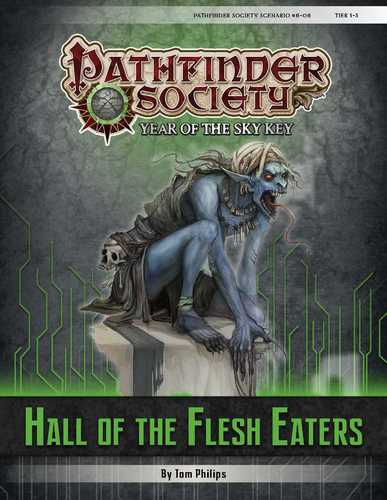
Ring Side Report-RPG Review of Pathfinder Society Scenario #6–05: Slave Ships of Absalom

Product– Pathfinder Society Scenario #6–05: Slave Ships of Absalom

System– Pathfinder

Producer– Paizo

Price– ~$4 here http://paizo.com/products/btpy9985?Pathfinder-Society-Scenario-6-05-Slave-Ships-of-Absalom

TL; DR– Some problems hurt a good story that’s part of this year’s metaplot. 83%


Basics-Someone is selling tainted slaves in the Inner Sea!  A slave at a party had a spell cast upon her that allowed someone to eavesdrop on the guest.  Can you and the rest of the Pathfinder Society make some friends by discreetly finding out who is behind this?


Mechanics or Crunch– This is a reasonable short adventure as it’s designed for Pathfinder Society play.  However, some major missteps happen over the course of this story.  One is the players can fail a few rolls and be completely out of luck when it comes to the mystery.  In addition, like most PFS modules, there are some roleplaying and 2-to-3 fights.  However, one of these fights is pretty tough and can easily wipe most parties if the GM doesn’t pull a few punches.  This isn’t a bad module, but some of the Pathfinder mechanics work against the fun your players could have. 3/5


Theme or Fluff-Overall, I liked the story of this one.  There is a decent amount of roleplaying that can happen while still having the combat that some players crave.  However, some of the story seems off.  A character won’t help the players even after the players save that person’s life!  That kind of seems out of the realm of believability even with magic and elves about.  Also, this module is about slavery, so some players won’t like working for NPC’s who openly own slaves. 4.5/5


Execution– This is done by Paizo. They know how to layout a book.  It’s easy and quick to read.  The art is good, but as always I’d like a bit more.  What is here is well done. 5/5


Summary– This is a short, fun adventure that isn’t without its faults.  I enjoyed running this for my players, and they enjoyed playing this adventure.  It has the standard problems that can plague a Pathfinder game: combats based on CR alone and rolls killing investigation/roleplay.  Those are some problems that can really gum up this adventure’s gears.  Also, this is a module that deals with slavery.  If you’re players are not comfortable with that, then this will not be fun for them.  If you want a module set in Absalom where you have a decent mix of investigation and combat, this is a better than average module.  Also, if you want to get deeper into the Year of the Sky Key, then this an good start to the metaplot. 83%

Ring Side Report-RPG Review of Pathfinder Society Scenario #5-22 Scars of the Third Crusade

Product– Pathfinder Society Scenario #5-22 Scars of the Third Crusade

System-Pathfinder

Price-$4 here http://paizo.com/products/btpy96i8?Pathfinder-Society-Scenario-5-22-Scars-of-the-Third-Crusade

TL;DR–  Great roleplaying, but nothing for the combat heavy characters. 87%


Basics-Murder is afoot!  Pathfinder agents have been arrested, and you are sent to determine if they are guilty or not.  Can you prove the innocence of your fellow agents while in a town that already doesn’t trust the Pathfinders?


Mechanics or Crunch-This one has exactly one or maybe two fights scenes in it, depending on how the players proceed.  Most of the time, players are investigating the murders.  If you have a combat heavy party, they will just be bored.  Also, the combats that are present will be somewhat underwhelming to most parties in the level range.  The module presents some rules for investigation, misinformation, and events in town.  Some of these events are arbitrary as well as the rules for these events being somewhat unclear.  It just might need a bit more to keep some people involved. 3.5/5


Theme or fluff-This is where this module shines.  You as the GM get to scream at the players if they reveal that they are Pathfinders.  Most of the people in town don’t trust the Pathfinders, and players tipping their hands make this module come alive.  The town is well described and the personalities in it are fun to run.  Everybody here has a story, and the players have to try to figure out who did it over the course of the adventure.  I loved what I saw here.  If you want a mostly roleplaying module, this is the one to look for.  5/5


Execution-This is a wordy one.  To get all the information a GM needs to run the mod, lots of words have to happen in a very short amount of space.   I do like that the town has a town map to help you and your players understand all the places they can investigate.  In addition, the investigation methods are presented decently as well as providing the GM with a worksheet to help GMs keep track of all the information at hand, but this chart could use another column to help me keep track of what I and haven’t told the players.  I’d have liked a few more divides in the words, but the module is set up well. 4.5/5


Summary-I liked running this module.  I have no problems standing up at a convention and screaming at the top of my lungs about how I hate the Pathfinders and such.  When I ran this at a con with about five other tables, I did get a few stares.  If you want to have some awesome roleplaying with your characters, then this is the module to run.  If you what a hack and slash fest where lots of things die, then do not even consider this one.  I would like some changes to the module, but overall it was a great if you have the right group.  87%

Ring Side Report-RPG Review of AMP: Year One and Attack of the Buzz

Product– AMP: Year One

Producer– Third Eye Games

Price– ~$15 here http://rpg.drivethrustuff.com/product/132784/AMP-Year-One

TL; DR– Want some amazingly customizable superheroes? Look here! 93%


Basics– When they showed up, everything changed.  AMP is a near future, heroic RPG.  Players take the roles of super humans in 2015.  The mutants have only been around and in large numbers for about a year, and the world isn’t really read for what they have to offer.  Will you fight to save mankind or destroy it?  Are you here to put these monsters in their place or will you stand with the mutants?  All of these are important questions that you will have to answer as you struggle to find where you fit in.


Mechanics or Crunch-This is a new RPG theme and with a ton of new mechanics.  Let’s do a rundown of some of the high points that are offer.

Base mechanic-This game has echoes of its d20 past, and I mean that in a good way.  Everything in this game is a d20 + skill A + skill B or d20 + 1 1/2 skill A.  That’s it.  It’s simple, it’s quick, and it’s fun to play.  Want to treat an animal’s wound?  That’s a d20 + beast handling + medicine.  Want to shoot a gun?  That’s d20 +marksmanship*1.5.  Simple enough.  It only gets slow when both the target and the attacker have to roll to determine if a hit is a success.  In my game, I found myself just saying 10 plus the skills for the attack or defense.  That change made my game run just a bit quicker.

Character Generation-This character generation is complex but has several walkthroughs.  This is a true everything point by.  You can really screw up your character if you try to min/max and fail horribly!  Everything from your speed, to your health, to your attacks is all bought via points.  You don’t have to take any points in speed, but you will move really slowly.  I love this style of customization, but newer RPG players really need to look over the example characters to make a useable character.  Unlike DnD5e where you make about five choices, when you make your character in AMP, you have at least 20+ decisions to make.  It’s easy to do as the math of the system doesn’t operate like the point buy from Shadowrun 4e, but don’t expect your first character to be made in five minutes.

Loyalties-One thing I wanted to point out from the character generation was loyalties.  This game has lots of different themes that are really well integrated into the mechanics.  One way that is done is with loyalties.  When you make a character you decide how important various aspects of your life are.  These range from your community, yourself, and to lovers you may have.  Each rank in these provides in game bonuses with ranks varying from rank zero to rank five.  I like the addition of mechanical benefits from role-playing choices, and these loyalty ranks really provide that connection.

Powers-It wouldn’t be a superhero RPG without superhero powers.  Powers come from several different general areas ranging from batteries (you store up energy) to behemoths (you are the Hulk!).  These powers all have augmentations that provide extra benefits like the behemoth has the crush augmentation that adds extra damage on melee attacks or the bolt ability which allows you to fire elemental blasts at people.  Most of these powers are dependent to on Juice.  Juice can be thought of as adrenalin, and it powers the superpowers of the heroes and villains.  Each broad category has a number of smaller augments that you get as you level up in the power.  Some categories have several different augmentations, while some only have a few.  It’s a quick and easy way to broadly provide the foundation for lots of different hero powers, options, and flavors.  Some of the names might be somewhat confusing, but looking over the powers the descriptions provide the rules and the story to how each power works.

Summary-The mechanics of this book are well done.  The game provides near endless customization and the ability to create the heroes and villains you want to be and see.  The new ideas such as the loyalties are excellent mechanics that other RPGs should employ that really developed the mechanics and the theme together.  However, this isn’t perfect.  Some aspects are a tad fiddly such as rolling for both attack and defense on both sides of the GM screen.  It’s not the worst thing in the world, but sometimes dealing with the amount of rolling in combat can be annoying.  Also, character generation is somewhat difficult.  If you know what you’re doing, you get all the tools you need to make any hero, but if you are just by yourself readying a character for a friend’s game, you might be lost in the amount of options you have to choose from.  4.75/5


Theme or Fluff- The basic story of AMP year One is that after World War I governments around the world worked on a super soldier project to stop war altogether.  Over the generations, the children of the experiments developed these super powers and passed them on.  Now, lots of super powered people are emerging.  How will the world change because of this?  What kind of person will you be?  This is a standard comic book intro, and this is semi-cheesy.  But, its super powered people.  You have to expect a little cheese in that territory.  Just look at the number to times Batman has died and come back to understand.  While it might not be my absolute favorite intro story, it does leave a lot of room for the GM to design a story in the near future world of 2015.  The first half of the book describes the history of the future, and provides lots of different story hooks as well as doing an excellent job of introducing the various groups at play in the lives of the mutants. Does this feel like the X-Men?  Good!  This RPG specifically mentions that as one of the main inspirations behind the themes of the game.  And since there is no currently published X-Men RPG out there, this is the best solution if you want to play in that world.  I think AMP does a great job driving home its theme while providing lots of different stories for the GM to run. 4.75.5


Execution– AMP is done fairly well.  The powers section is a bit wordy, but all the powers get nice flow charts explaining what augments you have to take to take the next one.  A little more art would be nice as well as color, but for a black and white book, it’s done really well.  The font, words, and layout all work well, and the hyperlinks don’t make my iPad slow to a crawl.  I would have liked a few more pre-generated antagonists for the PCs to face as well as a better guide on how to generate encounters.  But, on the whole this is a well done book that was fun to read. 4.5/5


Summary-If you want to play a free form superhero RPG?  Then, pick up this book.  The mechanics are simple, the powers work well, and the execution is great.  I have my minor gripes, but overall, this is a fun super hero RPG that isn’t too crazy or cheesy.  The world is fresh and interesting while providing enough open-endedness to give the GMs free reign in the stories they want to tell.  I was actually pretty entertained by the story that this book had to tell.  Since the tile of the book is AMP Year One, I hope the authors keep up with other AMP books or splat books to keep the metastory going.  93 %


How about two products today?  Here is the first adventure for the AMP Year One RPG-Attack of the Buzz!


Product– Attack of the Buzz

Producer– Third Eye Games

Price– ~$3 here http://rpg.drivethrustuff.com/product/137727/Attack-of-the-Buzz-Adventure-for-AMP-Year-One

TL; DR– Know your group, and this will be a blast. 90%


Basics- Alice, Texas is under attack! Not by the mutants that are running around but by bees! Hundreds have died, and no one knows why the bees won’t give up attacking people.  Can you and the other AMPs you travel with find out how to prevent the bees from killing the town or will you end up like the rest of the town?


Mechanics or Crunch-The adventure is a fun one, but there are some problems depending on who is playing.  This isn’t a bad adventure for mechanics as everything presented makes sense in the AMP work and is balanced, but bees are swarms.  And, swarms are always hard to fight.  Especially with new characters.  Some characters will be completely useless for some of the major scenes in this adventure.  If you have a super computer hacker, then that character will spend most of his/her time running from the bees.  It’s a bold move for the first adventure put out by a system to feature swarms as the main villain, and I think it hurts the fun a bit.  However, the adventure does provide some new powers as well some equipment to help smart players.  What’s here is good, but the mileage your players will get out of the module really depends on who is at the table. 4/5


Theme or Fluff-This is one of the major events in the AMP Year One story.  My players enjoyed being part of the world and solving a major mystery that is presented in the main book.  It was fun for the players to work out how to solve some problems as well as fighting for their lives!  Also, the major groups all have reasons to send characters to this location helps me as a GM bring all the players to this location while still allowing the players to be whatever they want to be.  I didn’t feel like I had to shoehorn my players into this one size fits all adventure. 5/5


Execution-This product was laid out like the AMP Year One core book.  Overall, that’s good as I like the text, font, and layout, but I felt this lacked a few things.  Alice, Texas doesn’t have a map.  That was somewhat troubling.  However, I did like the fact that there is some new art like the main villain and the bees attacking the town. The art was well done, conveyed the sense of terror from a bee swarm attacking people, but didn’t go gory.  The RPG was still pretty age neutral, and that makes the super hero genera fun.  I would have liked a bit more art, but for the price of the module, it’s worth it.  4.5/5


Summary-As a mod that’s a cold intro to the system, this one might not be favorite.  The main enemies that are thrown against the player are kind of hard to deal with when players have limited resources and powers.  That said, if your players know that swarms are a problem here and they can plan accordingly, then this is a fun module.  I’d like a bit more to the module like a map, but for the price, I had fun and so did my players.  It’s a quicker mod as it doesn’t have tons of scenes, but that’s not a large problem.  If you need your AMP fix and want to learn one of the major secrets in the AMP world, this is a great way to get some more of the system. 90%

Ring Side Report-RPG Review of Trail By machine

Product– Pathfinder Society Scenario #6-01: Trail by Machine

Producer– Paizo

Price– ~$4

System-Pathfinder

TL; DR– Good intro to the Year of the Sky Key, but some plot flaws. 97 %


Basics– Pathfinders-time for some basic training!  Go to the old Red Redoubt and survive a few simple tests of pathfinder skills.  All goes well until something mysteriously sets off the eons old redoubt powering up motors long dead.  Can you figure out the ancient, yet futuristic technology of the Red Redout of Karamoss to escape?


Mechanics or Crunch– This one has a decent mix of old and new items and mechanics.  It eases the players into the new, fantastic technology that players can pick up while exploring Numeria.  Also, this scenario presents rules for converting enemy characters to good characters in the society setting.  It’s a fun way for players to reform others by thought, action, and speech. 5/5


Theme or fluff- The Adventure has some interesting twists that will throw your players for a loop.  I won’t spoil them here, but they are pretty fun.  However, if the players do the smart thing, and instantly leave when they have their goal, they will only get to explore roughly HALF the area and miss all the items and faction boons!  A simple change in where some doors close would really help this adventure force the players to experience the cool technology and locations offered here. 4.5/5


Execution– Trial by Machine is done well.  The picture on the front of the module is nice as its something you can show your players to help them understand what they are fighting.  I would have liked a few more pictures to help my players with some of the more fantastic enemies and locations, but the art included isn’t bad by any means.  The text is decently put together as it’s not too cramped and laid out well. 5/5


Summary– This is a fun one.  I really like the Sword and Circuitry concept of the year of the sky key and the Iron Gods campaign, and this get that into the Pathfinder Society.  This adventure eases the players in slowly to robots and other fun technology things while teaching them how to interact with technology and new items.  You might have to do a bit of GM fiat to make half the adventure happen, but if you do, the players will have a much better time than if you just let them leave after half an hour of Pathfinder! 97%

Ring Side Report- RPG Review of Shadow Spells

Product– Shadow Spells

Producer– Catalyst Game Lab

Price– ~$7 here http://rpg.drivethrustuff.com/product/137717/Shadowrun-Shadow-Spells

System- Shadowrun 5e

TL; DR– Good, but more for your GM.  92%


Basics– Always geek the mage first!  Shadow Spells is the first pdf book to be released post Gen Con for Shadowrun.  This book builds on larger magic book Street Grimoire by introducing new traditions, new threats and allies in the shadows, and ending with new spells and abilities for mages of all sorts.


Mechanics or Crunch– This book does have some cool stuff in it, but most of the presented crunch is focused on making the GM’s life easier.  The book introduces several new threats and allies for the PCs to tangle with, and they are all well done with fun new magical powers.  On the PC’s side, the new traditions all look great and look fun to play with.  The best thing introduced by far in this book is the Norse tradition.  So if you want a mage who has a crow familiar and worships Loki for power all the while screwing with everyone with illusions, then this is the book for you.  The powers and spells are ok.  Nothing is bad here, but most of the spells have extremely limited use.  There are some winner spells that are pretty useful on most runs.  However, most of these might be spells you buy later, as most of what’s here is not the kind of spells you would pick up at character generation when you only can choose 10 spells.  4/5


Theme or Fluff–   I love the way Catalyst presents information in their books.  Instead of “here is X information”, everything is always presented as an internet post with people commenting on what just was presented either to provide new information or to provide some snark.  It might not be laughing out loud comedy, but it’s funny and entertaining enough to keep you reading and interested in what is basically a textbook on obscure magical persons and traditions in the sixth world.  5/5


Execution– Much like the rest of the short Shadowrun PDFs, this one is well done.  I’d like a few more pictures and some more white space to break up some text, but overall, I enjoyed reading this.  It never felt like a slog through dense, boring text.  There are some cool pictures as well as some nice text boxes to break up the text and give the reader a chance to breath.  These all help to keep me interested and entertained rather than bored.  Some things I would have liked to see are some pictures of the named characters in this book as we see some pictures of the named people of interest, but not all.  But overall, it’s a well done book.  4.75/5


Summary– I love magic in Shadowrun.  It’s always fun to take down a fully armored troll street samurai with a timid elf pinned down in an alley.  This book adds some more story to the Shadowrun world.  Overall, it’s pretty well done, but if you don’t play a mage, then this book is completely useless to you.  If you don’t want to play an obscure tradition, then this book doesn’t help you either.  As a GM, this book is very useful as it provides a new set of enemies and powers that you might want to throw on an enemy.  For the average player, you really have to consider what you want.  This book provides some great character options, but it might not be useful to most players.  92%

Ring Side Report- RPG Review of the Current DnD 5e Expeditions Adventures

Product– DnD 5e Expeditions- DDEX1-1 to DDEX1-3

System– DnD 5th Edition

Price– FREE!!!  (at participating game stores)

TL; DR– Great to see the new LFR. 85%


Basics– Dungeons and Dragons 5e is here, and so is the Wizards of the Coast organized play program called DnD Expeditions.  Let’s look at the first three adventures as a group.  The first publish three adventures are: Defiance in Phlan, Secrets of Sokol Keep, and Shadows on the Moonsea.  They are all open for characters level 1 to 4, and all play a role in the current metaplot-Tyranny of Dragons.  Let’s do a rundown of these adventures and see how the stack up.


Story or Fluff– These three adventures give an introduction to the town of Phlan and its surroundings.    In Defiance in Phlan, five different short stories are introduced with a time of one hour each.  Secrets of Sokol Keep has the bay lighthouse stop working and the players are asked to fix it.  And finally, Shadows of the Moonsea has an unknown “thing” moving up the Moonsea coast approaching Phlan next.  All these modules follow a pretty standard plot as  with previous DnD living games: 1) Introduce a problem/get the PCs involved, 2) PCs find the problem, 3) PCs kill the problem.  That’s not a bad story structure for organized play adventures.  If these three have a single problem, it’s the introduction of the problem, and why the players should care.  Often a problem is introduced, and the players have no reason to care aside from wanting to play some DnD that day.  Here is one area that the DnD Expeditions loses to Pathfinder Society-pre story player involvement.  Another problem that can occur is one time checks that if not succeeded often prevent the players from finding a major plot point.  Nothing is game breaking for the story, but some extra story parts would really help the players get into the story and prevent the GM from having to do some heavy story lifting at the start on the fly. 4/5


Mechanics or Crunch– DnD is a pretty tight system, and the adventures show this for the most part.  The combats are well done and provide enough challenge.  Also, each combat is given a small stat block to change the combatants on the fly for really weak parties to overly strong parties.  It really helps the GM find his grove and run a great adventure with fun combats.  One encounter I can think of deviates from this as the fight is just too hard for a level one party, and it makes that adventure suffer a bit.  But, that encounter is a clear outlier for these adventures. 4.8/5


Execution– These are free PDFs given out to the organizers of the Adventure League, so I don’t expect art.  I don’t get any, so I don’t penalize the adventures for that.  What I don’t like is how combats are buried in the text!  When the players enter a room, a box is given with the description of the room.  Below that box is the standard description paragraph of the room with all the hidden items, other checks the PCs might do, etc, but if there is a combat, the monsters and their numbers will be hidden in that same text.  That is not helpful!  As a GM, when I have a room, I really need to know how many of any monsters are in the room first.  I’d separate that from the main text and have that listed right under the title of the room in a separate block of text.  It is the same in the Tyranny of Dragons adventure, and it really doesn’t help there either.  However, these are free adventures that do tell some interesting stories.  I like what is here, but some significant changes to the organization of the text could really push this over the top. 4/5


Summary– DnD is back, and so is the child of the Living Forgotten Realms.  It might not be the old Living Forgotten Realms, but if this is what its children look like, I’m fairly happy.  It’s great to see a major company give out several hours of free play to its fans.  These are not bad adventures by any means, but a few changes would really help with these be just a bit better.  Moving where the monsters are listed would make my life as a GM much easier!  I’ve read the adventures, but being able to quickly scan the text will help me find out what needs to be in the room after my 10th four hour event at a con.  The stories need a bit of work at the start to draw the players in a bit more, but the last bits of the story and the world they create are often great.  Shadows of the Moonsea has a left turn, but it’s nothing that you won’t enjoy.  All and all, these are three great adventures that any new player to DnD will really enjoy. 85%

Ring Side Report- RPG Review of Pathfinder Campaign Setting-Technology Guide  

Product-Pathfinder Campaign Setting: Technology Guide

Producer– Paizo

Price– ~$20 here http://www.amazon.com/Pathfinder-Campaign-Setting-Technology-Guide/dp/1601256728/ref=sr_1_1?ie=UTF8&qid=1411311976&sr=8-1&keywords=technology+guide

System-Pathfinder

TL; DR– Problems with focus, but great item selection. 90%


Basics– Welcome to the world of tomorrow!  The Technology guide is the extra setting book that GMs of the Iron Gods will need to handle all the new technology items and some rules presented in that adventure path.  This book introduces a number of new archetypes, feats, spells, rules, and skill uses for the base classes as well as a prestige class.  Then, the book moves onto introducing several technological items, weapons, armor, drugs, and generators.  Finally the book adds new hazards, rules, and artifacts for the Iron Gods campaign and Numeria as a whole.


Mechanics or Crunch-This book is a combination of the Ultimate Equipment book and the People of the River.  The book adds an insane amount of items all with new rules how to handle them.  The rules make sense within the Pathfinder system and help distinguish technology from magic.  The character options are all well done and provide some awesome Numeria flavor for any technology based campaign you could be running.  5/5


Theme or Fluff– This book does have a decent amount of story.  Each item gets a short description in addition to its rules and a picture.  The pictures might not be amazingly large, but there are pictures you can show to your players and help them envision the world of Numeria.  The book even goes so far in depth to describe the different types of metals found in Numeria and what they look like.  It’s not a perfect theme book, as the primary focus of the book is to provide rules and items, not to provide story.  But, what is here does have some decent story to it. 4.5/5


Execution– I love how Paizo puts their books together.  Even though this is an item book, the pictures and layout really breaks up the text and makes this much less of a drag to read.  The problem I have is that this book is a Pathfinders setting book.  The setting books are not designed to be given to the players.  However, a 1/3 of this book is player options.  This book is kind of indicative of the problems I’ve seen with the Iron Gods roll out of as a whole. To do the Iron Gods AP justice, several new character options, items, and rules all have to be introduced.  However, all the Numeria character options are spread out across at least four books, and the rules are also spread out across some of these four books, but different rules are also in other books.  This is particularly a problem with this book as players are not supposed to look at this book.  But, as a GM you almost have to give it out, so base class characters can have additional class options.  It’s not world ending problem, but the lack of focus is apparent. 4/5


Summary– Honestly, if you are going to GM the Iron Gods AP, you’ve most likely bought this book already.  If you have no plans to ever put technology in your Pathfinder game, then this book has literally nothing to offer you.  It’s a good book for what it is (character options and items), but it has some problems with focus. 90%